
The deep blue Mediterranean Sea lay ahead contrasting with the unsightly, gritty, rather poor at times, urban and diverse Marseille. A dock worker decides we should board the ship first. We are escorted by a small car around the labyrinth of wharfs with ships alongside bound for North Africa. We cycle at speed hoping to not loose our escort, particularly as we have a long convoy of vehicles following us and it would be awkward to lead them onto the wrong ship. We are bound for Corsica and our ship awaits. It is warm and sunny. I think back to when I was last in this port, forty years ago, with my family returning from Algeria having crossed the Sahara from West Africa.
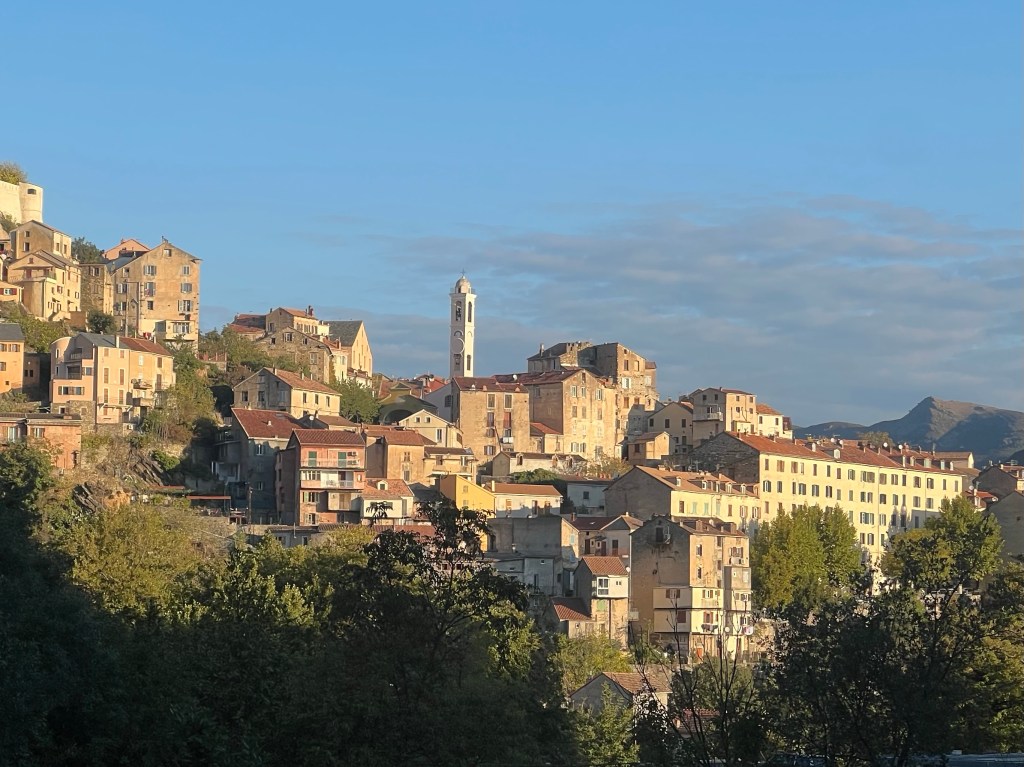
Corsica was rugged and mountainous. Villages capped hilltops. Impressive tall square towered churches with colossal bronze bells hanging high above the buildings pierced the jagged horizon. All set against the immense jagged panorama of the islands interior. Mixed forests of cork trees, olive groves, and sometimes oranges make up the low slopes and these soon give way to stark towering rocky peaks in the near distance rising abruptly from the warmer greens of the forested slopes.

Corsica is French but certainly doesn’t feel it. A unique place with a character of its own. More like Italy, but slightly harsh and lacking the French charm or Italian flamboyance. Driving is aggressive and there is a feeling of underlying tension. A funeral we drive past, hugely attended by vast numbers of solemn people, also has a large police presence.

We take the short ferry hop from Bonifacio to Sardinia. The walled city dramatically overlooks us on the clifftop as the boat slides out of the natural harbour. The white sandy rock faces are scoured by the wind forming long layered horizontal grooves across the escarpments, looking more like a form you might find in a desert. On board we have a strong espresso with our new French friends Fabian and Fred who are also travelling on bikes. A lovely exchange of stories that enriched the brief passage.
We now have arrived in Italy. Still very hilly but more rolling and tamer than Corsica. Immediately the whole place has a tamer warmer feel. The driving improves and the charm of the people returns.
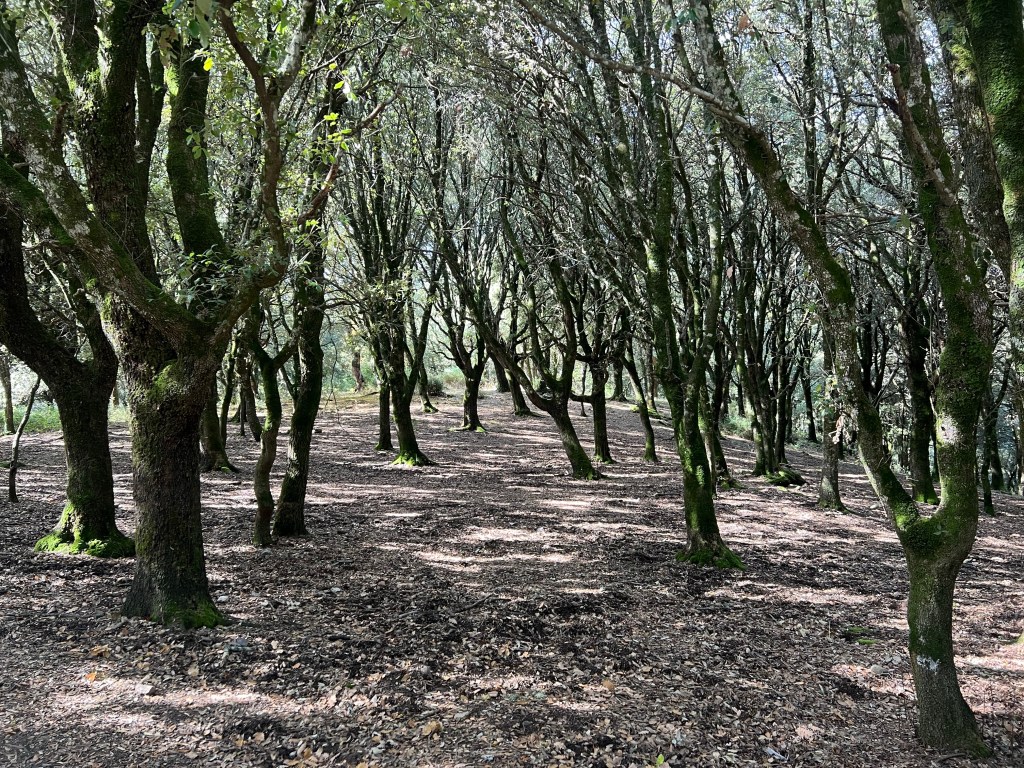
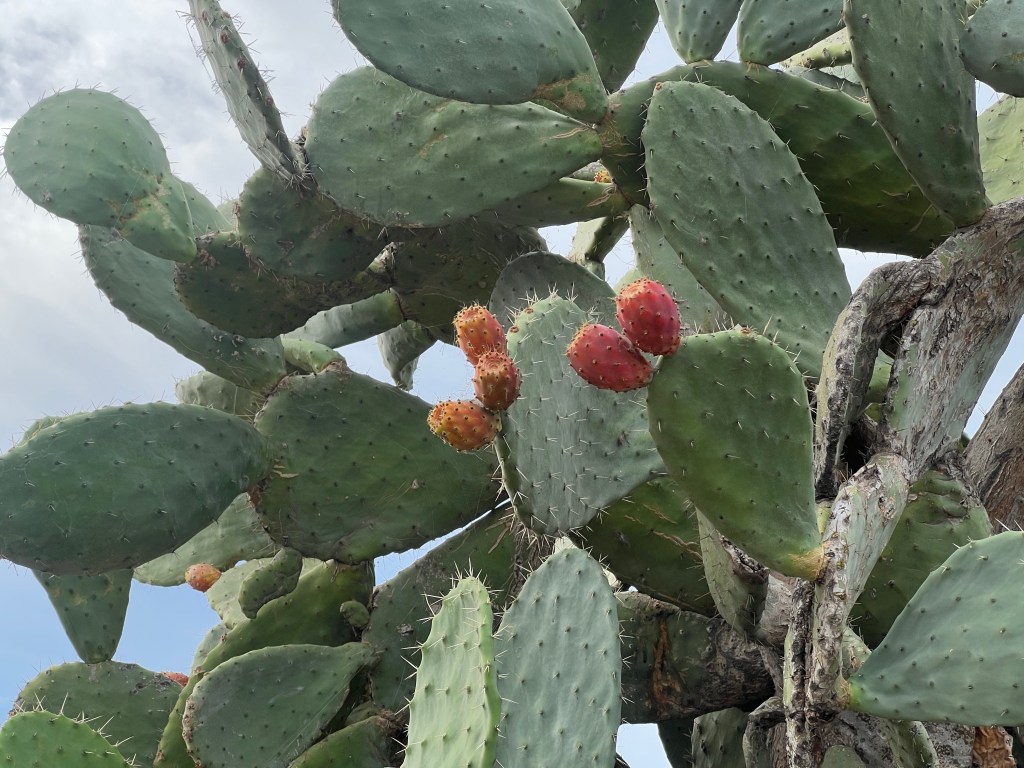
Cork trees abound the hilly slopes. There are prickly pear and pomegranates.
We stay on farm stays where we are introduced to all kinds of local dishes and get a good insight to the friendly rural life.

Quiet rural lanes and tracks take us through small farms and plantations spread over the undulating landscape which becomes more and more dotted with intriguing stone structures called Nuraghe. Huge irregular rocks stacked like a drystone wall forming a roughly circular enclosure are crudely cantilevered as they gain height forming upper chambers in the craggy tower. Many are now just a pile of rocks making up heaps dotted across fields. They date from about 1500 BC and their function is really not known, and there are thousands of them over the hilly landscape.

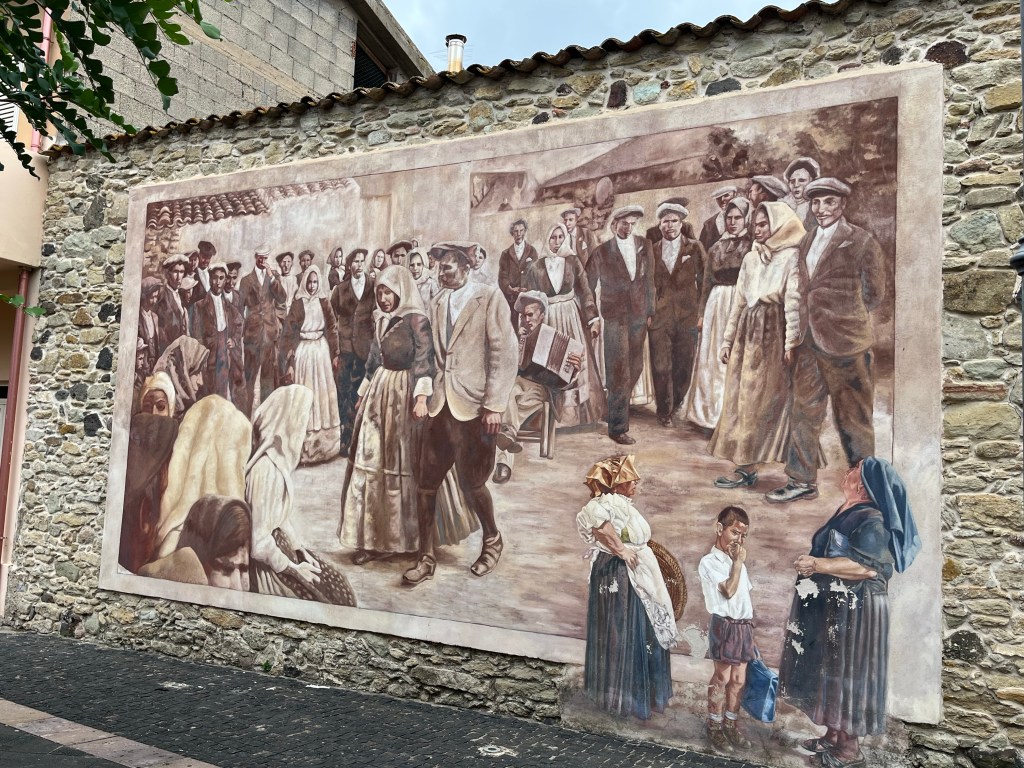
Elaborate and intricate murals cover building facades in villages. These are all over Sardinia and are partly to brighten up decaying walls or abandoned alleyways, but also depict scenes of protest and suffering that affected whole communities .
An overnight ferry took us to Sicily and after camping at Palmero where we met a few people in their campervans we started climbing huge hills into the interior of the island.

We loved Sicily. It was quaint and rugged. Mount Etna looming in the distance. Picturesque mountain top stone built towns, quite empty, but with the occasional quintessential Sicilian provision shops and cafe stops.
The towns of the interior eerily had vast areas of desertion. Beautiful old crumbling homes abandoned and very often in a state of partial collapse. It was sad to see whole neighbourhoods silent and derelict, just a few possessions lay scattered as a reminder of life.

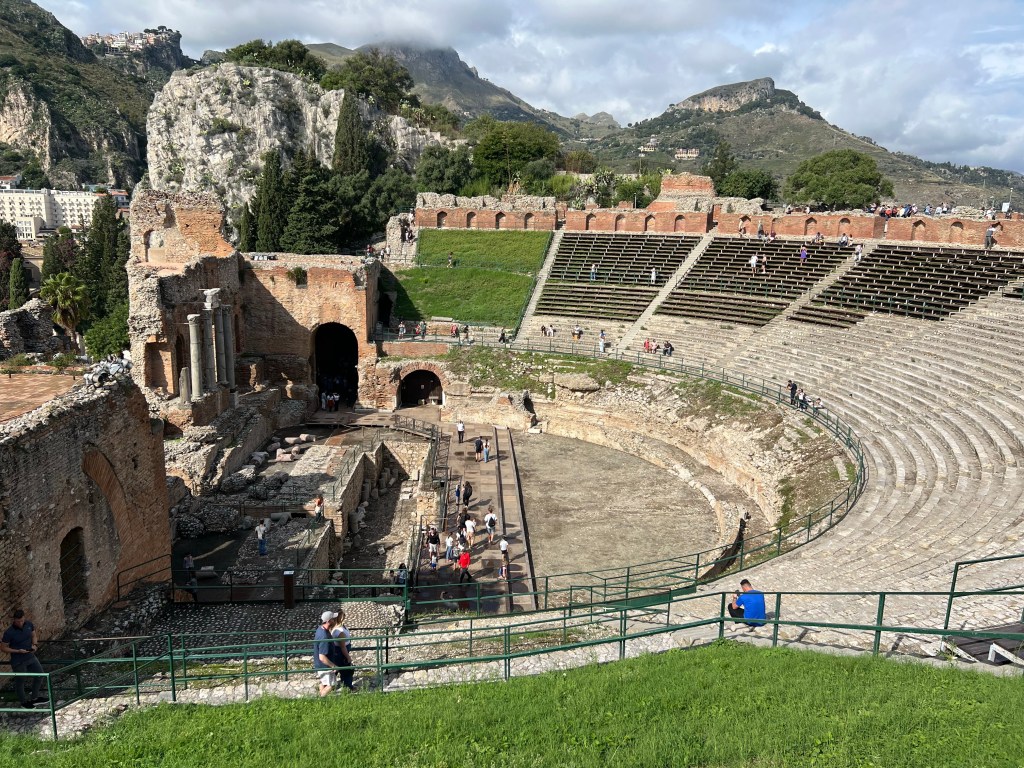
We are over 2000km cycled from home now and work our way across mountainous Sicily past the stark peak of Etna and drop down to the once Roman town of Taormina with its impressive amphitheater set in a natural crescent of the craggy hills. The temperature warmed and the sea was invitingly blue and clear. It was half term in a lot of Europe so the place was bustling with tourists.
The boot of southern Italy lay ahead before crossing the Adriatic Sea to Albania.
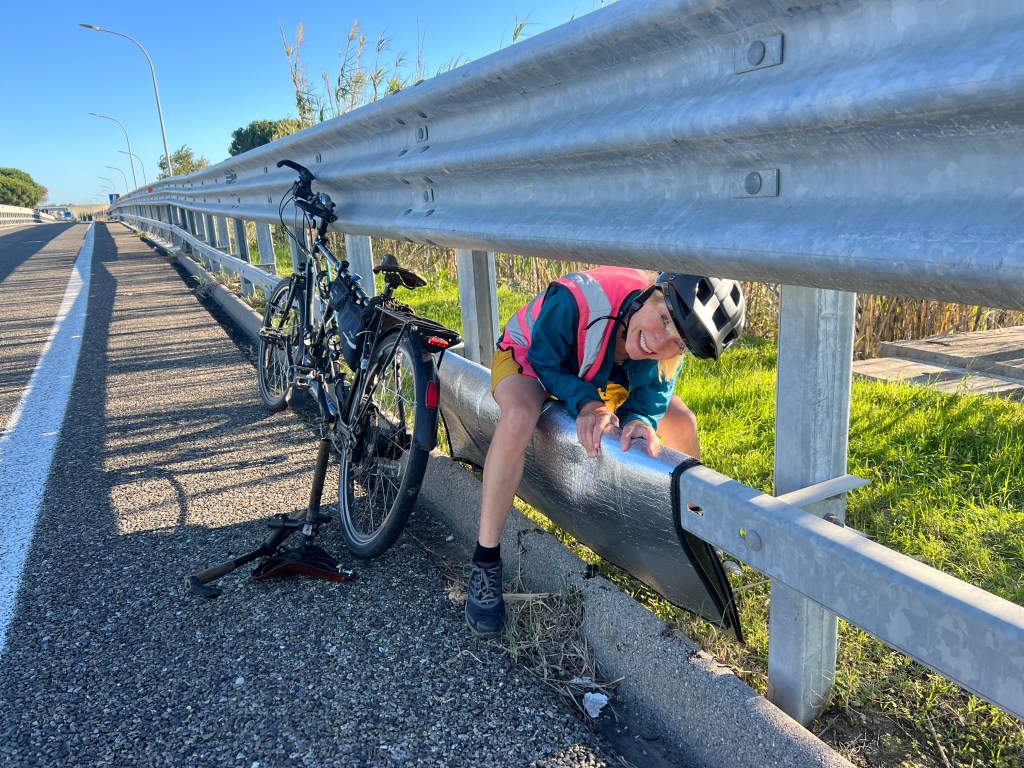
More developed and rather busy roads surprised us. We were challenged when quiet roads disappeared and motorways blocked our route. Matera and towns of Puglia made for a dramatic scene, but they were very well explored and we missed the rawness that we had experienced in Sicily.

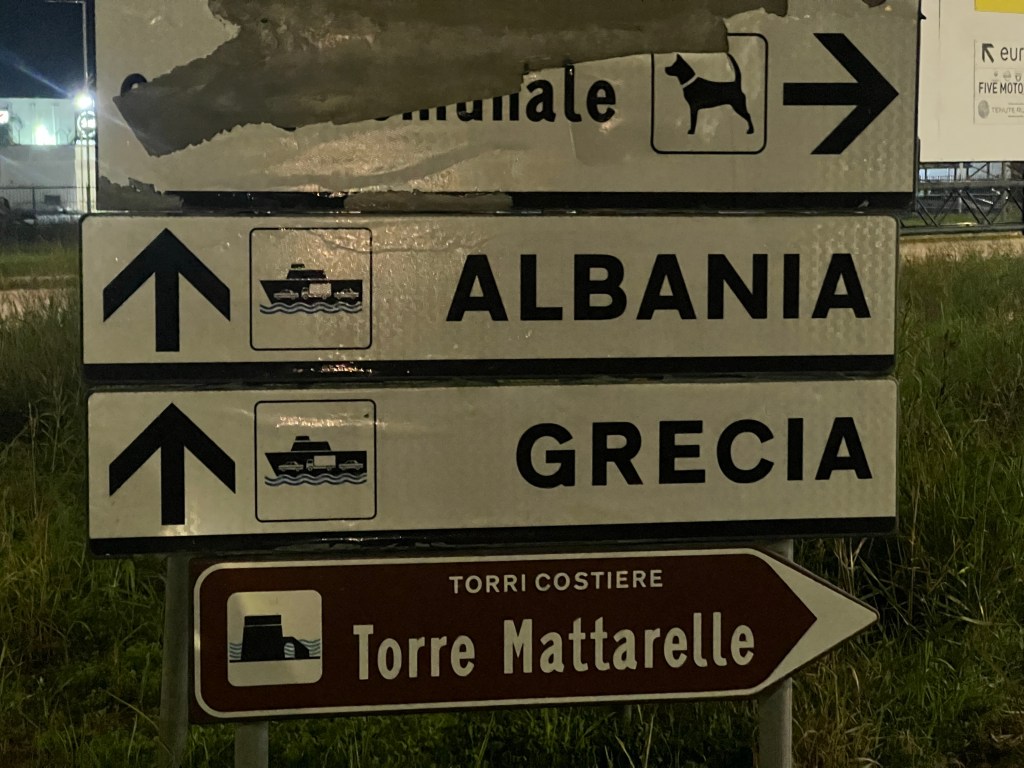
Dark quiet roads take us to the port of Brindisi. We follow unlit signs to Albania. It feels foreign. There aren’t queues of lorries and the usual commotion. A handful of Sprinter vans carrying Albanian workers and a few foot passengers accompanied by large trolleys of luggage are our fellow passengers. We chat in French with a couple of Senegalese lads selling African trinkets. The ship is small, similar in size to an Isle of Wight ferry. It looks really quite old. But we have a cabin with a double bed and a swivel chair. At midnight we set sail for Albania 🇦🇱


Wonderful to read again your adventures !
You were so close to me while you where between Marseille and Corsica 😉
Have fun !
Annabel
LikeLiked by 1 person
Thanks Annabelle, so lovely to hear from you. Hope you are well, have fun 😊
LikeLike
As usual, this was beautifully written in such way that you feel immersed in the landscape.
I rewatched the video of crossing the Sahara and felt emotional!
LikeLiked by 1 person