The straight forward efficient Namibian border post with its fine tarmac road that led into the country was a sharp contrast to the wild Angola we were leaving. The rutted sandy tracks of the day through remote countryside, although absolutely fascinating and the few people always greeted us with warm broad smiles, had left us completely drained and exhausted. What a difference to get to tarmac and everyone speaks English! We had struggled a lot with Portuguese, despite trying hard.
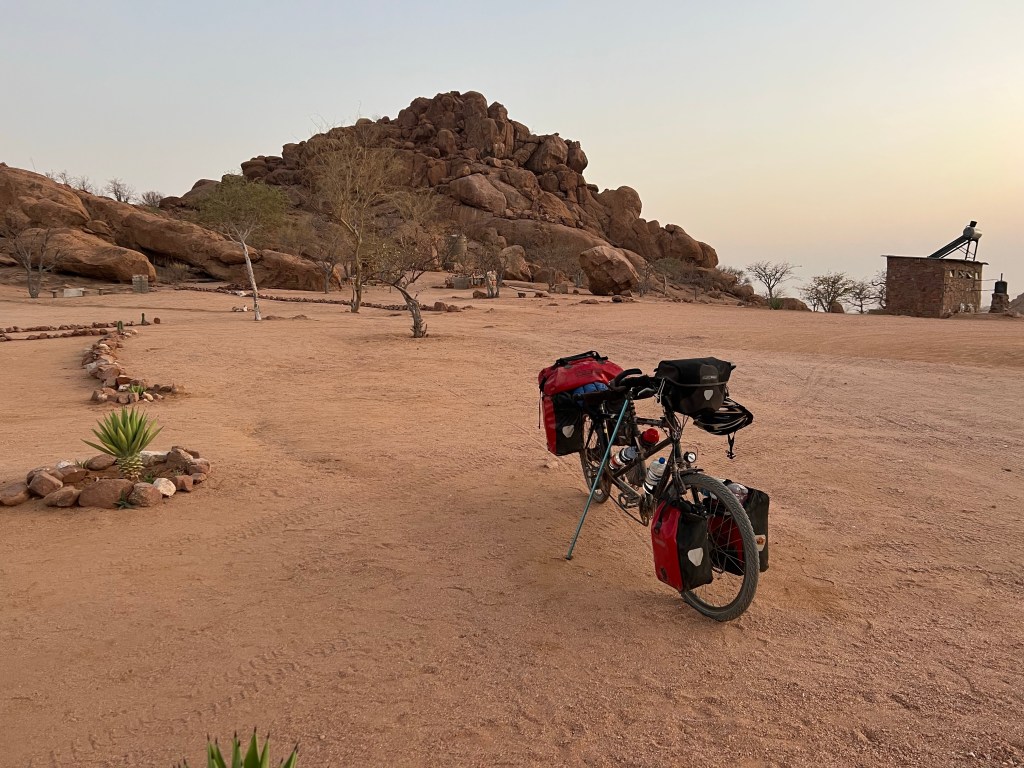
The settlements are smarter and buildings are complete. Pleasantly rubbish doesn’t strew the roadside and dominate the arrival at a town or village. It seems wealthier and tidier, a more organised feel, very different to the Africa we know.
We set off really early on the fine smooth empty tarmac road to get the 140km done before the time lions are out for supper. Namibia has an abundant amount of wildlife which seems surprising in such an arid place. Carrying more water now, 9 litres, as it is really very empty desert now, cold in the early hours and very hot by afternoon. We Camped just outside Etosha Park in a lovely little campsite that has individual plots with a loo, shower ( hot water from a wood fire) and kitchen area all outside under a slatted timber shade roof. Our campsite looks out onto bolder strewn rocky desert with thorny trees and bushes. This kind of well organised camp and the many lodges are all over Namibia to meet the demands of the huge number of tourists that visit the country. We bumped into a South African guide with some tourists( first proper tourists we have met since Gabon!)while we were having lunch at one of the regular roadside picnic tables. He warned us we should be careful as there are lion about. The campsite have had recent lion visitors. As we cycled on the rough stony track to the site we passed a small herd of Zebra and from the rocky hill we looked down on a giraffe and various dear like animals taking a drink from a waterhole. Wow this is like the Africa tourist brochure, and we aren’t even in a park or staying at a fancy lodge with all the access facilities to view the wildlife. We had a leisurely breakfast so we started cycling after the lions breakfast time! The wildlife sitings are so regular, giraffe, oryx and springbok. Such a change from the Africa we have been through. But the other real difference is there are no villages. Where are the indigenous people?

There is real emptiness,no villages, no goat or cattle herders, just windy desert scenery, oh and tourists! You could think you are in a sandy Europe, the African faces are a rarity, the white Toyota Hilux with fresh faced Europeans and South Africans are the natives of Namibia, a kind of sandy playground for these people.
The tarmac road finished on the second day and we had the daunting realisation that the large country of Namibia was going to be nearly all gravel roads, hilly and mostly strong headwinds too, and the busy tourist traffic calved the roads up into relentless corrugations, making the going really hard. Added to this the tourists don’t slow down at all and shower us with dust and fine rock. This 2000km country is going to be tough to cross!
The corrugations shake us to bits but stunning panoramas emerge as you get to every crest of a hill. The desert plants cling onto the stoney sand and rock, buffeted by the ferocious warm dry wind that arrives from late morning and builds with intensity. Threadlike ribbons of slightly greener waxy plants and stunted trees meander over the scape, presumably following the course of a stream or river that may momentarily form when it rarely rains. Coarse sand fills the bigger rivers that we have to cross by pushing the bike, bone dry, not a trace of water in the desert heat. The craggy mountains, all hues of purple black and orange stand harshly against the clear blue sky. The colours clear and sharp in the cold early morning and becoming muted in the heat of the day.
At one lodge we met Basil, a large burley chap full of life, sat with a few friends drinking local beer. He offers us some smoked raw Oryx that he cut with his large sheath knife passing the dark red meat over on the end of the shiny blade.
The Boers are an interesting bunch. They migrated up from South Africa generations back and are mainly involved in farming this harsh land. Huge farms for game and cattle in the desert where grazing hangs on the hope and arrival of tiny amounts of rainfall. It’s not an easy life and we learnt to have respect for these people living in isolation.
We decided to alter our route, taking us a bit more remote, but without the tourists meant for smoother gravel roads. Basil had helped us with some planning. A big challenge coming up was the formidable Kuiseb pass which is approached by very empty desert and long stretches with no water. We carefully planned a route that we could just manage to cycle between water points, once carrying 16 litres and we soon learnt this was beyond what was reasonable on the bike. We became very unstable in the sandy sections with this much weight. We worked out we could make the Kuiseb pass if we got help with the final section, crossing the last dried up river, from a farm that we had made contact with.
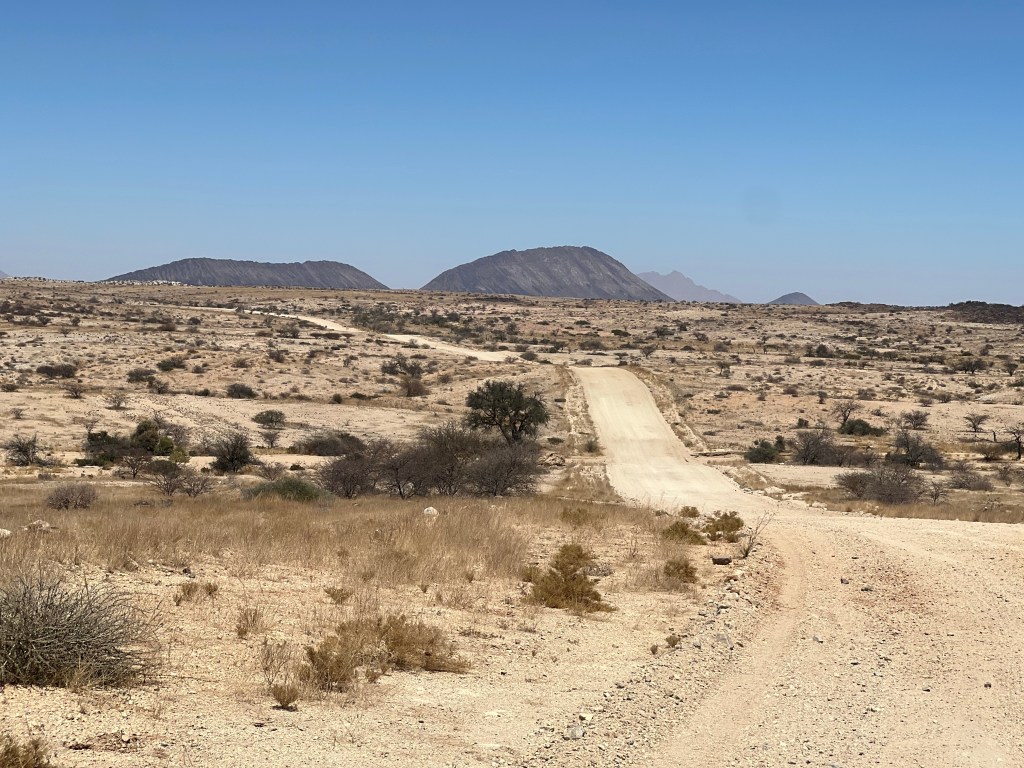
We again crossed stunning empty desert scenery, sandy hills and rocky ravines. Needing more than ten litres of water in the day it was hard going but without the corrugations it was a little more comfortable.
We eventually arrived at Friedrike’s farm, ‘base camp’ for the final push to the Kuiseb pass!
We enjoyed a relaxing and fascinating day off at the farm stay. It was my 59th birthday and they made me a cake! Friedrike from Germany and her Namibian husband Hugo, along with Hugo’s uncle Nicos run this farm in the desert. They have two very young children too. Like so many settlers before them they are continuing the tradition of uprooting and coming here to farm this remote inhospitable place. Nicos took us on a great tour of the farm on rough tracks across mountains and through rocky gorges. It’s so fascinating to hear how you farm the place with such water scarcity. They have cattle, sheep and goats on this vast area. Everything clings onto the hope of a little rain that falls each year that momentarily turns the place green and provides much needed food for the livestock. Much of the huge farm is set aside for game that roams freely, many zebra, giraffe, all sorts of antelope and oryx. Lots of predators too, leopard, cheetahs, hyena, and jackals. They have wind mill pumps to provide water for the game from boreholes. This draws in lots of animals. Nico’s knowledge on the wildlife and farming was impressive. We followed Leopard footprints in the sand. The farm also has a very interesting story of two German geologists that went into hiding for two and half years on this land, escaping from being called up by the german army in the Second World War. We visited shelters in the desert where they lived and even in this remote part they were continually being hunted down and had to keep moving on. It was so interesting hearing how they survived for so long in the desert. They attached zebra and antelope hoofs to their boots so they couldn’t be tracked when they walked across the sand. The owners of this farm at that time, who were also German took risks and helped them. The story is quite well known in Germany. The geologists were most likely lovers and was the farmer involved too! Nicos told us so many intriguing stories and said there are some things that aren’t talked about……. A very different side of Africa, but still very interesting.

Gerry Jones from Nashville, a 79 year old trophy hunter, was also a guest at the farm. He was here to get a hyena to add to his large collection of corpses back home. It was a rather uncomfortable union, us and Gerry, but we warmed to him as time went by, all folk are interesting even if you are worlds apart on what you believe and do. Gerry said grace at dinner at the request of Friedrike, this was quite a lengthy affair! The trophy hunting is what keeps these farms going in Namibia and it was interesting hearing about how it is tightly controlled and how it benefits the farm workers with their meat allowance, but it still doesn’t sit well with us.
Gerry eventually shot a hyena, and Hugo drank all night to celebrate. This made him obnoxious and aggressive at breakfast time which made for a very unpleasant atmosphere. The conversation became very tiresome and circuitous with us and Gerry trying to steer the talk away from hunting. We left under this dark cloud and with Nicos’s help we got to the formidable Kuiseb pass just across the desolate valley from the farm. We could now survive between water points on the gravel roads all the way to the South African border some 900km away. There will be some challenging sections and the rough roads are quite relentless as they climb up and over the hills, but we should be able to refill with water everyday. The Namib is such a harder desert to cross compared with the Sahara which now looks pretty easy, where we had tarmac roads and the strong wind on our backs. Here it is rough gravel, carved up forming brutal corrugations by the tourists 4×4 and the strong headwind batters us slowing our progress. Crossing the Kuiseb and then the Tropic of Capricorn, the Cape of Good Hope suddenly seems within our grasp. It may only now be 20 cycling days away! Tough stuff ahead but it might be possible.

We really appreciated our rest day, a chance for our backsides to repair and our chapped sore lips to heal!
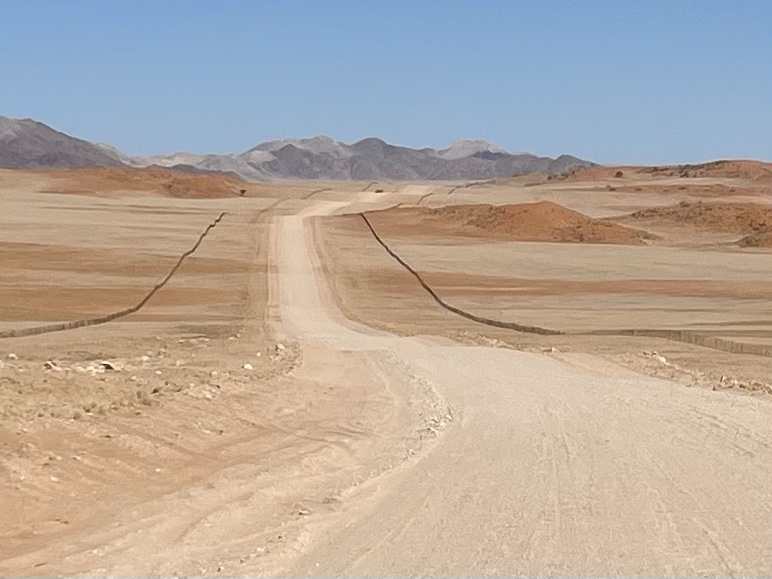
The desert continuously throws such beauty at us, every hill you cross another panorama opens up with a new palate of colours of sand, rock, grasses, succulents and mountains set against the blue sky and illuminated by the bright sun. Strangely wildlife is abundant, zebra, oryx, antelope and ostrich roam the arid wilderness.

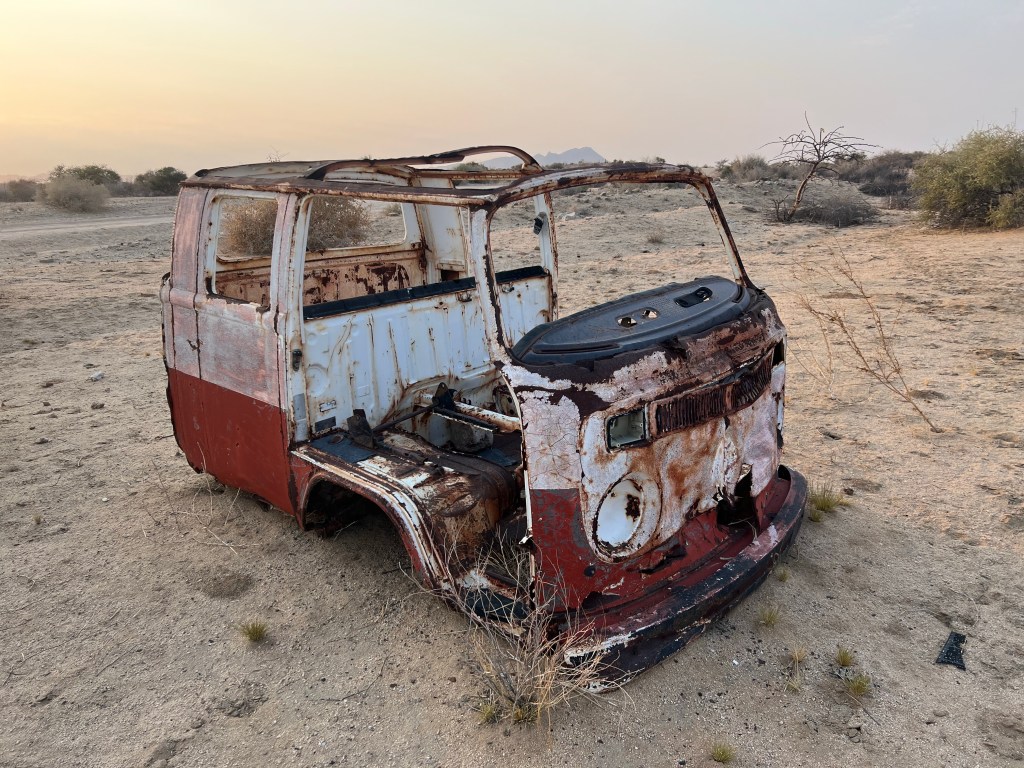


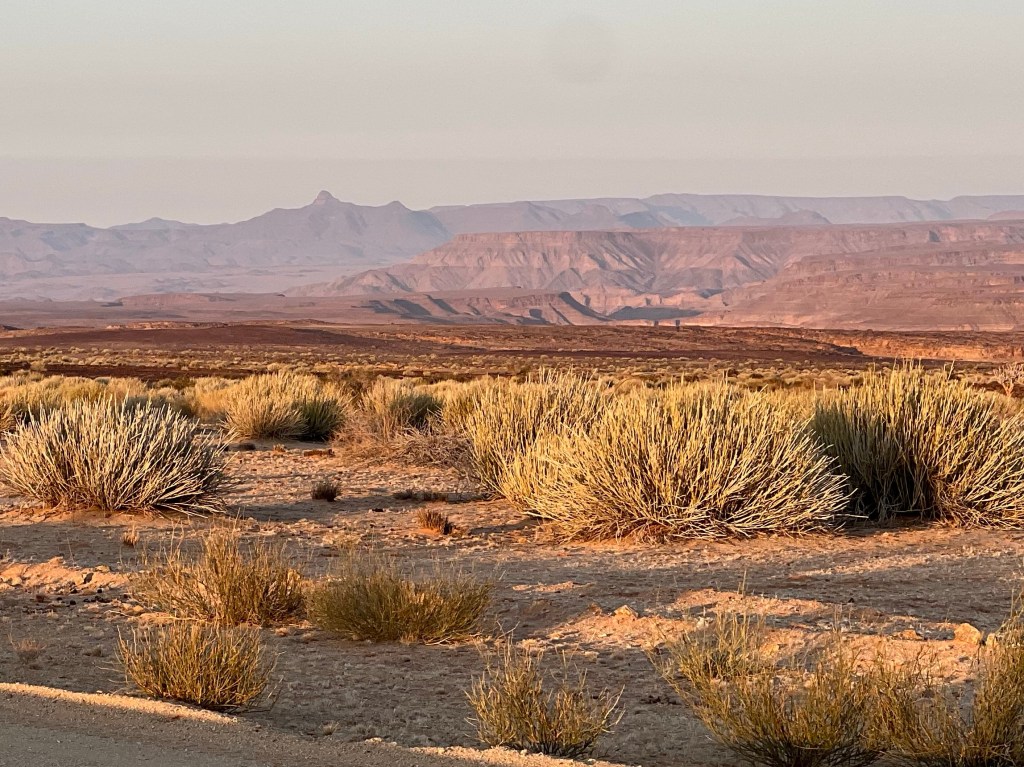
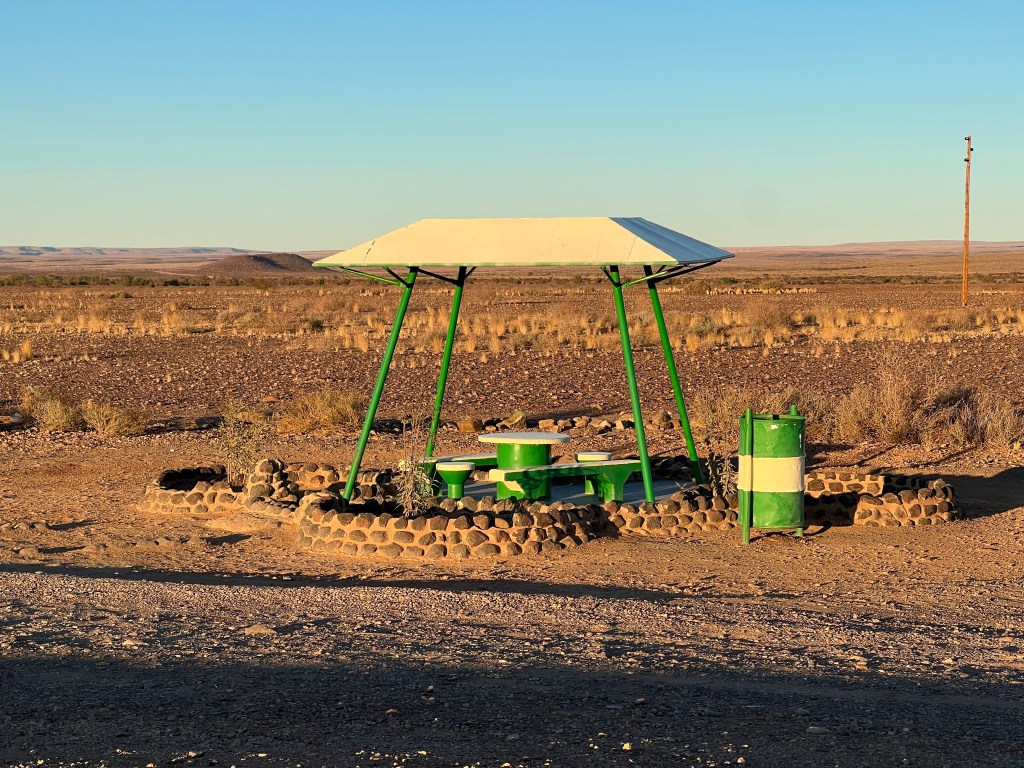
The wind is blows ruthlessly straight at us. We follow the Tsondab valley through the Naukluftberge mountain range. The wind is thundering down the valley at almost 60km/h at times. Only 40 kms but this wind is brutal. We are travelling from one farm to another. They are owned by Germans or Afrikaans and mainly farm cattle with some game hunting too. The German ones tend to be fancy hotels and they live a life of luxury that feels uncomfortably colonial with many servants, and the Afrikaans are the tough rugged farmers taming the harsh land. There is always talk about water and if they will get the 50mm or so annual rain fall. Once through the valley we are hoping the wind will ease. We know it will never go away but perhaps turn a little and get less would be great.
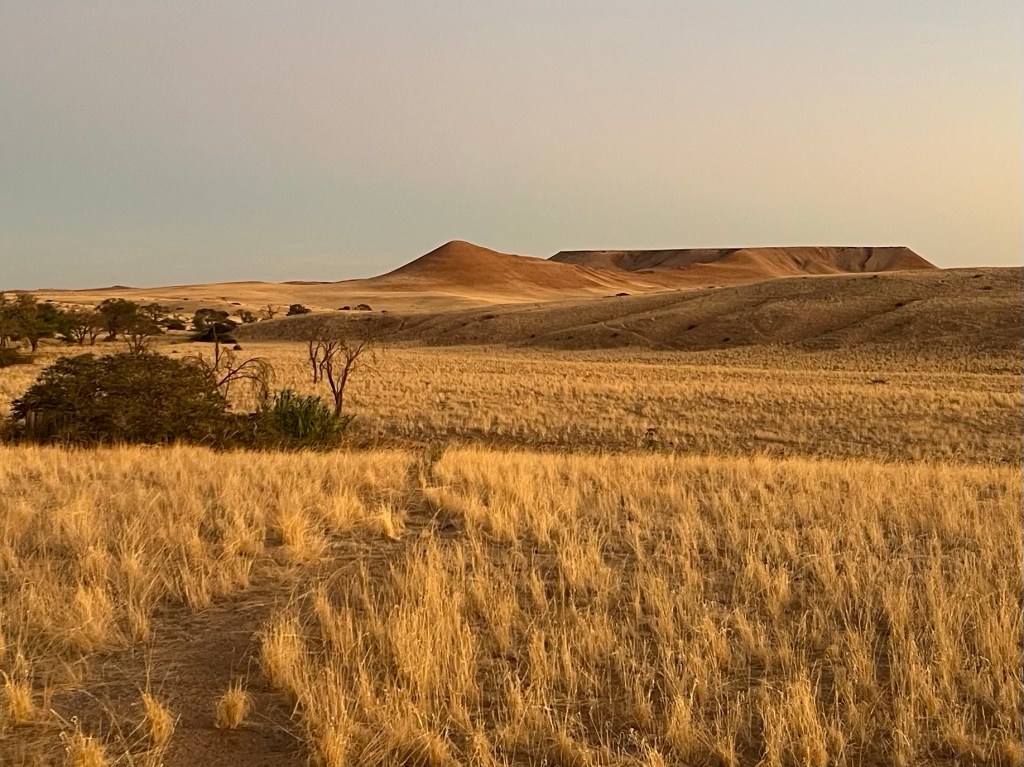
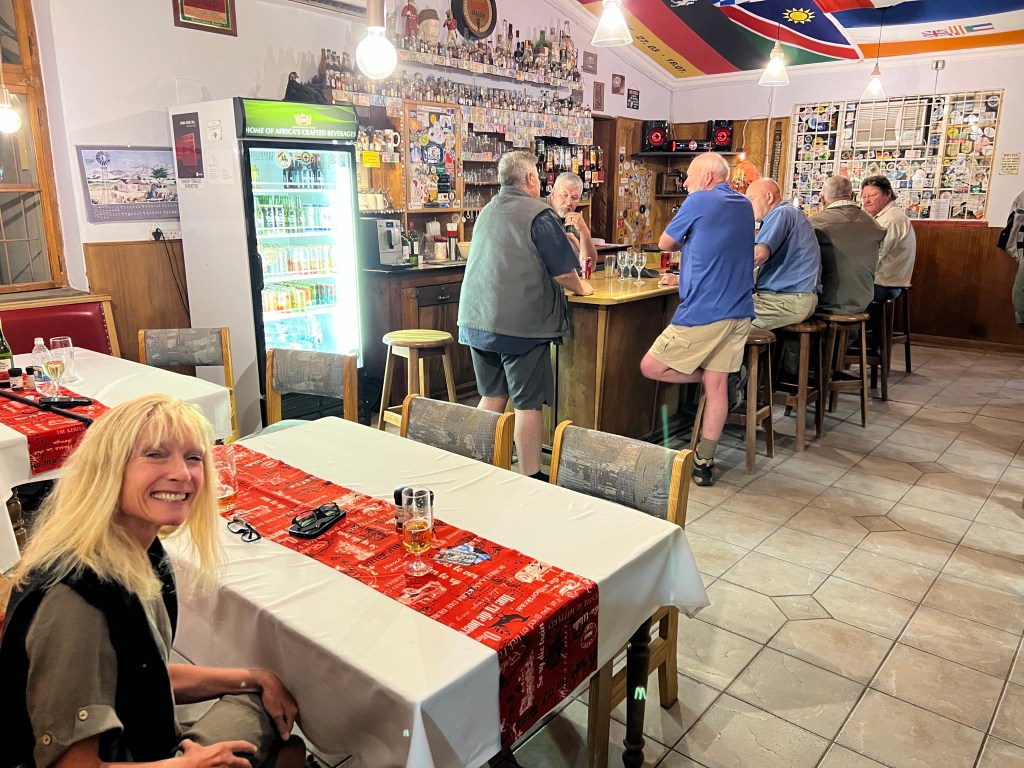


We arrive at the Malthoe Hotel, something of an institution for the Boer farmers. Quite an outpost of a settlement like other places it feels like the Wild West. We walk into the bar, a group of hefty looking men drink beer sat on barstools, heads turn and there is little in the way of social exchange. They warm with time and soon we are all friends.
We leave the gentle giants at the pub last night. They really were a friendly bunch attending a meeting on farm security/cattle rustling! It seemed to involve a lot of hours in the bar and their stoutness implied pouring a lot of beer down their necks, but not at all, modest glasses of red or white wine, and after their meal they finished up with elegant cocktail glasses containing fruit salad and topped with whipped cream. It wasn’t a look that went with their huge stature!
We had one of our longest days between water points, 120km of desert, but the gravel road is quieter and smoother so not that bad at all. On the desert road we came across an elderly South African with his wife and daughter struggling to change a wheel. They needed our help and no cars had stopped for them. The wheels of the land cruiser are big and heavy for someone in their seventies and they were in a bit of a fix. We got them sorted and they were so appreciative. A couple more cars raced past without slowing chucking up dust as we changed the wheel. That odd Namib desert camaraderie coming out again! Anyway there was much laughter that the people that had stopped were on a bicycle. It was in the cool part of the day which is our time for cycling when we don’t drink much water but luckily they were able to give us some extra water to get us through the later part of the day.
We passed some flocks of goats being looked after solely by dogs. The dogs are reared by goats when they are puppies so they think they are goats and they guard the flock. Stayed at a super campsite in the middle of nowhere surrounded by desert mountains. The farmer has brought us home baked bread, butter, jam and Kudu sausage, all their own produce. Namibia has the best campsites, particularly the small ones in remote locations.
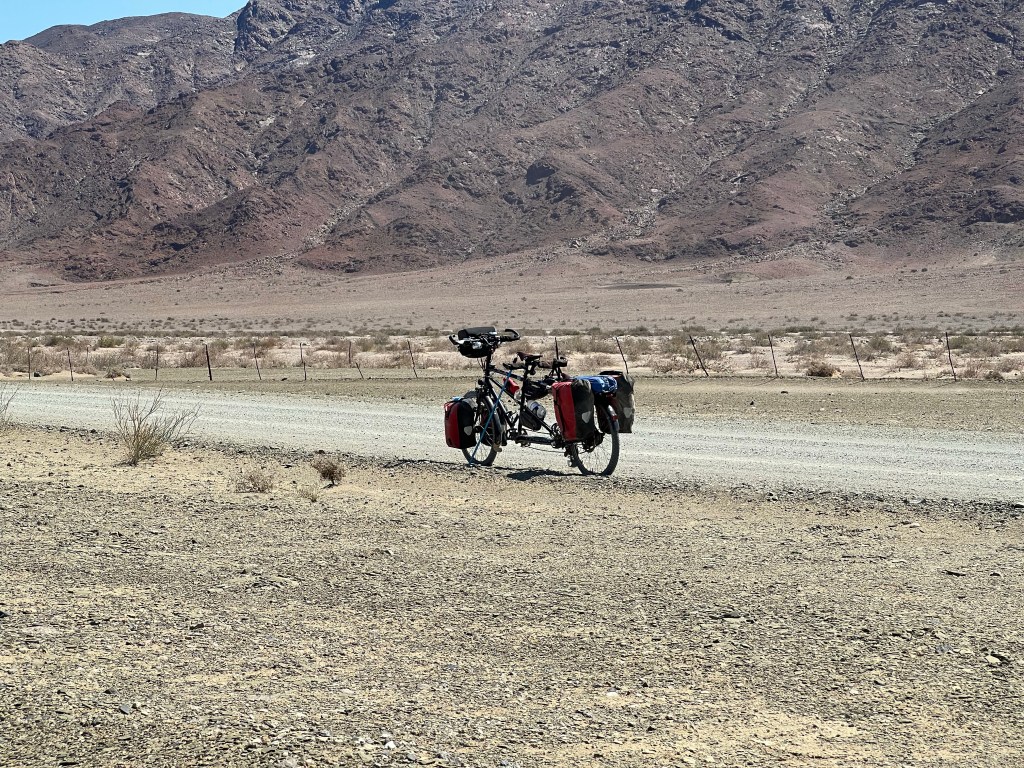
Eventually and some way after the Fish River Canyon we had nailed Namibia. 1500km or so of gravel roads gave way to tarmac as we crossed the Orange River into South Africa. Climbing out of the Orange River valley the desert greened and flowers became abundant. The further we went the more the spring flowers covered the hills, such a contrast from the other side of the river and the desert we had had for weeks on end.
Stayed a night at the sleepy town of Nuwerus, set in the dramatic green rolling hills peppered with yellow flowers. Tess and her husband were looking after the lodge. A lovely couple sitting on the veranda wearing their leather Jacaru hats like something from the outback. They were looking after a friend’s farm too and lived in a tiny portacabin house with a huge plastic water tank at one end and their pick up parked alongside which stretched the length of their home. Tess made us meatballs, rice potatoes and squash. With our bottle of red wine from the liquor store it made for a hearty meal which was much appreciated after the long day.
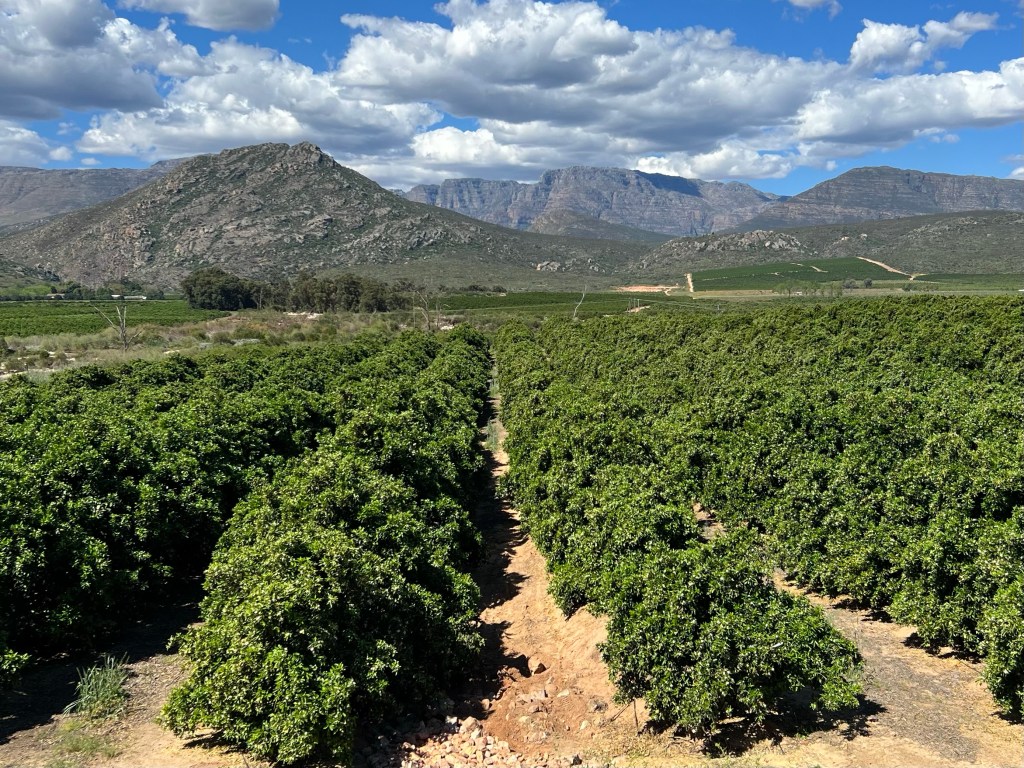
The last days through the beautiful South African verdant landscape took us closer and closer to our goal, The Cape of Good Hope. Every day we cycled as fast as we can to do the kilometres before the dreaded headwind becomes ferocious, usually by just after lunchtime.

We camped in vineyards and one in particular, the night before the final day into Cape Town, we met Rocko, who is a long stay resident in his modest camper. A striking looking guy with his long grey beard and bare chest, looking like he should be on Goa Beach in the 1970s. Rocko doesn’t drink and prefers weed! Despite this he was a really likeable chap and we spent a while chatting with him. He helped us plan our route into Cape Town avoiding the worst townships. It was interesting talking to him about the dangers that everyone talks about in South Africa. Life in South Africa seems to involve driving everywhere with your car doors locked and living behind gates and walls topped with razor wire and electric fences. You employ a security firm with 24 hour armed response team too! But is it really this bad? The people that keeping telling you it is are the ones cocooned behind this facade of security. Sure the crime rates are bad, but how likely are you to come across these baddies.

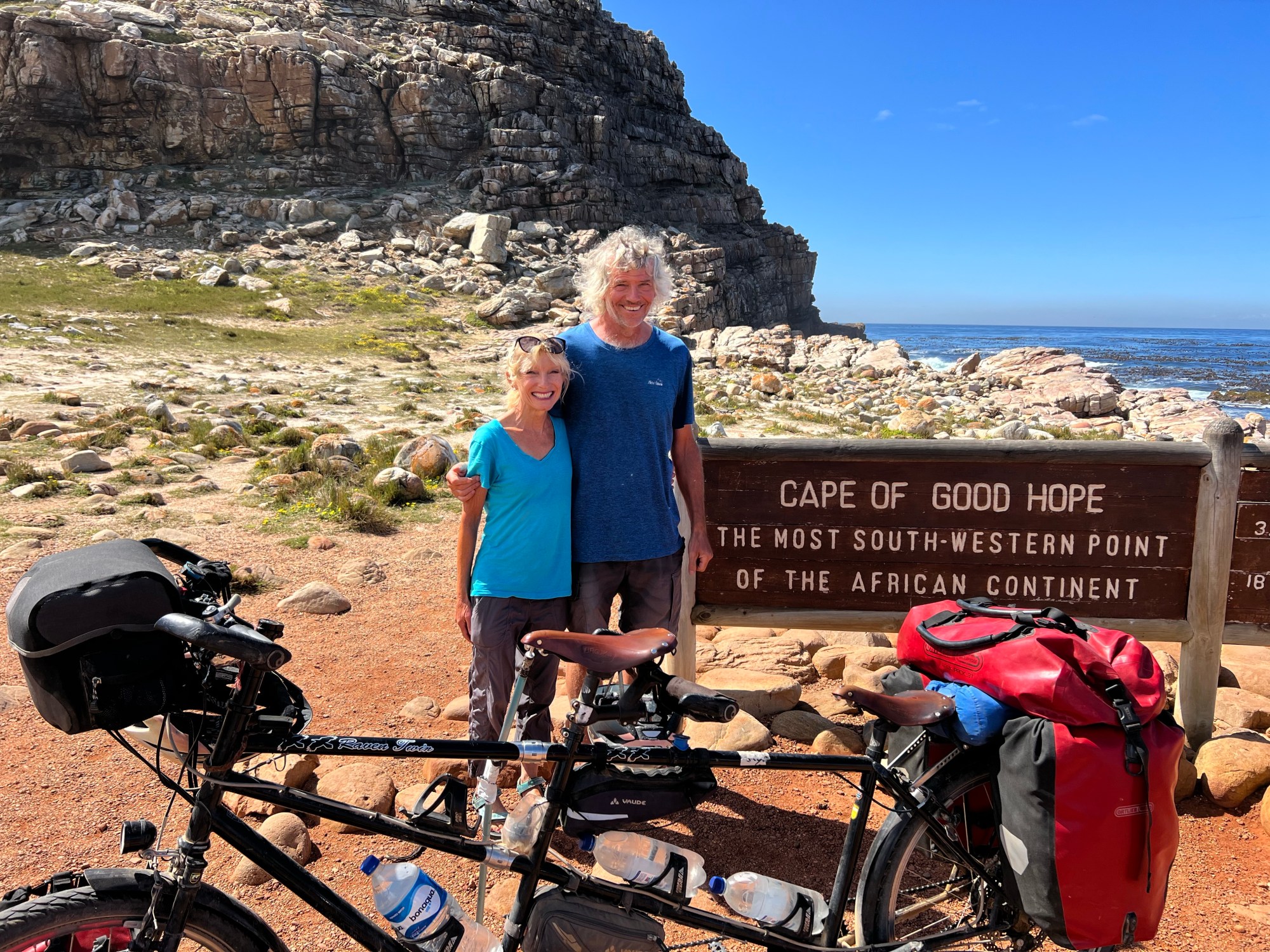
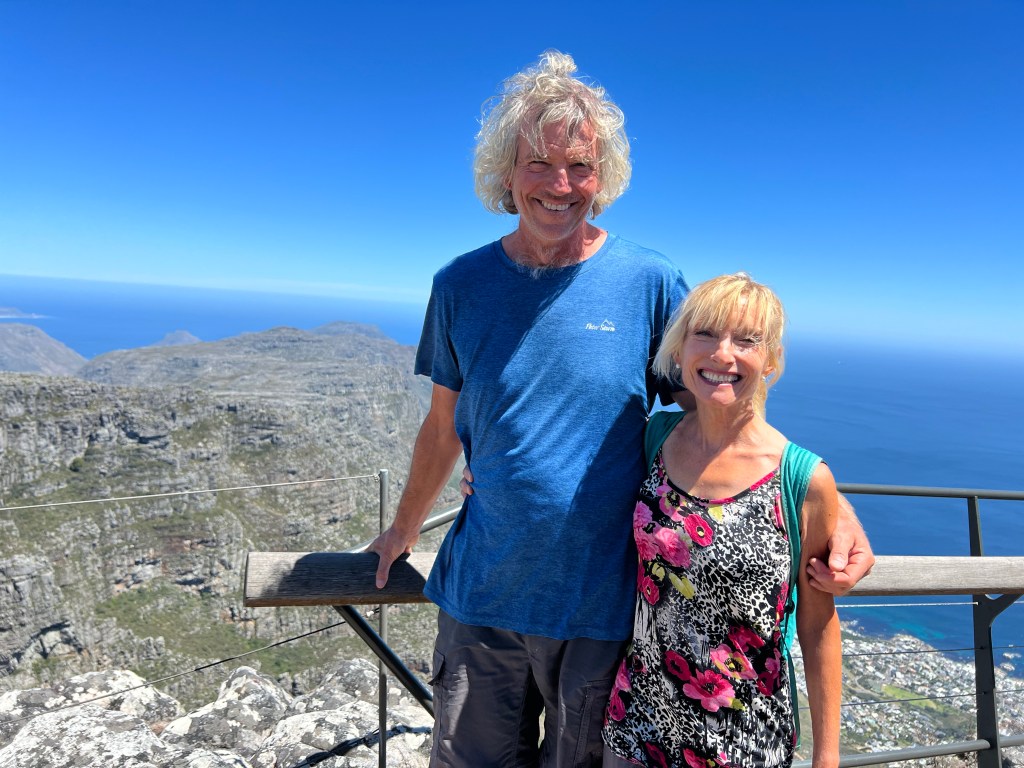
We got to the Cape of Good Hope, the conclusion and our goal of our Africa Journey, 17000 km, 10,500 miles. We thought back to all the lovely people we had met, the deserts, jungle, mountains and rivers crossed. We have come to the end of our journey in such an ‘unafrican’ place!
It has troubled us since leaving Angola that we have moved into this uncomfortable disconnected world. Everywhere you go people talk about the dangers. You mustn’t go there, or even near townships otherwise you will be robbed or shot. You soon start to feel you can’t trust any black people you might pass living in this crazy existence. It feels ‘them and us’, like the apartheid lives on. We fully understand the crime rates here and you need to be careful but this is serious paranoia. We were seeing a very unbalanced view of the place and after a bit of research ended up with the WhatsApp number of Chippa, a guide who would take us on a walk through one of the townships. At last we feel we have seen the country, ‘a village within the city’. A truly positive experience.

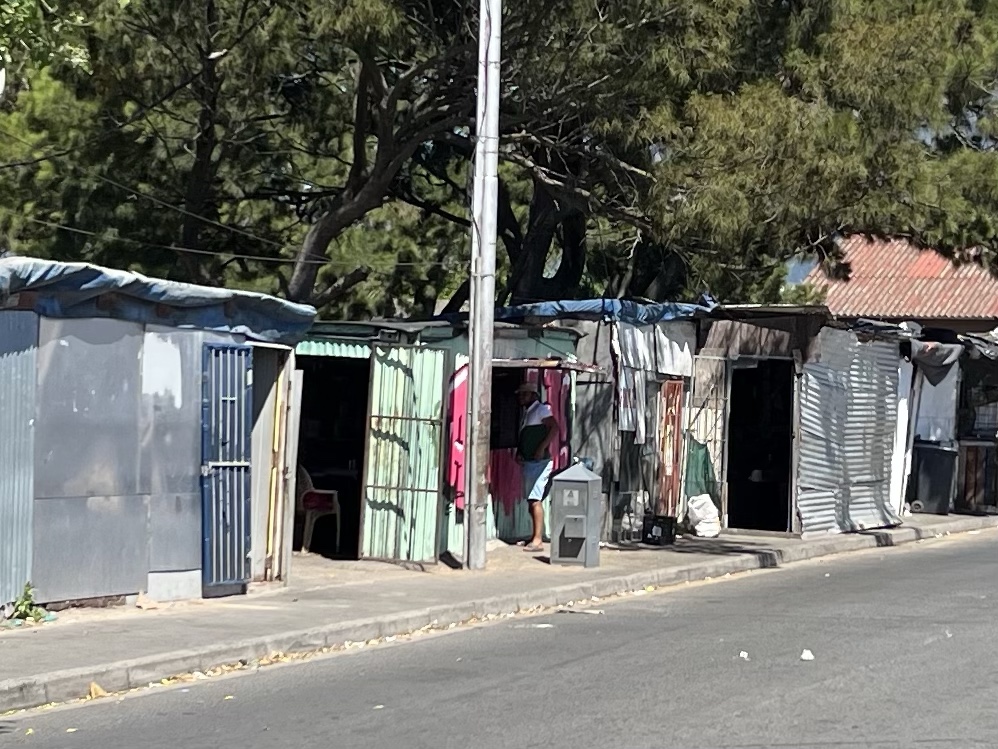


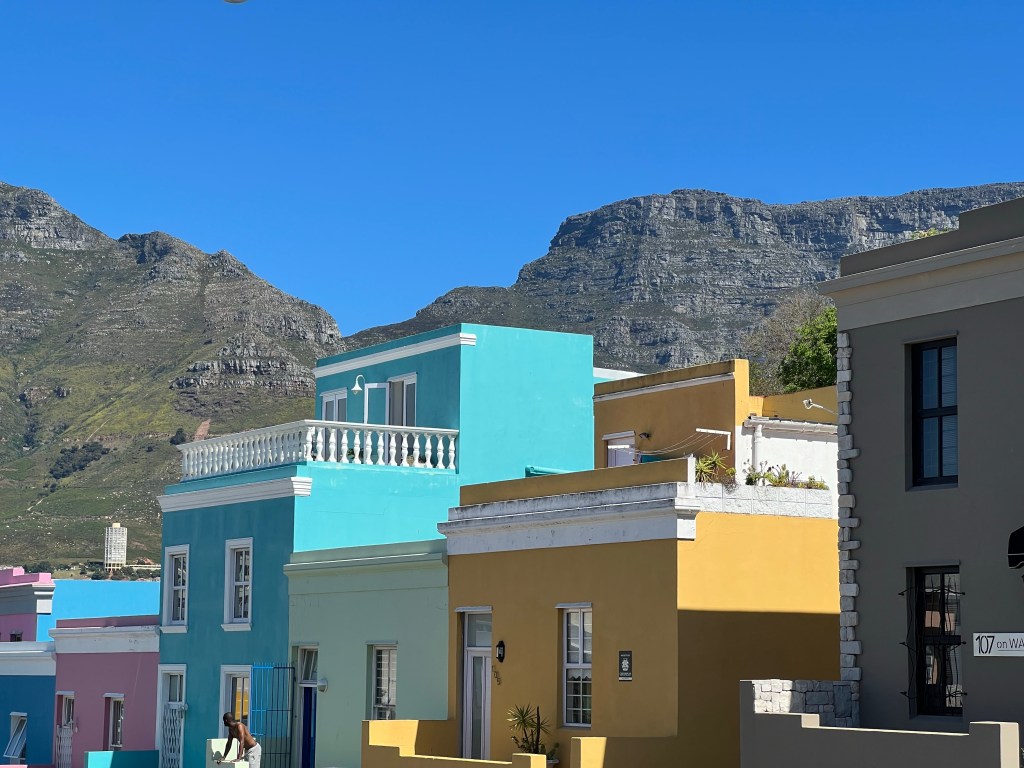
Chippa’s friend, Wandile took us around the township. He had grown up here and being of the generation known as ‘Born Free’, post apartheid he had attended a mixed race school in a neighbouring district. The township ranges from densely populated corrugated iron informal type dwellings as they are termed here to social housing similar to council houses to privately owned dwellings like the one in the last picture. It suddenly felt alot more normal here where you get a range of wealth living together like any other settlement in Africa. Sure there is inequality and problems particularly with alcoholism and drugs but it felt like other places. The good and bad is just there rather than this weird set up of fancy districts with the problems ‘out of sight and out of mind’. It felt a lot less threatening, just people going about their day, rather than in the posh suburbs people enjoying their coffee at a beach side cafe and then worrying about gangsters hanging out at the traffic lights on the way home. Initially the townships were built as labour camps and now have quite a bit of social housing. There are primary and secondary schools and children’s attendance is compulsory. There is a well attended library, sports ground and swimming pool, health centre too. They are installing fibre broadband throughout the township, but the sewers are overflowing! Alot of people only have access to a shared water tap and bathroom. There is a strong sense of community in this township but the harsh reality that hangs over this place is people were forced to live here well before apartheid as they were moved out of other parts of Cape Town by the whites in the early 1900s. This separation between where we are staying and the townships feels like apartheid is not long gone. The township visit and Wandile frankly explaining everything to us made us finally feel we had a connection with the country similar to how we have felt in the rest of our African journey

 tandemtravelcouk
Hi Helen and David,
What a delight it has been following your incredible African experience. I’ve loved reading your Blog and all the Facebook entries. Thank you for describing so many fascinating people you met along the way and the ever changing landscape and wildlife so vividly. A true feat of endurance, physical fitness and adventure in this crazy modern world. Congratulations making it all the way to the Cape of Good Hope. Enjoy that well earned rest before heading home. Look forward to seeing you both soon.
Helen xx
LikeLiked by 1 person
Thanks Helen for your lovely comment
LikeLike
Congratulations on the completion of another amazing adventure, truly remarkable and enjoyed following it all! Perhaps once 60 it’ll be time to take it a little easier?! Have a good rest for now anyway!
LikeLiked by 1 person
Thanks Lloydy, not planning to take it easier! Next trip might be length of India and hopefully Pakistan, the Karakoram Highway and on into Kazakhstan!
LikeLike
Hello you two! we know the Cape very well but travelled there in a slightly different way! Peter travelled through Namibia with a small tour and was impressed with the sand dunes and evening skies.
LikeLiked by 1 person
You made it ! Congrats ! I think about you often, I hope you are fine and I wish you a lovely and warm end of year with the one you love.
LikeLike
Thanks for your lovely message. Happy New year. Good travels for 2024 x
LikeLike