We are entering the Angolan oil rich state of Cabinda, considered the Kuwait of Africa! But there is intermittent electricity at the border. The mild mannered helpful immigration officer is unable to print our visas without power. We sit for several hours waiting patiently, watching the comings and goings as people nonchalantly wander from Congo to Angola carrying all kinds of things on their heads, babies bundled to their backs with brightly coloured material and presumably going to markets on either side of the border. As if there is no separation between the countries these people can move freely. Eventually the electricity returns and after several tedious formalities including the bike being photographed from all angles by equally friendly customs officials we are set on our way.
We had arrived in Angola and once more cycled off into a new country. Similarly to Sierra Leone, Angola sadly conjures up images of bloody wars in the eyes of the West. But these are countries that have emerged from their tragic recent history in a similar way as the Balkan States, they are developing into thriving progressive places. So much negativity surrounds African countries from Europe and America, where there is so little known about these lands. They don’t appear in the western news if good things are happening, just war, corruption and conflict hits the headlines.
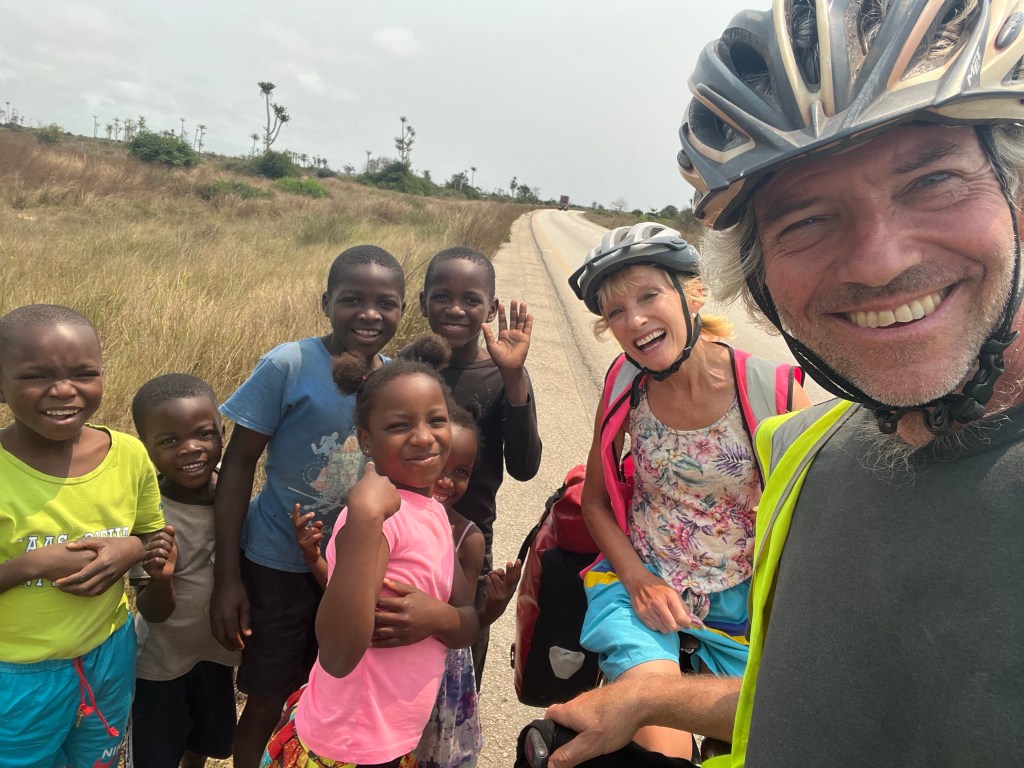
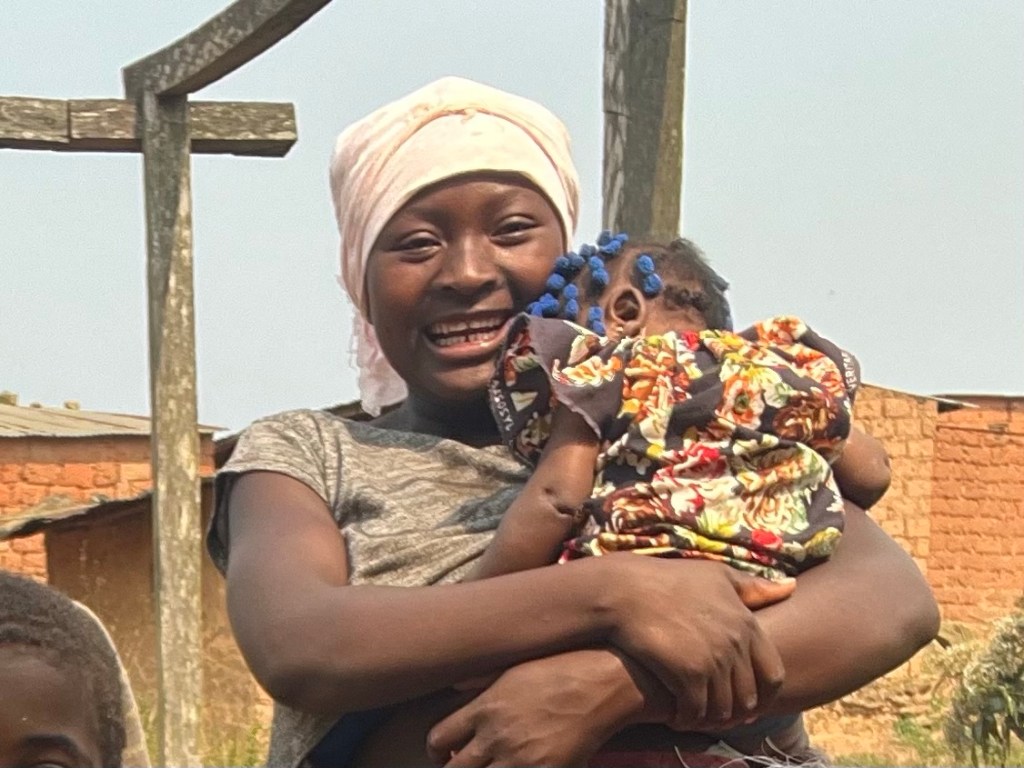
The people are warm and friendly, often waving with both hands with huge smiles or giving thumbs up encouragement to us as we cycle by. They are quieter than the Congolese and Gabonese making it feel a more tamer version of Africa which is nice.
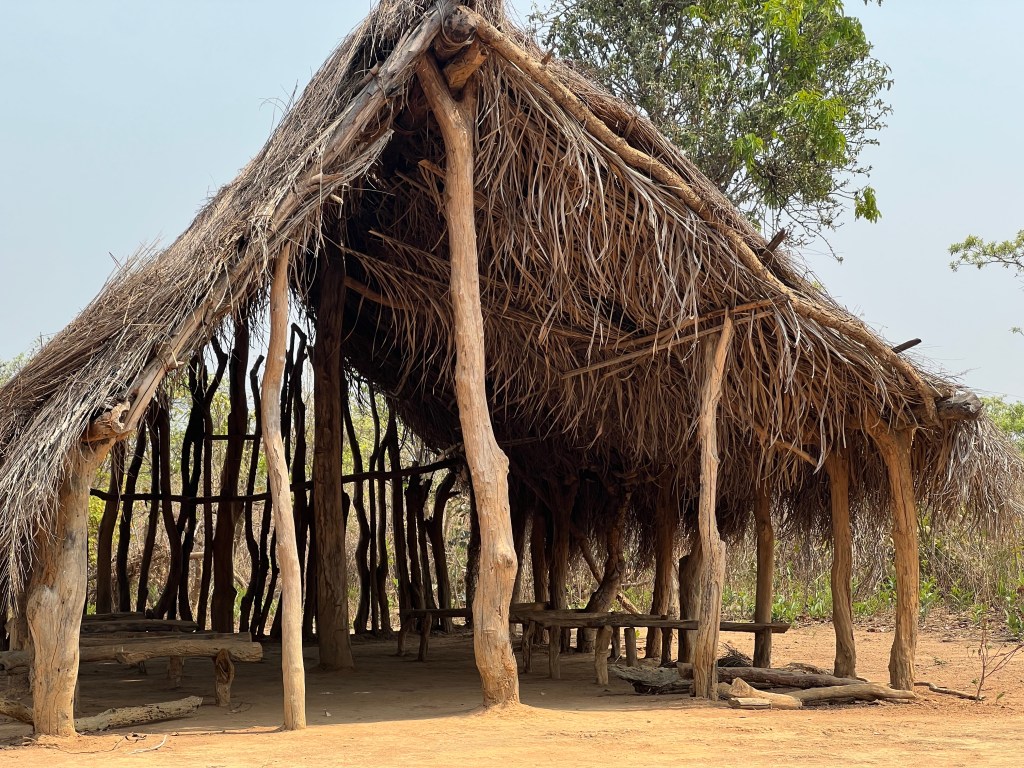
We saw a village shelter that looked a good place to stop for lunch which it was. We were soon joined by several young lads all carrying Kalashnikovs, some looked like they were in military uniform but some were just in jeans. This thatched, bamboo walled round shelter with nice benches in it, kind of felt less picturesque all of a sudden. We have just arrived in Angola and now we are eating our French bread with laughing cow cheese and surrounded by a gang with Kalashnikovs! Should we be worried? Now were we being influenced by that western negativity towards black Africa! One guy spoke really good English and they were all lovely. We had a good chat with them and shared our biscuits which they liked very much. There was a kind of informal army camp in the bush behind that looked more like a village which was their base. We bid them farewell and continued on our way. Smiles and waves all round while clutching their AK47s in the other.
The delays at the border meant we couldn’t make it to Cabinda city in the same day which would have been ideal as the region of Cabinda is an orange area on the foreign office advice meaning we shouldn’t really be there. Probably unfounded advice relating to an incident in 2008 and places do move on well ahead of advice changing. We stopped the night at a coastal fishing village where there was a nice guesthouse run by Vincent.
We pushed on to Cabinda on a good tarmac road accompanied by the usual beltching lorries travelling through the hilly landscape. Creeping up another hill, sweat pouring down our chests and faces, suddenly there was an explosion from a large lorry coming down the hill. A rear tyre had blown out. He was soon swerving out of control. We pedalled harder to push up the hill hoping he wouldn’t come over our side. A close shave as he flew past us violently skewing. Further on down the hill the truck twisted and rolled off the road in a tragic incident. What do we do? The truck lay their smouldering upside down in the dust like a struck down beast. Villagers ran out, vehicles stopped. We were in a dilemma, should we go back too. What could we do to help if the truck driver was still alive? We were in an area we weren’t meant to be meaning our travel insurance would be void if we too got injured. The language was another problem as we know no Portuguese. There were a lot of people on scene and miles away from a hospital there was little that could be done. Shaken and guilt ridden we cowardly continued with the hope that a passing Toyota could get the driver to Cabinda if he was alive, but it did not look good.
We had seen so many similar wrecked lorries lying in the bush but to witness this accident was horrific and we were very distressed, this has stayed with us!
To miss out the hundred kilometres or so of Democratic Republic of Congo we took the boat from Cabinda to Soyo on mainland Angola crossing the Congo River mouth. The fully loaded tandem was hoisted on strops and lowered onto the boat’s foredeck by a modern telescope forklift.
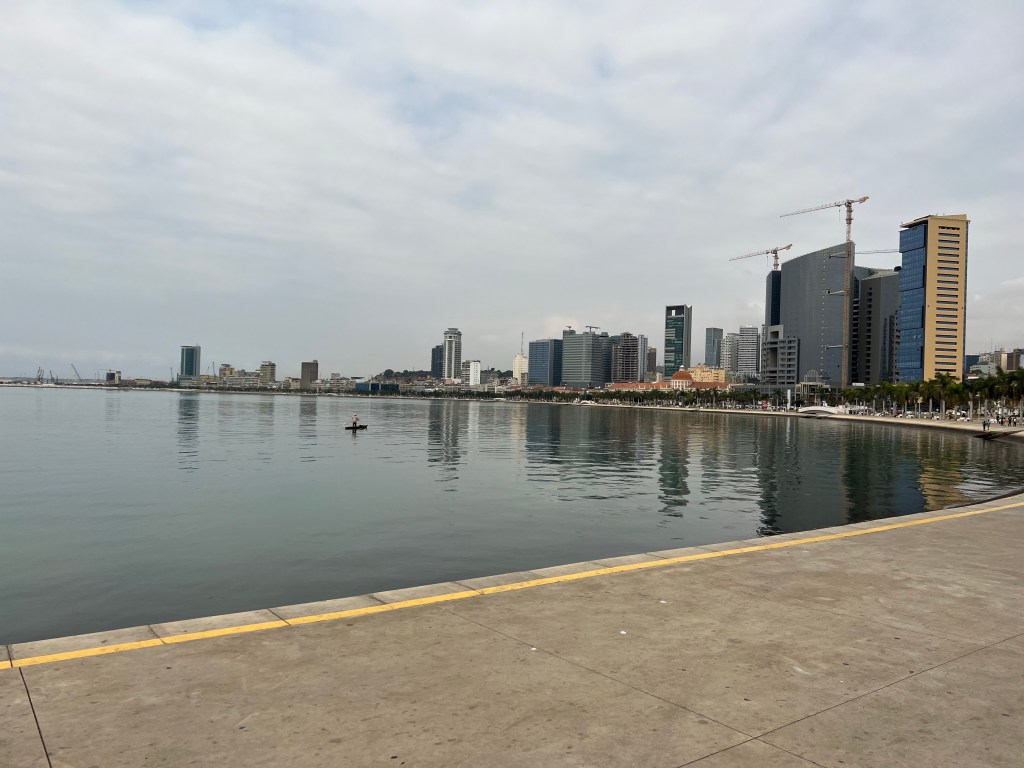
The ride down the coast to Luanda was bland, the scenery was monotonous and villages scarce. One night stop we camped. At 5.00pm when we look for somewhere to camp we asked some ladies at their house and they didn’t feel they could make the decision. There was a bit of a delay and then we thought we should look elsewhere, but now we are fighting the daylight as it gets dark so quickly and when it is dark it is really dark with no electricity for miles around. A guy at a small bar near to an army camp said we could camp there…… not looking great….. everyone smoking weed and then on the whiskey……But we didn’t have any choice and although rather noisy as they like to play music really loud into the night, Coronel the bar owner couldn’t have been more welcoming and helpful, bringing us water to wash with and checking we had enough food.
Angola is farmed, large swathes of well organised farming, particularly near rivers stretch out into the distance. This is a first on our West African bike ride. Not since Morocco have we seen neat green cultivation and lots of people working the land. It always troubles us why in so many countries they despise farming and don’t see it as viable business, preferring to buy everything imported from far lands. This is great for us, plenty of fruit and vegetables to buy on the way and when buying things we have lovely moments of kind connection with colourful people. Perhaps it’s Angolans colonial past where huge areas were cleared and farmed on a vast scale, but this all collapsed and was let go during the 30 years of war. So there is a different ethos on agriculture here that other west African countries don’t have. It’s like the hugely ambitious railway, built in the 1920’s, that went from the coast at Benguela across Africa to Zambia to extract copper, which was all blown up and destroyed during the war, but now repaired and runs at least as far as DRC. Things seem to happen here although there are numerous problems too as you might expect with corruption and vast disparity of wealth.


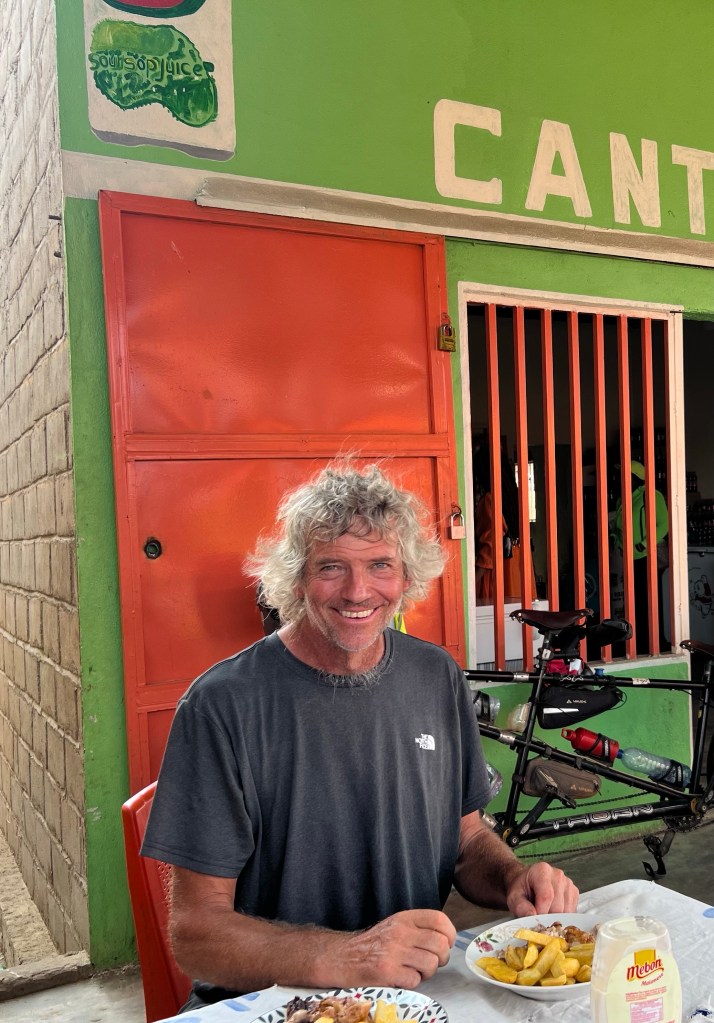
The road south from Luanda was a struggle, busy with lorries that were well driven but the road was too narrow. The ride was stressful and noisy. I felt my motivation slipping and was hitting a wall that was sapping my energy. There weren’t adventures and we weren’t discovering this beautiful country. We needed to get off this road and find the real Angola.
Nearly halfway down the country we took a small road inland with the hope of picking our way as far as Lubango on tracks and quiet roads. Soon we were climbing in the mountains, surrounded by greenery, rivers, waterfalls and peace.
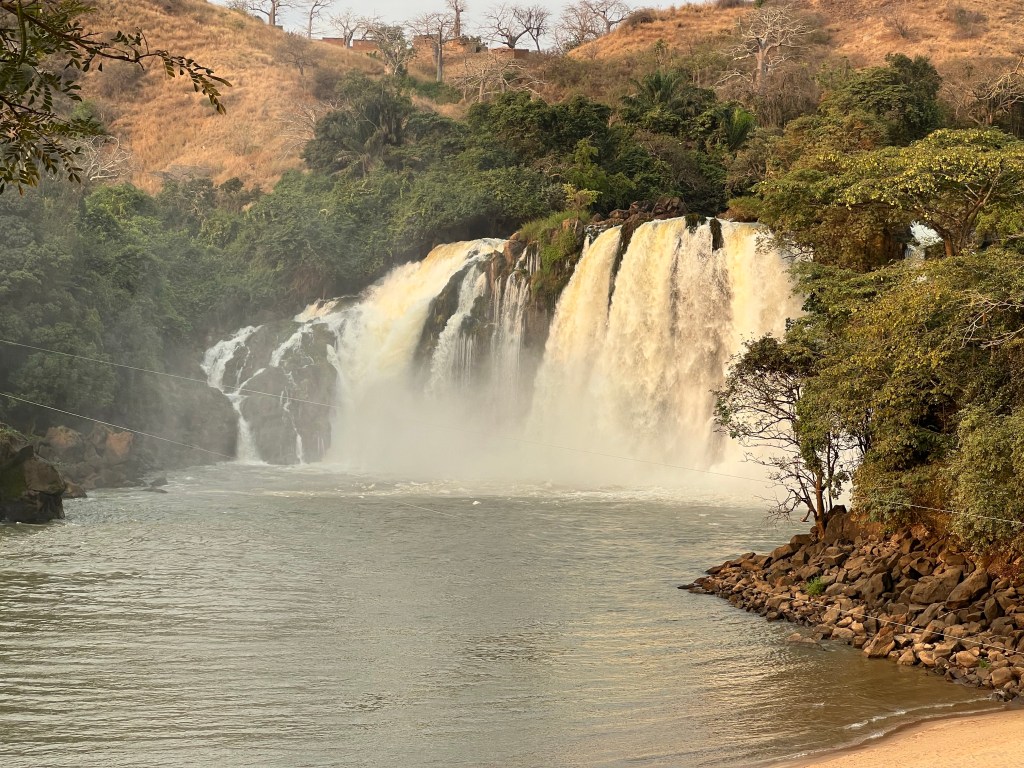
The harsher scarred landscape dotted with unsightly industry in various stages of haphazard construction and abandonment, wrecked plant and machines and unsympathetic ripped open landscape, all associated with the main road and larger towns, slipped away as we climbed winding smaller roads. This gave a feeling of relaxation.
We feel a connection with the villages, the beautiful people with their broad smiles are closer, giving us thumbs up signals of encouragement and calling out greetings.
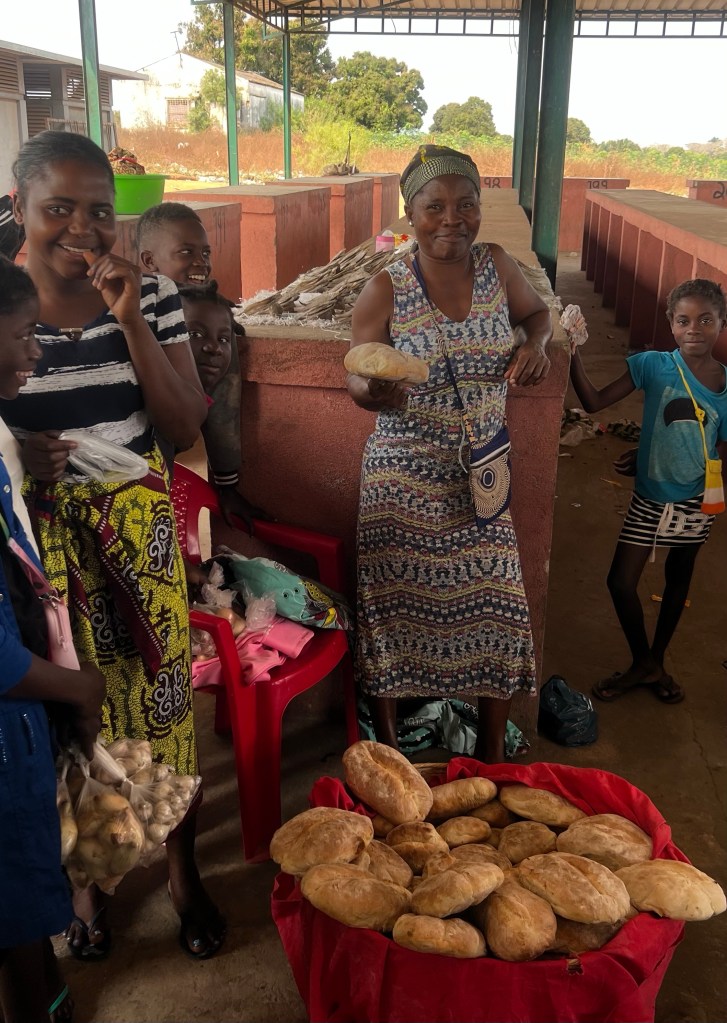
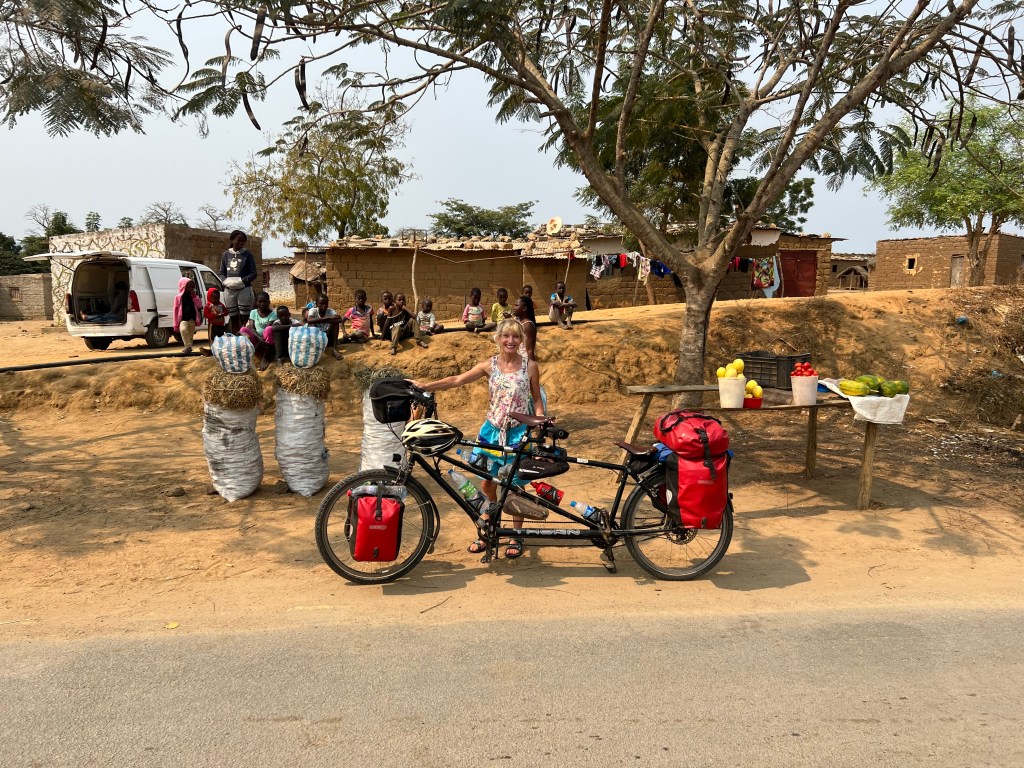
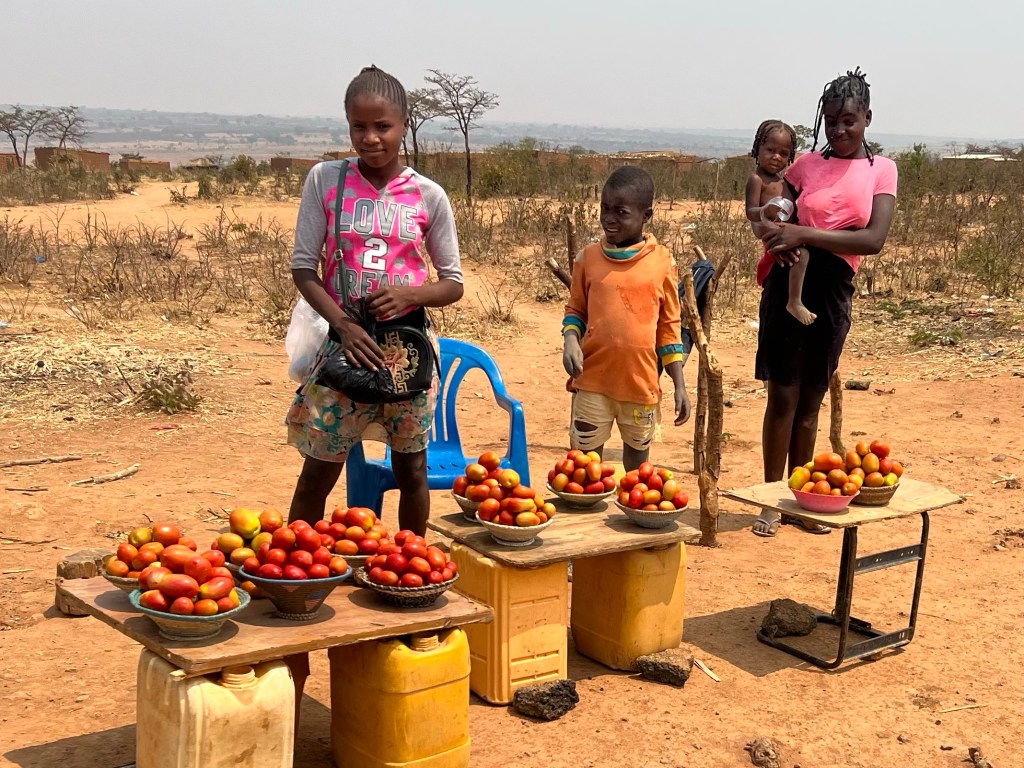
Every stop for fresh supplies, bread, tomatoes, perhaps a papaya or avocado, are highlights to our simple way of life. Brightly clothed ladies, bunched together often under a homespun shack or in a village market, selling produce laid out in neat piles according to their value, like 4 tomatoes in a little pyramid is 100 Kwanza. There is always so much laughter and chatter. We relish these wonderful enjoyable exchanges.
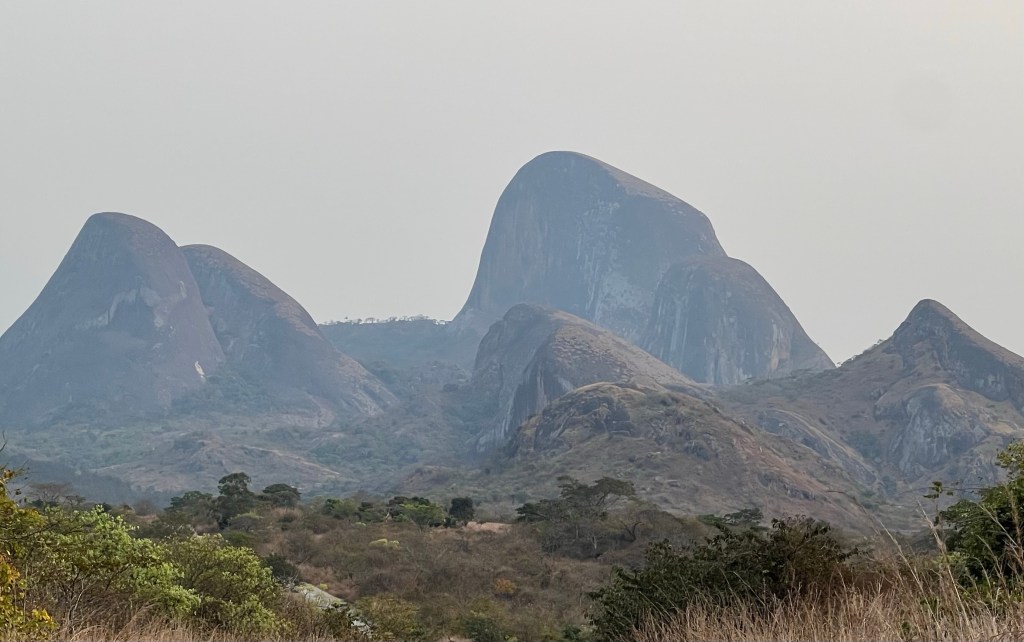
The rutted dusty track winds its way into the distance, climbing from one river and dropping to the next. On the steeper sections the surface becomes menacingly rocky and deep furrows have been gouged out by torrential rain. Luckily we are in the dry season so only experience the aftermath of the rains. Some rivers we wade across, others we push the bike over precarious logs that make up rickety tumbledown bridges spanning small ravines. All around us the scene is dramatic. Huge fissured and cracked slabs of granite tower over the countryside.
We love our Lunch stops perhaps in the shade of a rudimentary church or under a baobab. There is silence in the sparse landscape. Children get braver and braver and sometimes come and sit near us for an inquisitive look. Smiles and warm exchanges without any language. The crude church bell is a car wheel hanging from a tree branch that when struck makes a gong noise.

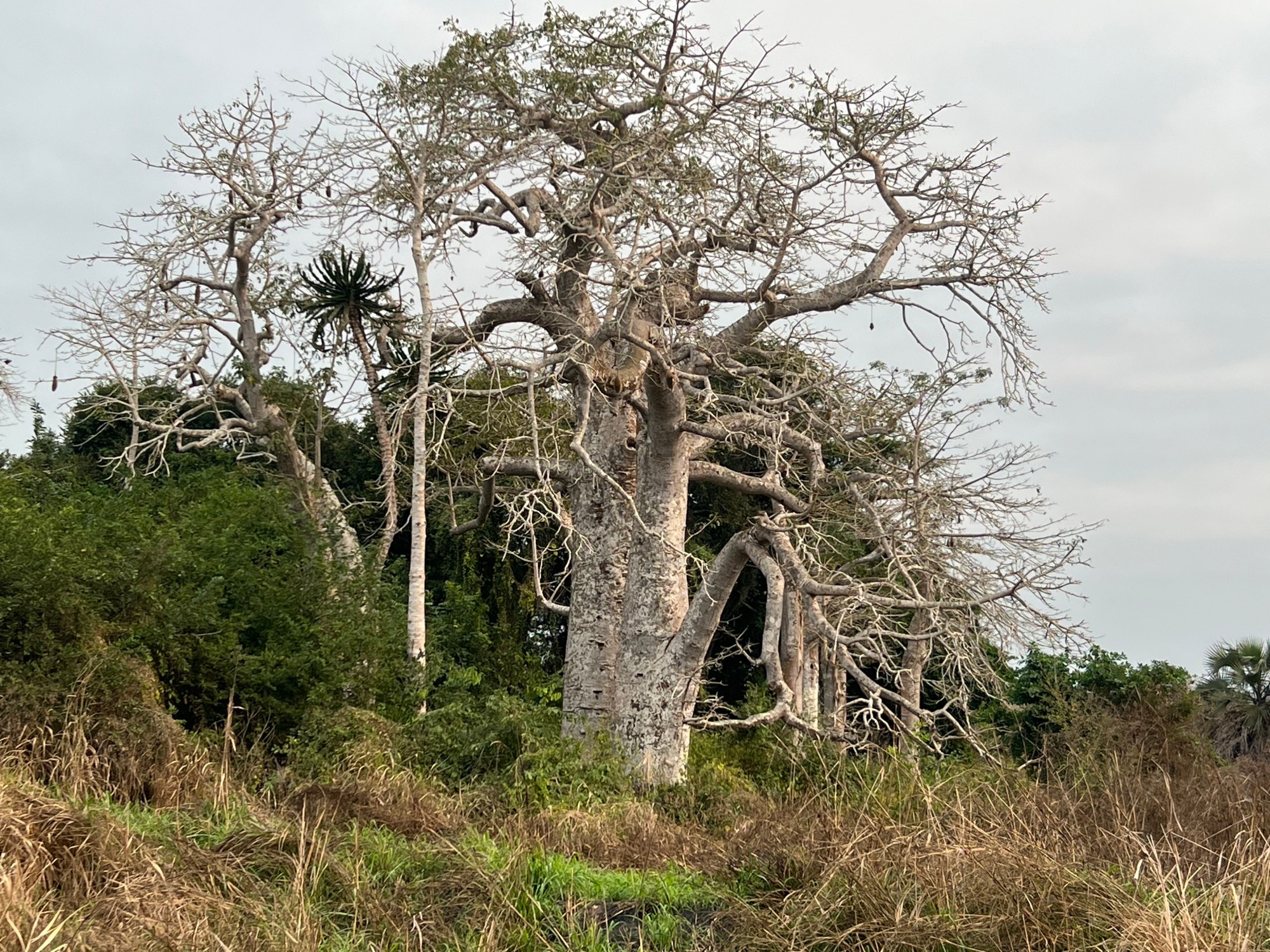
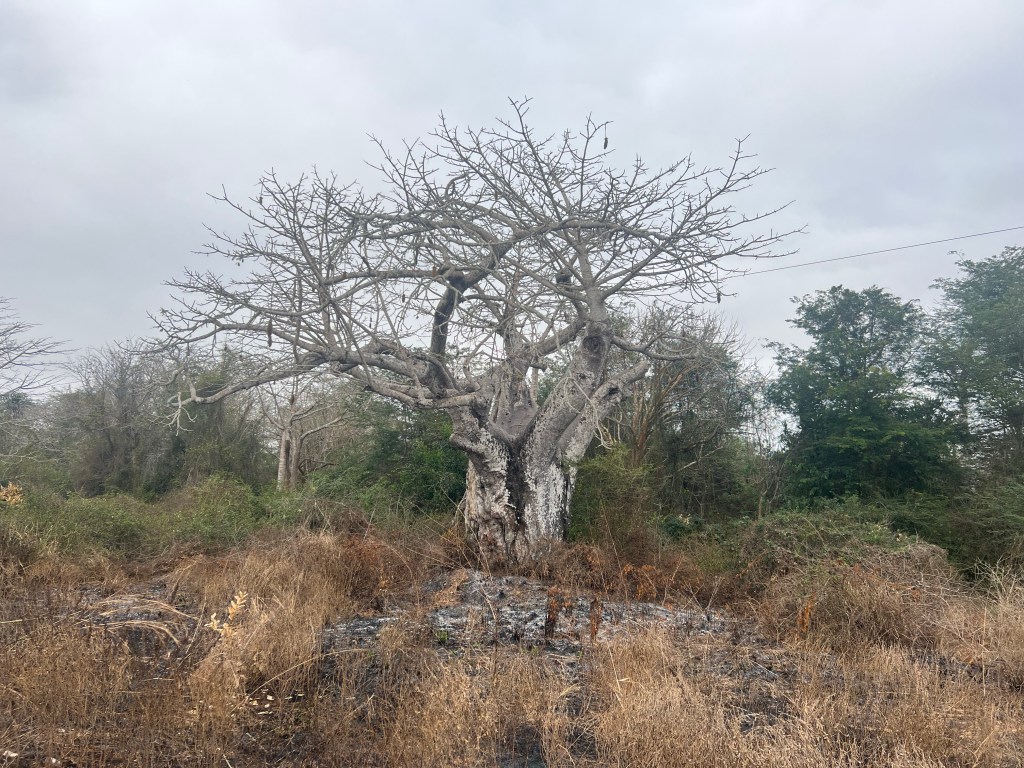
The iconic Baobabs really are a symbol of Angola. They punctuate the wild rocky landscape in a majestic way. Their disproportionate vast trunks and gangly limbs that make up the crown give each tree a character. It’s as if they are from some fantasy children’s story.
Camping in villages might be at a school, next to police station, on a scrap of land between mud houses or once at a small waterworks that had no water. Water for washing has been a problem in Angola. The villages aren’t near the rivers, perhaps due to flash flooding in this more parched land. Water sources like pumps are scarce and often broken so water is stored in Jerry cans and it’s often a mystery where it is coming from so we don’t want to be a burden on their resource. Until Angola when camping a good wash in a river or at the pump was part of our evening routine. It felt uncomfortable missing out on this as we bed down in our little haven of a tent, but we coped surprisingly well partly due to it not being too hot.
We decided to go totally native with the washing and when we got to a river during the day we stripped off, had a good wash and washed all our clothes, put them back on wet and carried on our way. At most bridges over rivers you look down and there are people washing themselves and clothes. Brightly coloured fabric is strewn over the rocks laid out to dry. We just joined in with this daily routine and it felt really good to be clean again.


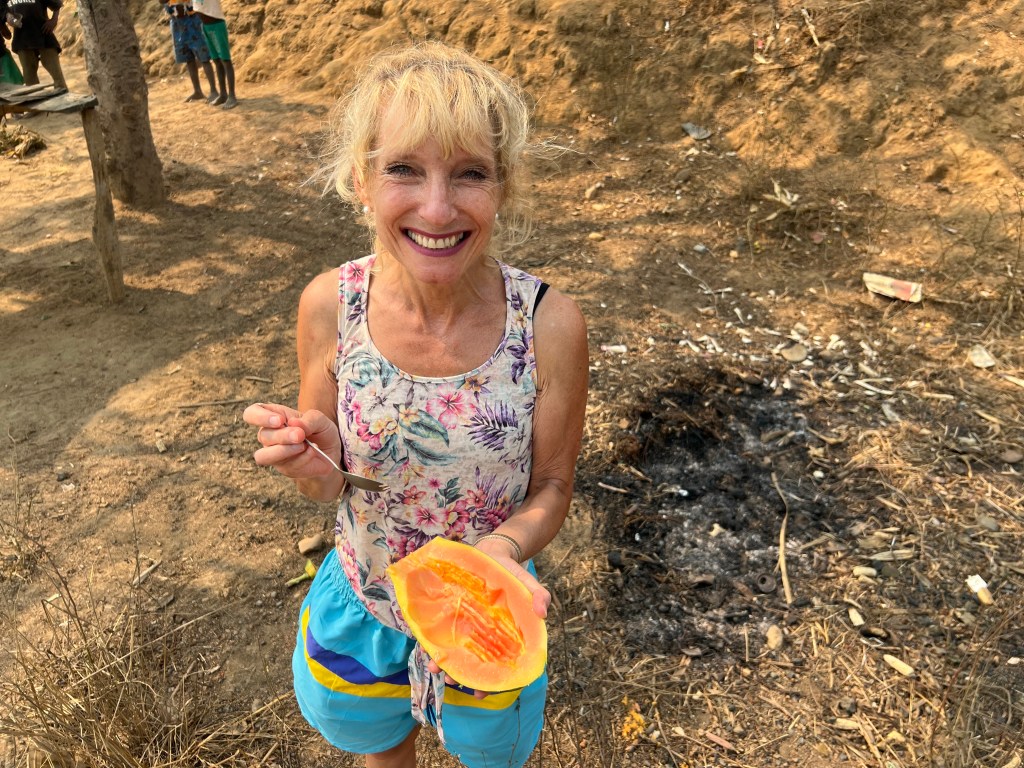
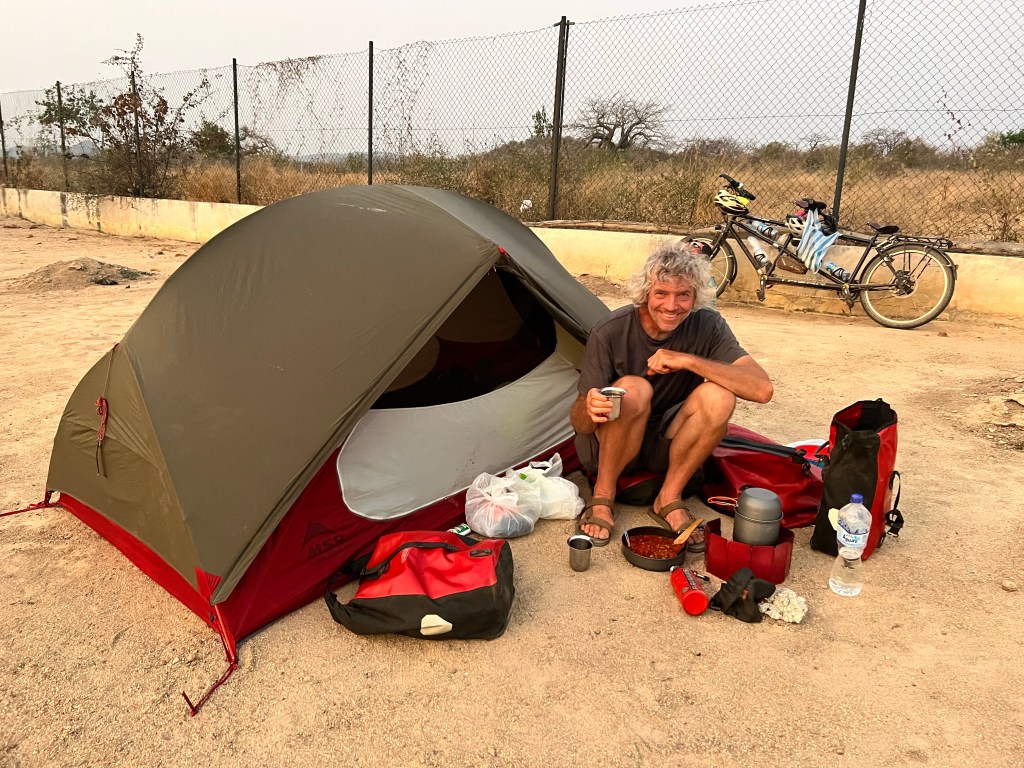


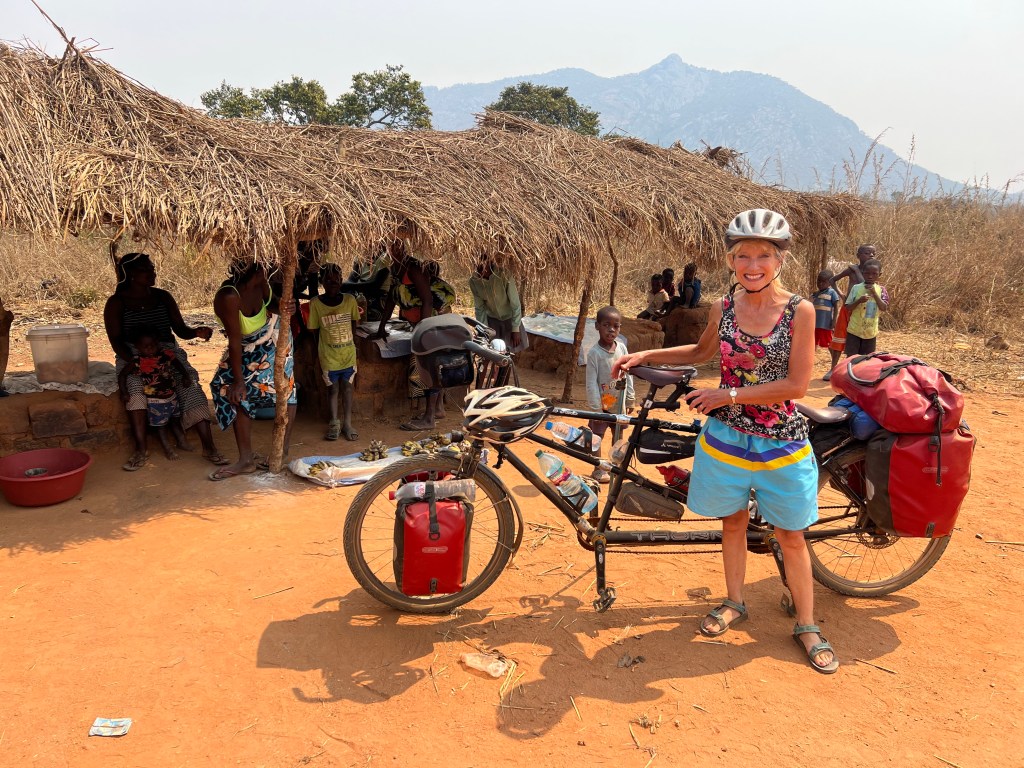
Stopping for bananas under shade of dilapidated grass roof shelter. Kindly ladies and children. We look at them and they look at us. We think about their world that we have momentarily entered. What are they making of us. We have exchanges in no language. Just smiles and friendly communication without words. All day we pass through other peoples worlds. Our eyes cast across a valley, river and mountain, this may well be as far as some of these people know. This is their familiar world that we fleetingly pass. The shape of the land, a patch of cultivation and an iconic rock shape, are all perhaps important and significant to these communities and we wonder whether there are names for all these places.
The life, cultivation and simple mud and grass buildings subside and the rugged parched bush returns again. It’s quiet again. The knarly trees protrude above the brown scorched long grass. But before long the process is repeated, some cassava growing on an irregular plot, then the settlement that blends into the vernacular and again we have entered another peoples world. Day after day we drift from one community to another.


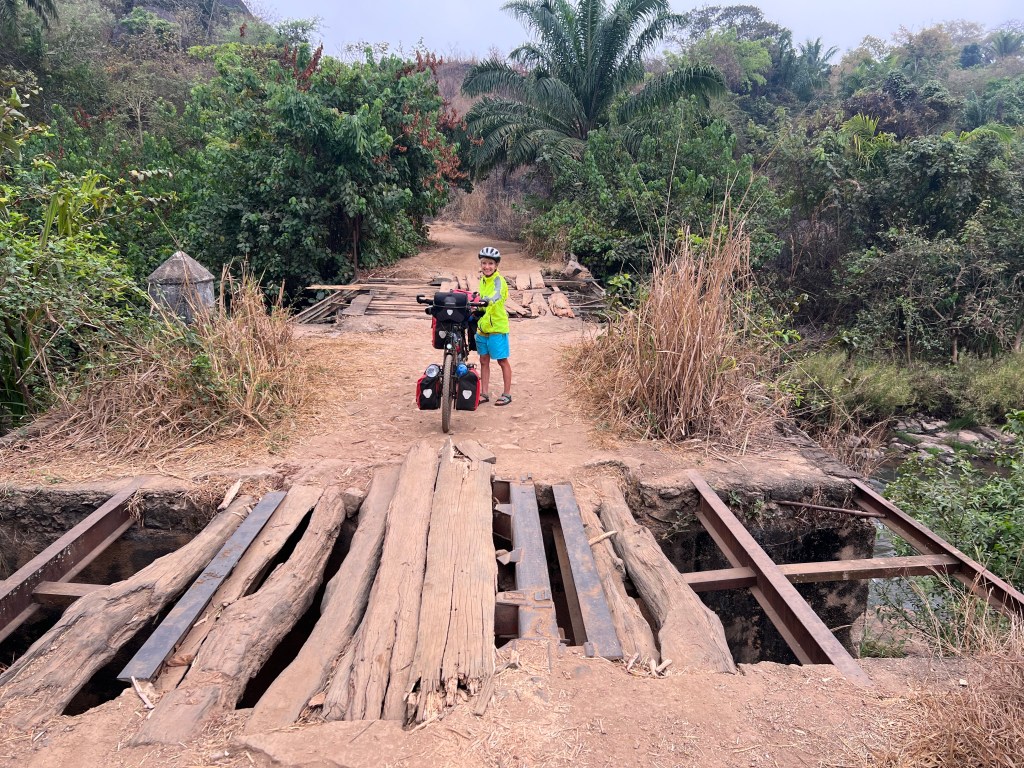
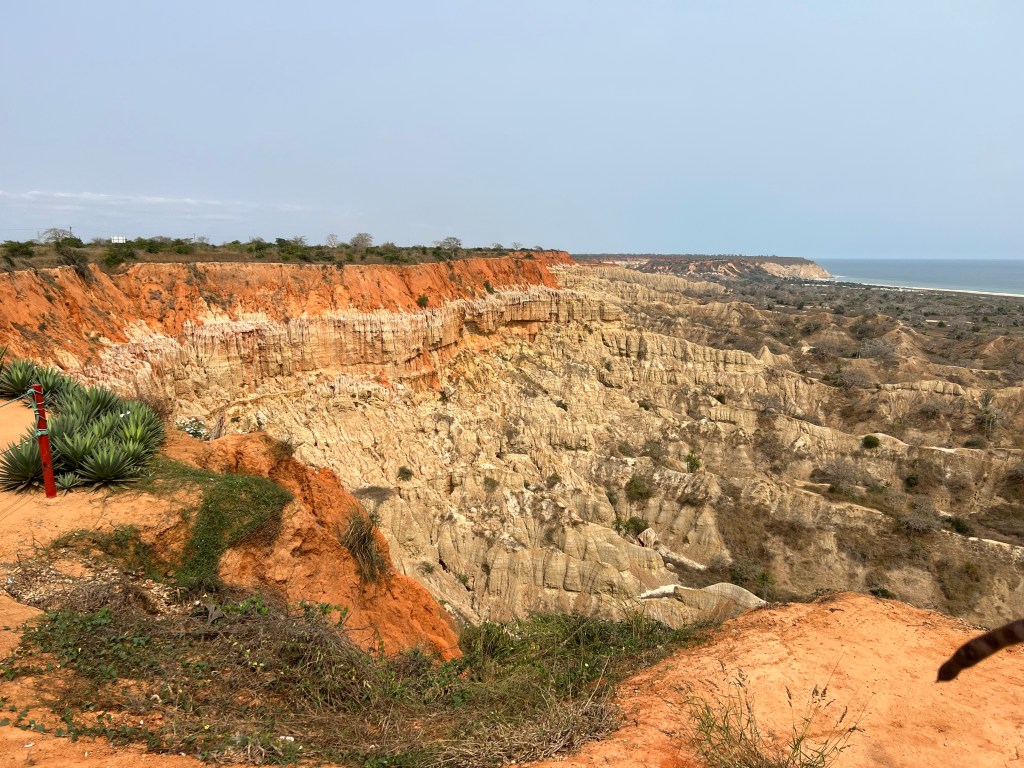
The dusty rough track, fluted by the rains wound itself across the dramatic ochre landscape. Towering rocky outcrops, parched tall grass, punctuated by stunted trees and the occasional splash of vivid red flowers that hung on the naked branches. Mountains silhouetted the horizon, making dark hues as a backdrop to the orange scenery. The remains of bridges, sometimes repaired in a halfhearted way with an odd log, plank, or piece of scrap steel, spanned the picturesque rivers.

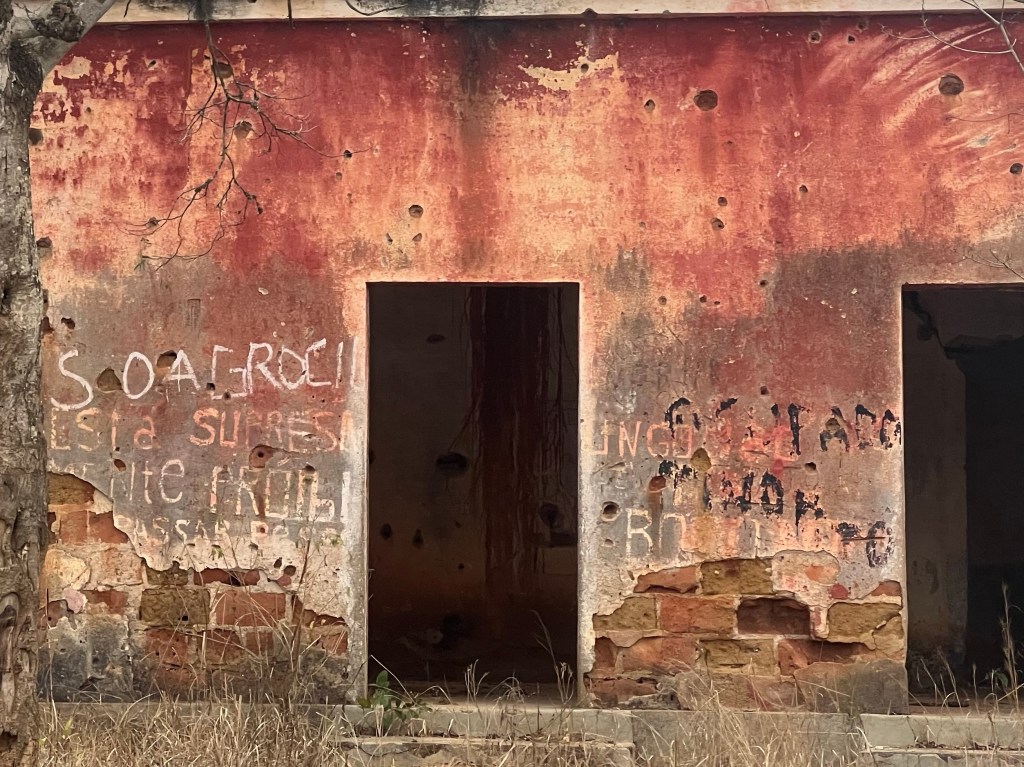
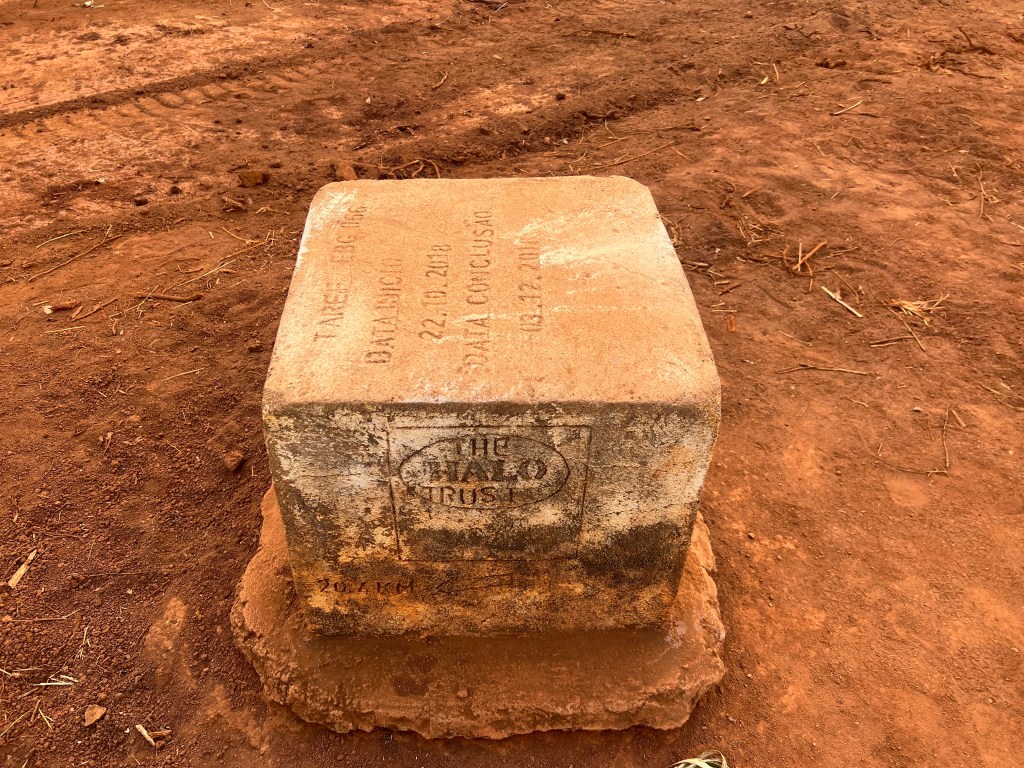
We entered a larger village looking for somewhere to camp. There was a wide main street with older looking buildings set back alongside. The faded pink and purple render facades were mottled and shabby giving a decayed patina. The surface was spattered with dots of missing render caused by gun fire. The roofs and windows were missing, leaving an eerie masonry skeleton of their former stature. The brutal thirty year war had hit this area really bad. Wrecked tanks litter the countryside, vegetation and rocks surrounding them, huge hulks of immobilised iron sat there rusting as a sickening monument. A Halo marker stone indicating dates of mine clearance is another chilling reminder of the terrible war. A war that was fuelled by the superpowers and South Africa to meet their paranoia of communism and loss of colonial influence and power. It surprises us that every village throughout Angola flies the flag of their persuasion, MPLA or UNITA, the two main sides to the war. MPLA was soviet backed and UNITA was backed by USA, right wing Portuguese and South Africa. These are still the main political parties and although there is much we don’t understand we think there must be deep cultural and ethnicity reasons for this rather than reference to warring factions that the country is so far removed from now. One is left wondering whether there would have even been a war if the external powers didn’t play out there conflicts in these peoples lands. The Portuguese left the place in a degree of order that could have worked if the ‘vultures’ hadn’t got involved, like they played around with so many post colonial countries.

Leaving the ghost like main street, mud and tin roofed houses made up quite a thriving resettled village. We camped at the school. It looked perfect on the edge of the settlement, but as is so often the case in Africa a sound system starts up after dark and plays late on into the night. Not usually with many people, but just the menacing overpowering African music pounding out at high volume, normally accompanied by a few tiresome drunk men. This time however it was different. A young lad turned up with his laptop, “DJ Makwana” painted on the lid, and a very worn out distorted speaker system and set up for the evening. Then hoards of children and some women carrying babies on their backs turned up. No men apart from the dj and some of his mates. It was Thursday and school term was starting on Monday and this seemed to be an end of hols disco. They danced barefooted on the hard mud with such wonderful rhythm and sung their hearts out into the night. All ages from toddlers carrying baby siblings to young teenagers. We watched the different friendship groups dancing and playing, girls keener on the dancing, boys scrapping about and running through the crowd. This time the music had purpose and it was a sweet event for all the children.
Where were all the men? It was refreshing to have them absent from the party. Sadly African men contribute little in the rural idyll. Women collect water, wash clothes, farm the land, bring up children, cook and sweep up. Men wander round with a machete on the way to getting something from the bush and sit around drinking. We try and always engage with women when we want to camp as it’s more predictable. This stereotype doesn’t extend to everyone but it is a menacing problem that is always lurking in the background.
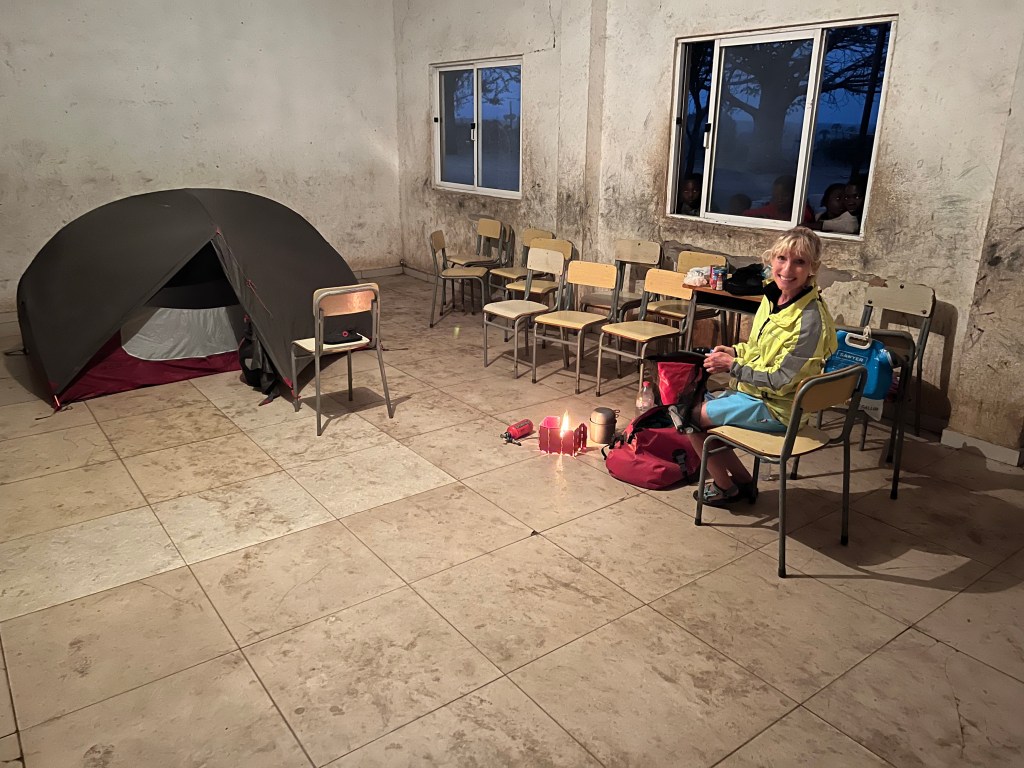
We were about to get into our tent which was now pitched in one of the classrooms and an elder man wondered in and went straight for Helen in a threatning sexual way. He was drunk and it took some defusing to get rid of him. The place had been so calm and reassuringly safe. Now late into the evening we were shaken by this. We couldn’t believe again on this trip normal boundaries were crossed in this unpredictable way and it left us frightened, similar to the Cameroon encounter. On the rough roads where we experience so much we also feel very isolated and remote. Alcohol again was the cause, but we have become used to where ever we are that people are just kind and look after us. We have always felt that people would be worried if anything happened to us and they would be there to help. No one helped on these occasions. In Cameroon the whole village was drunk, here the loud music meant no one noticed. We slept in a disturbed way listening out for his return. We were shocked. It was erratic and outside our experience of rural people. The remote location left us feeling vulnerable.
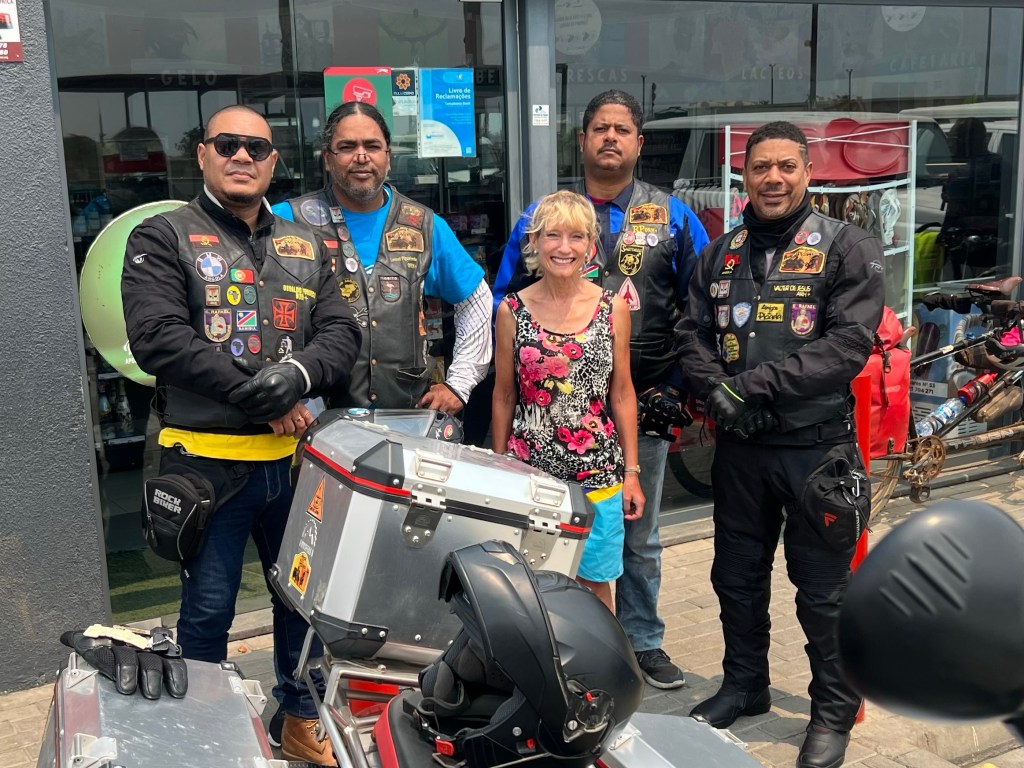
After this sadly we decided to return to the tarmac main roads which were luckily now much quieter in the south of the country. As we approached Benguela the usual city busyness builds with more traffic and blue minibuses swerving around picking people up and dropping them off. At one drop off point a van reversed back to catch an extra fare and in his determination didn’t see us which resulted in us being struck down in the road. It was alarming as we lay on the dual carriage side but luckily there were no injuries and the bike was fine, just our frying pan in the front pannier got rather bent. It was a slow motion accident and we reassured the driver we were fine and not to worry. What was shocking was a mob of youths descended on us as we lay there. We initially thought they wanted to help and lots of shouting was directed at the driver, but no, they were using the chaos as a chance to rob us. Luckily Warty noticed them grabbing her phone and she shouted. We were quick to get out of this mugging situation, shook hands with the driver, smiles all round and cycled off at speed. We had come to the safety of the main roads! A few kilometres on there was a modern petrol station with seats and selling coffee. We pulled into this haven for a regroup and regain our strength after the ordeal on the road. An Angolan Biker gang “Amigos da Picada” were drinking coffee. They were such a lovely bunch who spoke English and it was the refreshing encounter we needed.
Climbing once again away from the coast towards Lubango. The landscape changed once more becoming dryer, strewn boulders high on the panorama, baobabs and souring eagles overhead. The ground had become baked and only supported thorny shrubs and trees.
A desert is on the way.
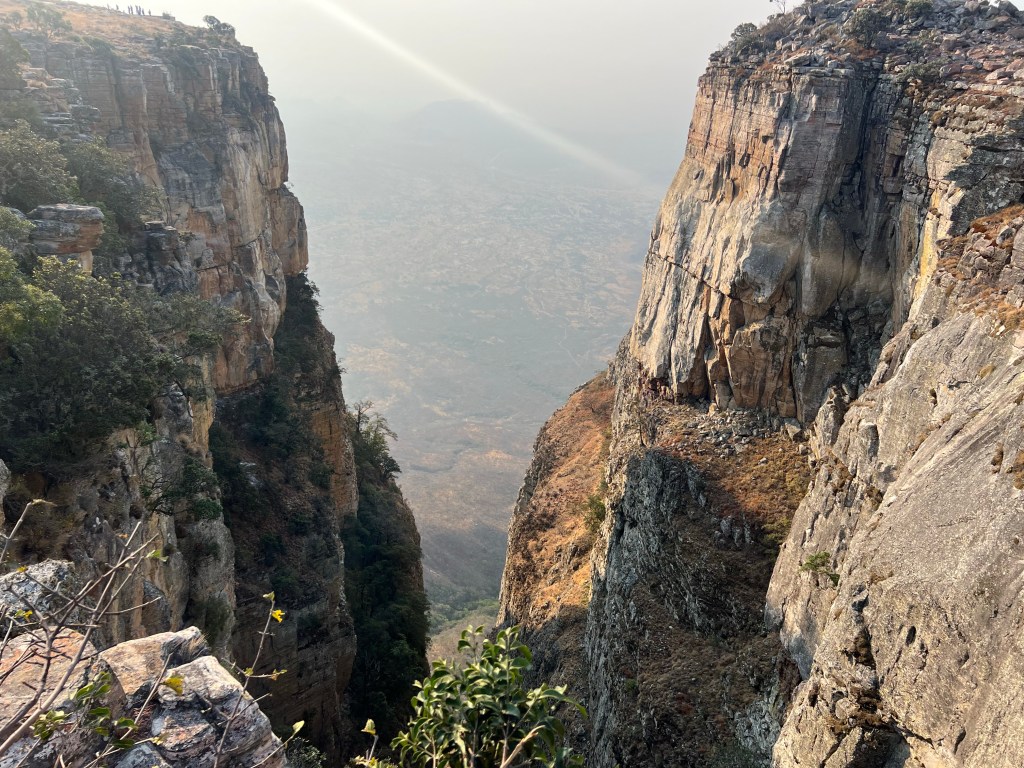
The days went by crossing the impressive rugged countryside and after leaving Lubango the relief flattened and the waterholes for cattle herders became scarcer as we neared Namibia.
The final push to the empty frontier on some very rough and sandy tracks saw the view become dryer and harsher. The villages became scarcer and the cattle herders life looked more on the edge and vulnerable to changes in climate. We wondered how they cope with no rain and if the infrequent water holes let them down.
Some cattle, a lady with baby on her back, a donkey cart and a couple of other women, purposely stride out across our track, kicking up the dust. The environment is harsh. The daily toil to rear a few cattle and provide food for their families is a relentless task day in and day out. We feel super privileged and guilty that we are passing through with our great western wealth and that we can just swan about Africa purely for leisure, when these people are on a continual tread mill of grafting to live and bring up their children.
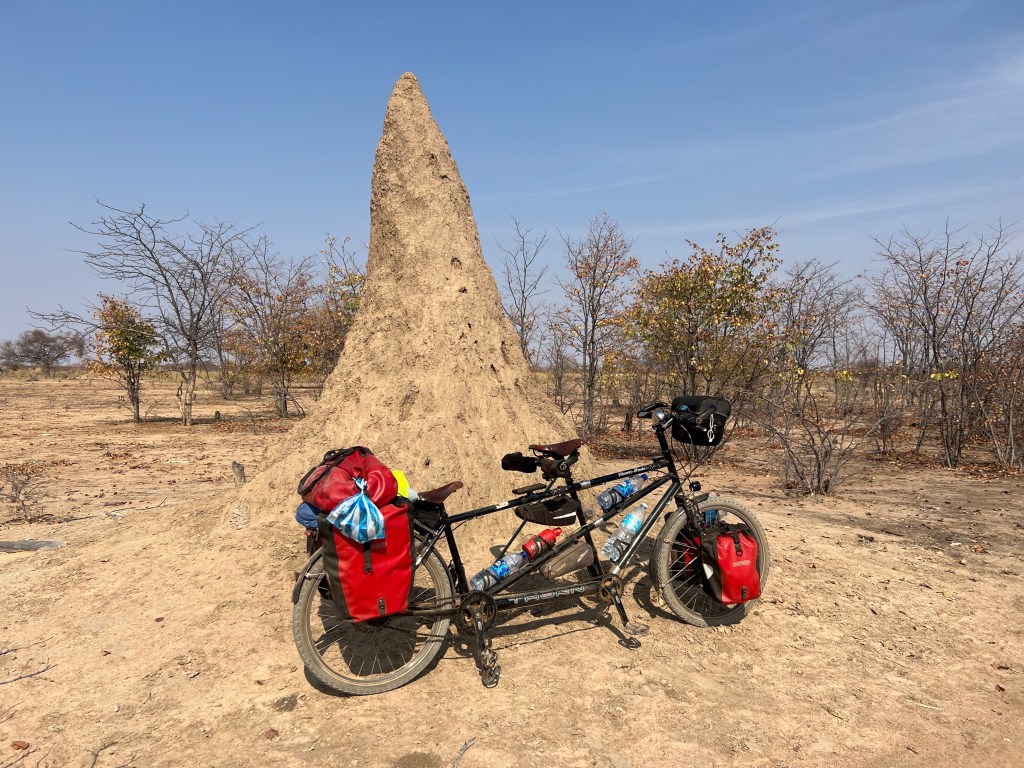
The villages are now made from wooden sticks and branches under thatched grass roofs. The wind blows through them keeping them refreshingly cool. The houses nestle behind high irregular palisade fences that form a large village compound. This keeps the cattle and goats out. It’s all about livestock now. There is some arable farming but generally is livestock and large areas of land are fenced off enclosures made from heaps of thorny branches, prickly pear, cactus, or more elaborate rough picket fences that are bleached silver in the sun.

It’s hard going with a lot of pushing the bike through the sand the 90kms to the border post with Namibia. The final town in Angola feels very remote and dusty, but to our surprise there is a Mauritanian run shop. We drink tea with Mohamed the shop keeper and think back to last summer when we were crossing the Sahara and reminisced about drinking this sweet tea in the desert and how it fuelled us on our way.


Thank you for this wonderful narration of a very adventurous trip. It was good to see so may great photos followed by an incredible story. I am from Africa, I wouldnt dare a trip like yours. Hats off to both of you. See you in UK !
LikeLiked by 1 person
So nice I met you ! You are AMAZING !!!
LikeLiked by 1 person
So lovely to meet you Annabel
LikeLike
Fantastic to have met you. All the best.
Greetings Ursula and Herbert the two Swiss.
LikeLiked by 1 person
Lovely to meet you Ursula and Herbert, enjoy the rest of your road trip
LikeLike