

Feeling much refreshed from a day off and a chance to recharge after the Cameroon experience! We Visited Bitouga, a Baka village in the NE Gabon. Slightly different this one compared with Cameroon. The rain forest round the village has long gone, but they remain isolated with the only access a 5 km walk and half hour canoe trip. In the past there were cocoa plantations around the village and the population was mixed, Baka and Bantu, but since the cocoa became diseased the Bantu left and just left the Baka. Sadly Baka people are marginalised in Gabon, they struggle to get access to services and education, and are hassled by the authorities. This village although bigger and had a greater population was much more impoverished. Some of their traditional way of life had been lost as their recent past had been influenced by outsiders. They can no longer hunt as the forest has gone and they rely only on fishing. It is more known about too, and has had foreign visitors in the past. When you google it some anthropological studies come up from 2007, but nothing else. A French guy, living in Gabon 2016 visited.
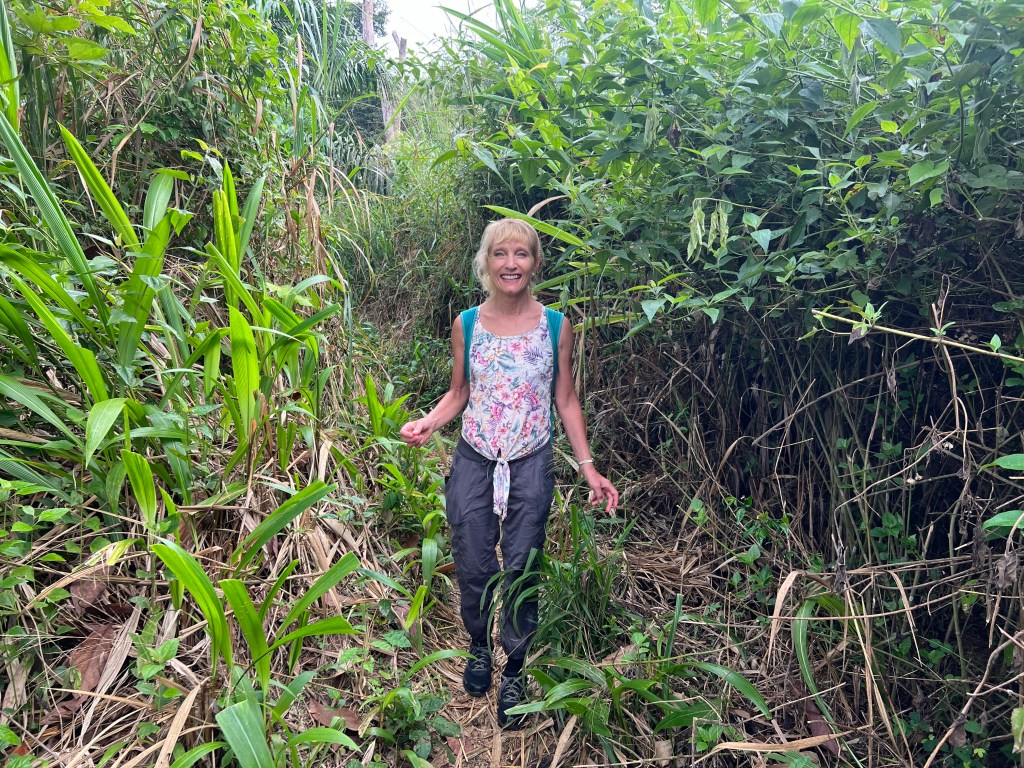
We set off on foot through secondary growth jungle, the grass towering over us, past odd small clearings growing cassava.
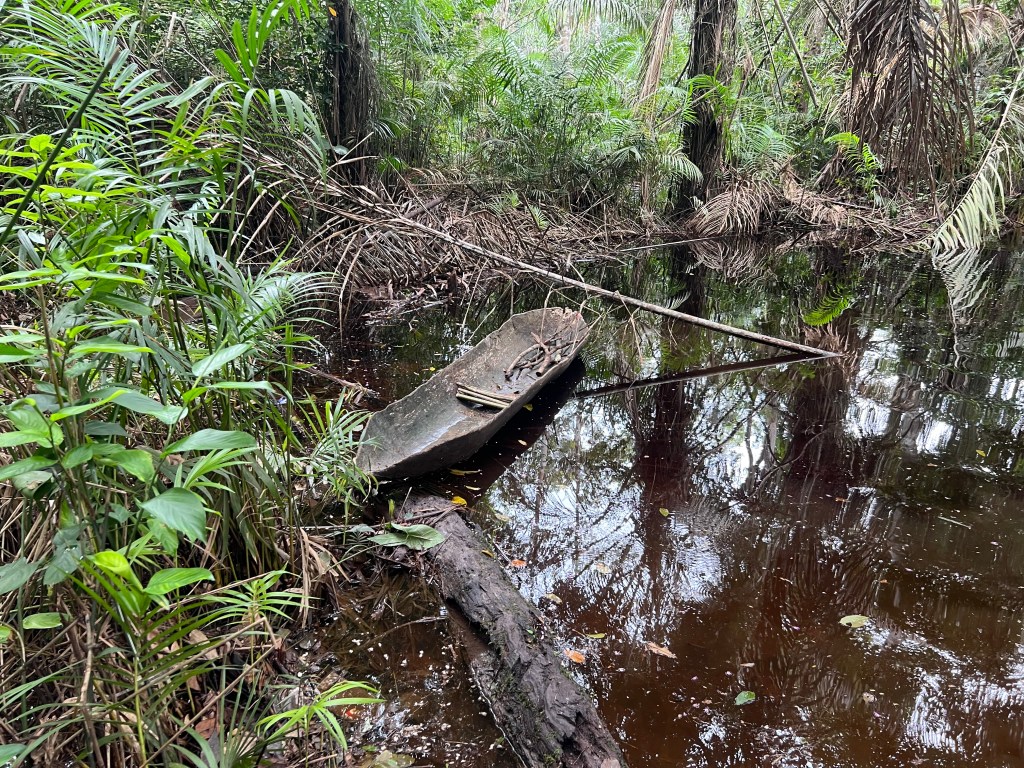
Arriving at the river bank on a small inlet overhung with palms and lush vegetation, we called out to fishermen out on the main river. They were elegantly paddle around their delicate hollowed tree trunks. One came over and agreed to take us to Bitouga. His craft, a fragile looking piece of wood sat low in the water with us in. We slipped out into the main river, a true tropical paradise was around us. The fisherman skillfully paddled the tiny craft upstream against the significant current. We sat very still for fear of capsize. The jungle noise resonated and the canoe paddle lapped the water. We took a side creek overhung with more dense vegetation, manoeuvring under fallen trees.
Villagers met us and we had some nice exchanges. We showed them the video of the Baka at the Sacred Forest. They loved the singing, knowing the tunes, and the children sang as we walked towards the village.
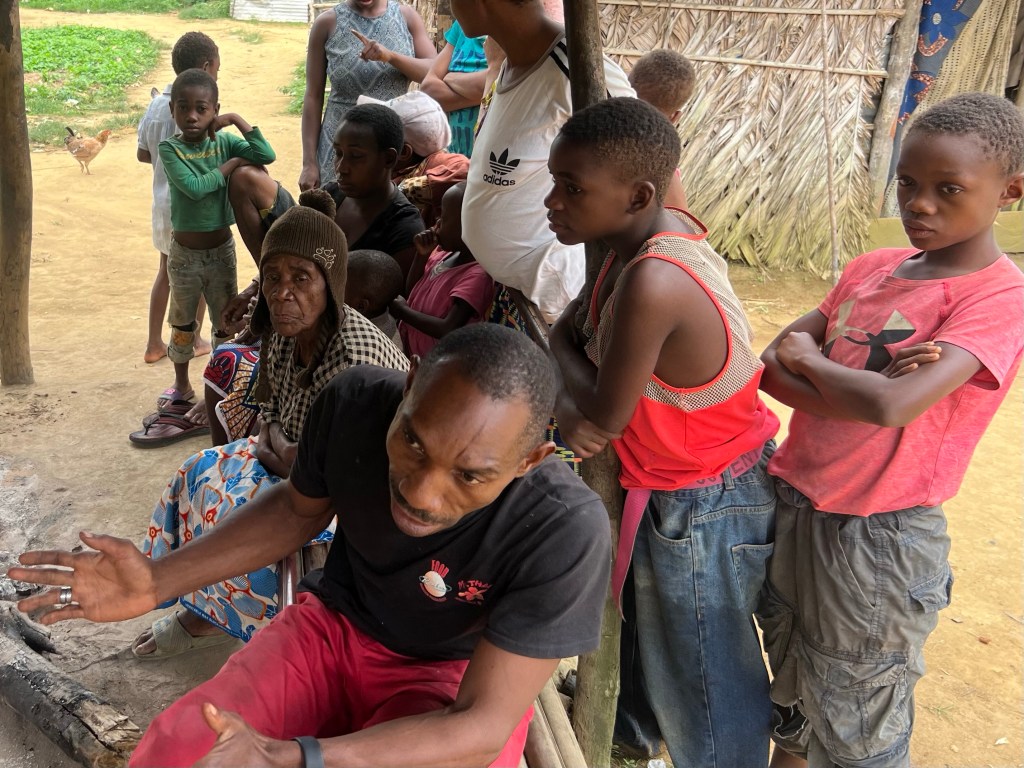
We chatted with the chief and a large group of villagers in a shelter, all sat round a smouldering fire. It was interesting hearing about their way of life and customs. But it was sad hearing about the Baka peoples’ struggles and the Cheifs head was held low as he explained the situation for them. There seemed no future for them. The old ways had long gone with the forest and they were left in this isolated place which you wondered if this is where the dominant Bantu population want to keep them.
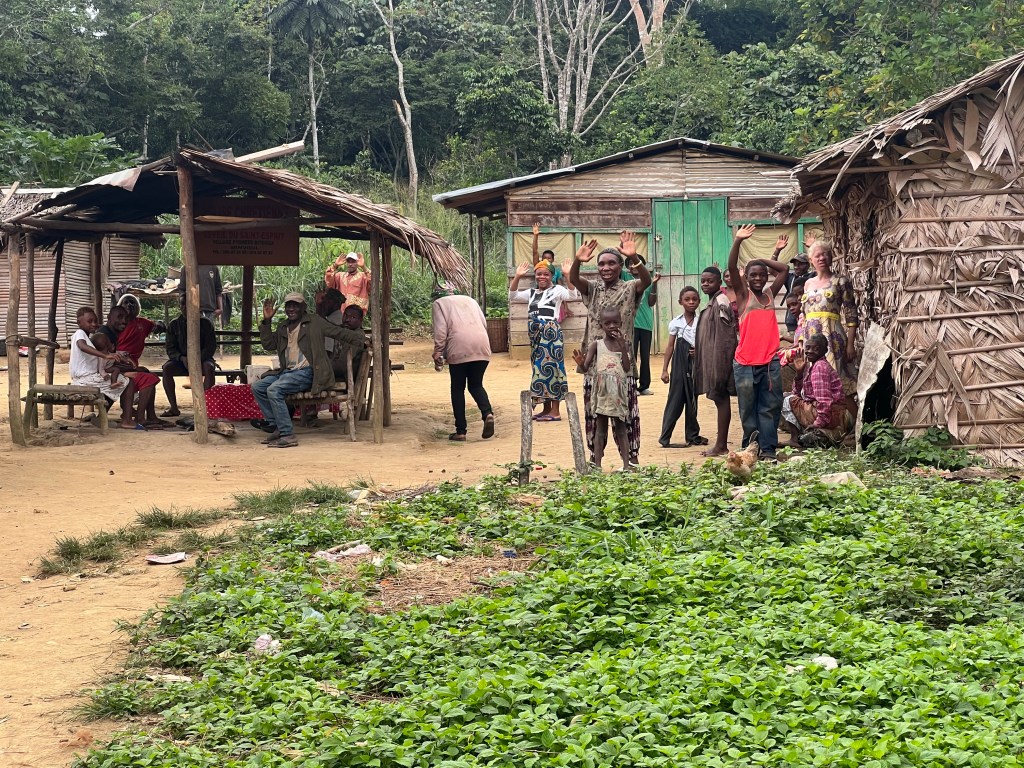
We showed the video again to the chief and most of the village. It brought smiles all round which was really nice. They invited us back in the evening and said they would put on singing and dancing, but sadly we had to decline as are heading off early tomorrow, continuing on our way through Gabon.
It was another moving experience with the Baka and a stunning journey to get there.
They wished us well on our journey through Africa
Really refreshed after staying at Emmanuel’s superb unassuming guesthouse we were ready to tackle the hilly 100km laterite road to Oyem. Friendly villagers called out, often waving affectionately with both hands, sometimes with a machete in one hand, which helped keep us positive on the red roller coaster of rough road. Nearly everyone carries a machete. Often a machete in one hand and a smart phone in the other. The Jungle hung thick and impenetrable either side of us. When it is so hilly we are finding the gravel roads really tough and we are wondering whether we are getting old! It was very long and arduous, making the Catholic Mission, our campsite for the night, a welcoming conclusion to the day.

The Catholic Mission was a huge place with a grand church, but only a few solitary people seemed to frequent the large array of buildings. It made for a peaceful camp and early next morning the air was filled with harmonious singing and delicate percussion music. It wafted through the open screened tall window facades. Only about 20 people attended mass, mainly women, in the vast cathedral, but their heavenly sounds filled the building and drifted beyond. Children gathered round our camp, smiles and chatting as they conversed with us. The two grand priests stopped by in their long elegant white robes. They said they would prey for us on our journey.

The next day was largely taken up by getting our entry stamp at Immigration in Oyem. We had been in Gabon for five days without a stamp and this did not sit quite right with us despite reassurances from the friendly immigration guy at Minvoul. This unease was shared by the officials in Oyem who were rather annoyed that we had entered at such an obscure border crossing. It took time and plenty of smiles but eventually our passports were returned with entry stamps back dated to when we arrived from Cameroon crossing that Jungle clad river by pirogue.
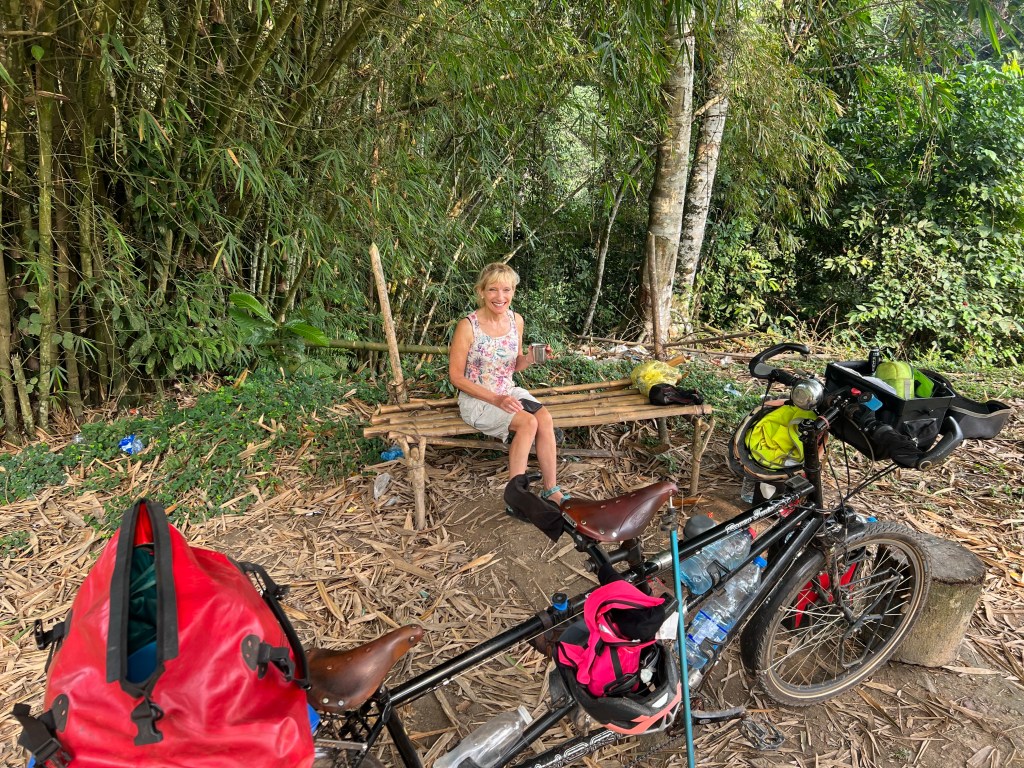
Now on the main tarmac north south highway progress seemed much easier despite the relentless hilly landscape. We were climbing nearly 2000m in a day. The road was blissfully quiet for such an important route. The population is very small and nearly everyone lives in two cities on the coast. We enjoy stopping to brew up coffee in village shelters. Pleasant simple rough timber structures with mud floors and usually some benches and sometimes a table, make for a welcome break.

We push on for Booue on the banks of the river Oguooe , where we hope to find a way to La lope National Park. The tarmac continued until a junction where we camped the night in a village. The village camp routine came out, sorting out where to put the tent up, where to wash, and drinking water source. Then it’s get the tent up, wash, this time it was at a spring, and cook supper, hopefully all before it gets dark, and it really does get dark with no electricity for miles around.
The road turns rough again, and the rolling landscape continues. The jungle noises are atmospheric. We see our first elephant poo, a reminder these animals are close by. We cross the equator, no sign on this track so we make our own line in the mud and symbolically cross to the southern hemisphere. Booue arrives before us as the red rough road emerges from the bush. We stay with an amicable kind hearted Nigerian chap called Mike. Gabon is so cosmopolitan, so many people from all parts of West Africa, mainly to the north and in particular the Sahel countries. Mauritanians run really well stocked shops which we love for supplies.

We explore the town and work out how we are going to cross the Oguooe river to take the 40 km of jungle piste to La Lope National Park. We are concerned about the amount of wild animals on this route, but it soon becomes apparent that the route has disappeared and the jungle has retaken it making it completely impassable. There is a train surprisingly which mainly takes cargo but there is a passenger train each day. Sadly just a week before the passenger train had stopped running. Now we were stuck at a dead end and would have to backtrack two days of cycling. We couldn’t face doing this on the bike so negotiated with some Mauritanians to use their Toyota to get us back to the main road again.

We were back on the main road cycling at ease on the smooth surface up and down the jungle clad hills. The road is quiet, just a few lorries pass us and they drive considerately. Scarce villages come and go and places of any size are very spread out, often 150km. It feels as empty as the Sahara. The jungle is thick and we see the trodden and squashed jungle vegetation where elephants have walked through it and have crossed the road. As dusk falls and we are looking for a village to camp in, the forest has an eerie feel, we expect to see an elephant moving through the prolific vegetation. We play a 1980’s play list on our speaker to scare the elephants away. “The Lion Sleeps Tonight” a suggestion from a friend on Facebook!
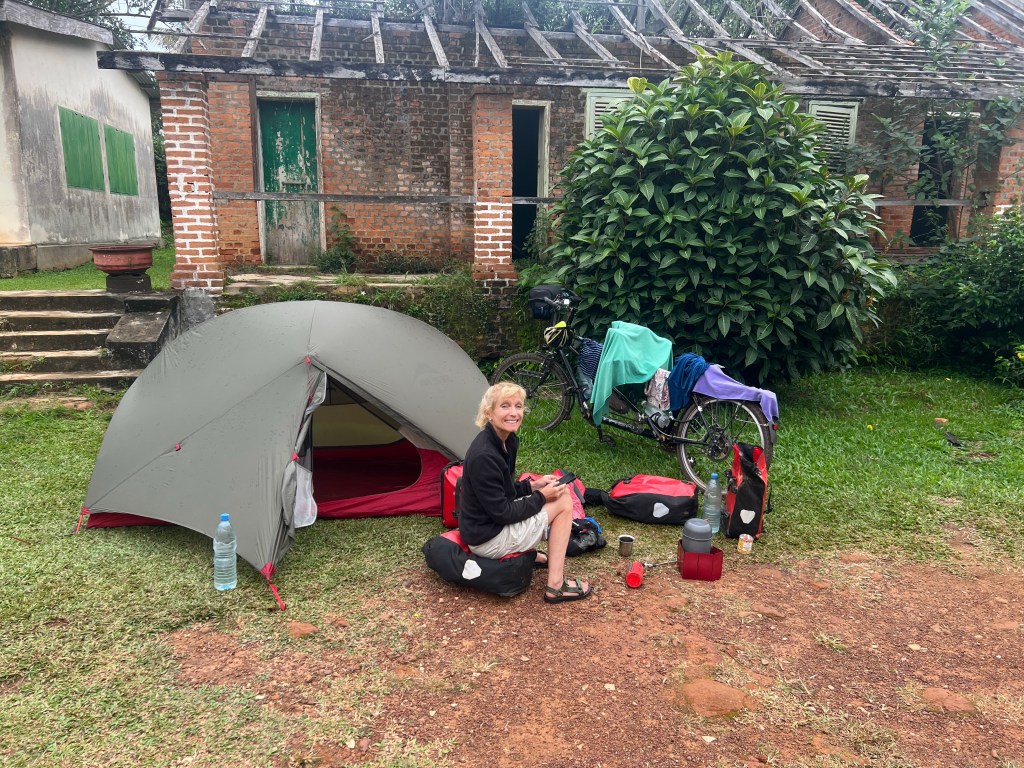
A village appears and we soon go about making the arrangements to camp. It’s so easy in Africa to sort out your place for the night. It all happens so quickly. You befriend the most kindly looking person, sometimes they send you to someone else, like the chief, and you are shown a place to camp. Last night it was on the veranda of an abandoned house. Then you are shown the place for washing, this time it was a small river. This is followed by where you can get drinking water and finally where you go to the loo, usually different places if you want a poo or a wee. All this done in about ten minutes of arriving. You are then just left alone to get on. We work quickly to get the tent up with bedding inside and then head to the river to wash. You have to call out to check whether the washing area is occupied or free! We wash quickly because there are more people wanting to use the place. Like us they want to get washed before dark when everything gets trickier. The river is beautiful and tranquil with overhanging jungle. Then we cook supper ideally just before dark. There is no electricity, so it gets really dark and the light goes quick near the equator.


The next morning up at 4.40am, our normal time, we get our petrol cooker fired up for coffee and noodles. A guy appears out of the darkness asking for a light of his Marlborough cigarette, he is waiting to go to work at the timber processing factory. This village like so many we have passed has probably only been created due to the logging industry. Everyone seems to have work. Life in Gabon is so based on needing money. In this village the only drinking water costs a euro a litre. Nothing is grown here apart from a little cassava. Pretty much all the food comes from Cameroon and tinned food and rice imported from all over the world. The land is sparsely populated, but there is no farming. We have come across this in many parts of West Africa and we never understand how people afford the imported items. Gabon is quite wealthy, there is a very diverse international population here with people from many parts of Africa migrating for the opportunities. The Mauritanians come to run the well stocked shops selling all the imported items at high prices like Europe. Today we have had coffee at a very friendly Lebanese bakery.
Even bananas become scarce and it’s a treat to find some from a kindly lady at the roadside. Her children are brewing palm wine in her garden.
We are now back in the southern hemisphere and have rejoined the Ogooue river which we will be following tomorrow. We think about Mary Kingsley, the quintessential English explorer who traveled up this river in 1895 by canoe, a formidable lady of her time, taking whatever was thrown at her, and refusing to wear anything other than clothes befitting an English lady.
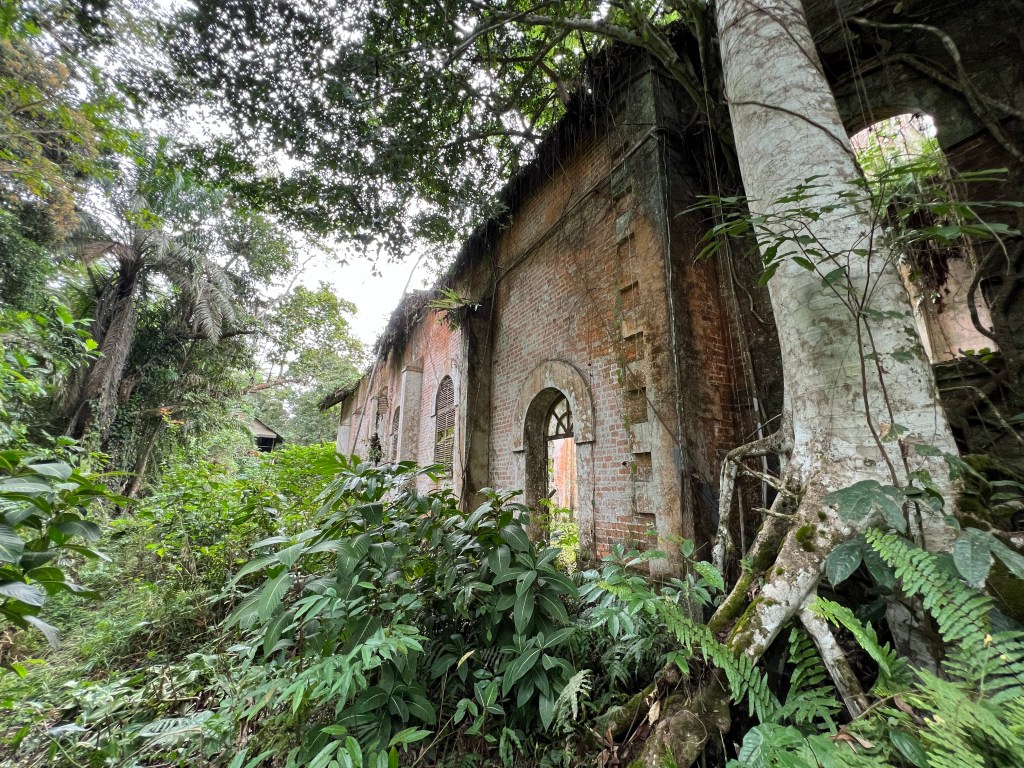
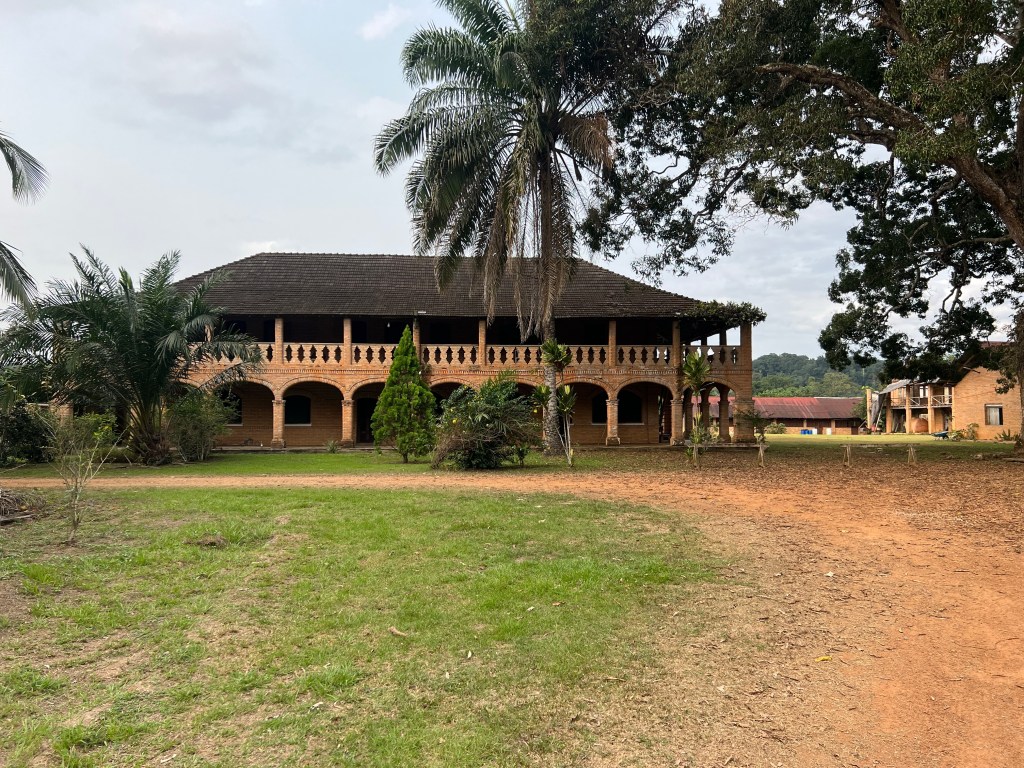
We crossed the Oguooe river to visit an abandoned Catholic Mission that dates back to 1897, a complex of houses, school and a priest internship establishment, deserted in the 1960’s, the jungle is retaking it. The place has a ghostly feel, overgrown with riotous liana twisting around the huge masonry facades with their gothic windows and the debris of collapsed roofs. It’s clear the elephants visit here regularly and perhaps befitting for these giant beasts of the rainforest to hang out in this hulk of this bygone time.
Most villages have a church, but they aren’t normally grand and excessive like we have seen in other countries, which are often funded by American evangelicals to meet their personal needs of giving to Africa. Here they are modest and unassuming with a car wheel hub hung on a post to act as the church bell, and rung by striking it with a stick. Church services aren’t well attended and it’s mainly women who go. Some parts of Africa like Sierra Leone on Sundays you can hear beautiful singing and melodious music playing every where.
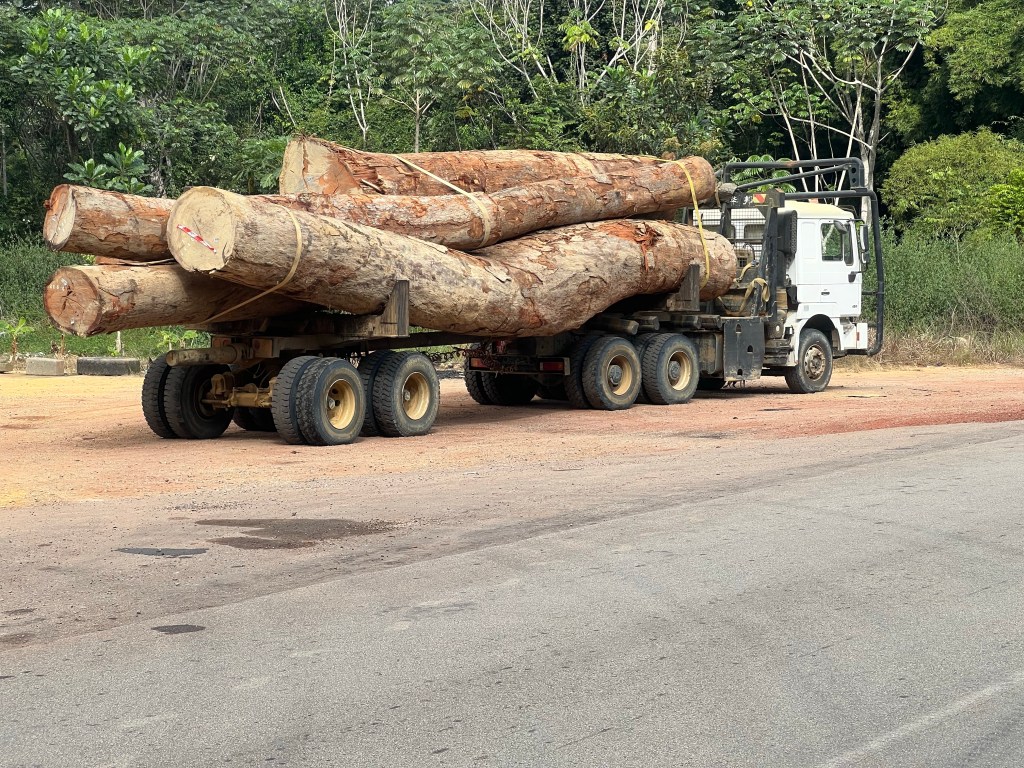
We push on through the hilly Gabonese jungle. The road deteriorates with broken tarmac potholes that sap our energy. The logging lorry convoys became more abundant and we have to get off the road to let them pass.

We get to Lamberene and stay at Stayat the Albert Schweitzer Hospital guest house on the banks of the Oguooe river. Quite an amazing legacy left from a lifetime’s work by Dr Schweitzer to provide healthcare for the Gabonese dating back to 1924 and still running as a working non profit making, highly respected hospital today. Despite his rather dodgy ideology associated with the Africans it’s an interesting place to stay.
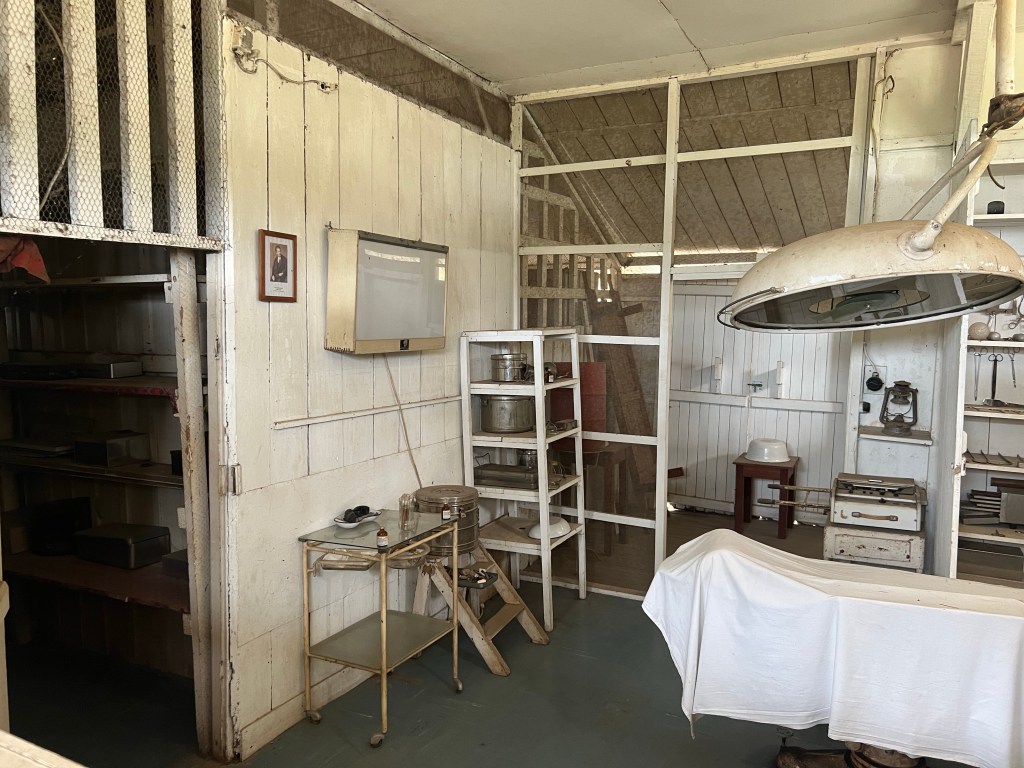
A fascinating day looking round the old hospital that Albert Schweitzer set up and ran for all his life, 4 years out of medical school until his death. Totally dedicated to treating the Gabonese and nice to see there is a new hospital here in his name today. We went out on the Oguooe river looking for hippos.
Camped at another extravagant Catholic Mission. Quite useful these places, built around a hundred years ago, a huge complex of two churches, a school and training college for priests, plus alot of accommodation. But now pretty much deserted just a few people seem to be living here along with the priest and trainee priest. The place is decaying and it doesn’t look like much goes on. The priest has a very new white Toyota Hilux which he took us in to look at the river. Would have preferred to walk but that wasn’t really an option. Don’t know who is funding this and the other Catholic missions. A very friendly and a nice place to camp though.
From leaving the mighty Oguooe river the landscape changes to savanna. Parched countryside in the shadow of a mountain range that separates us from the coast, keeping the climate a lot dryer. Random wild fires dart across the bush.
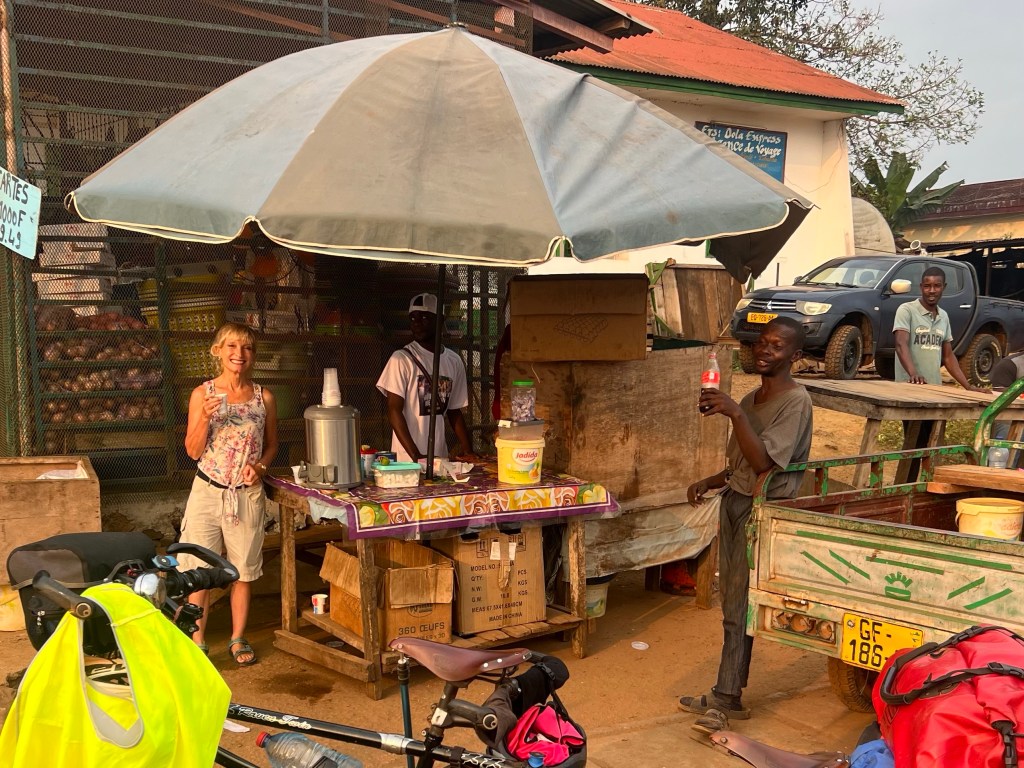
At Mouilla we noticed coffee and breakfast places. People were eating and drinking coffee rather than having no food and drinking beer which has been the norm! We stopped for coffee and spoke with the lovely Cameroonian owner. From the North he is Muslim. We had noticed a lot more Muslims in town and hence the food and coffee culture. We enjoyed our coffee sitting on bar stools at the counter of his shop. On leaving he wouldn’t accept payment, that Muslim hospitality for the traveler again.
It’s been a refreshing change in Gabon not having the heavy drinking that we experienced in Cameroon.
Had a lovely lunch stop in the middle of nowhere. Two Congolese people stopped out of curiosity. Their enthusiasm and jollity for our bike and adventures abounded. They had spotted us in Mouilla and when they saw us stopped up for lunch they screeched to a halt and reversed a long way back.

A very empty fine tarmac road took us to Ndende the last town in Gabon. We are closing in on Congo. We stocked up supplies from a Mauritanian shop just in case Congo doesn’t have them.
Still 48 km to the border, but immigration formalities needed to be done in Ndende. A slow tiresome process that involved waiting a long time for the smartly dressed chief of police to turn up.
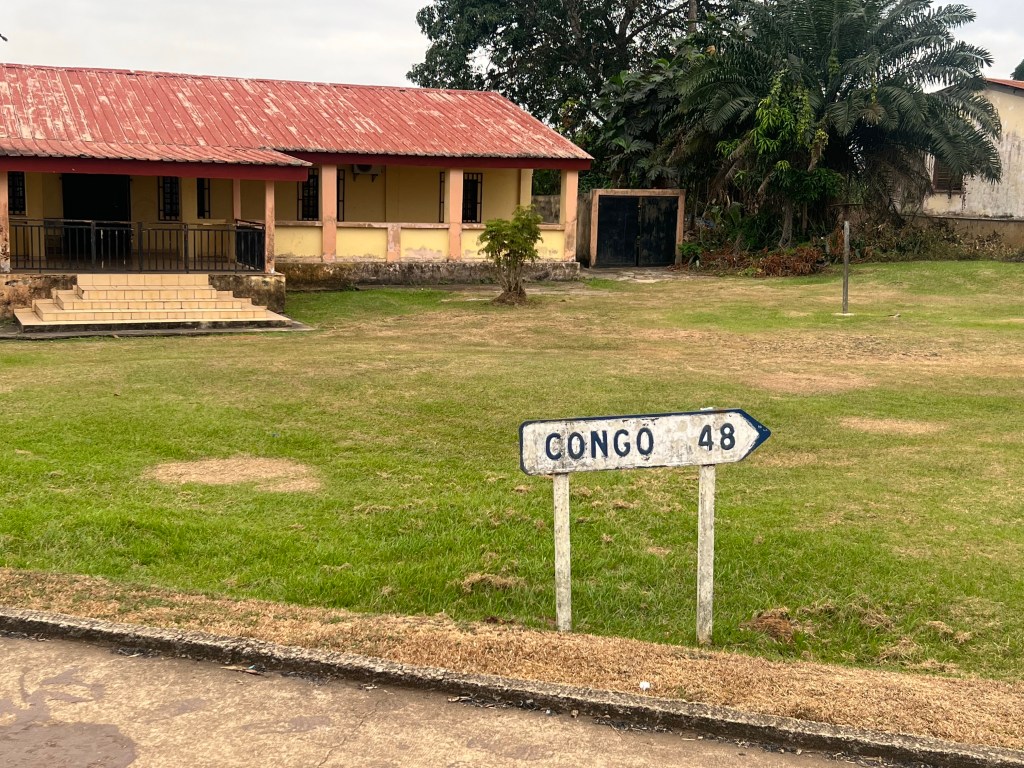
The dusty track narrowed and became deeply rutted. Progress was slow but luckily there was no water about. In the rains it must become impassable. The villages became scarce and there was a remote feel as Gabon just petered out into a red dusty nothingness. We only saw three other vehicles that day. This is the main route to Congo but we guess just not many people need to go there from Gabon. Even in this remoteness there were still three checkpoints which slowed us further as our details were entered into ledgers.
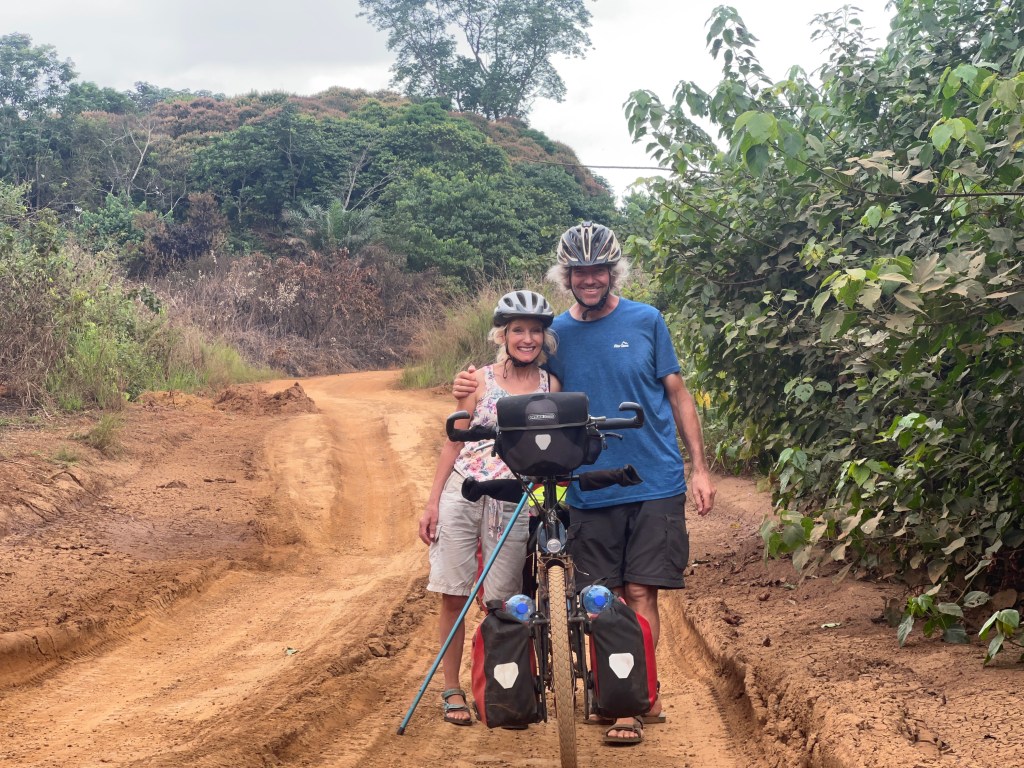
Eventually we cross a river marking the border. A scruffy sign welcomes us to Congo. The small village of Ngongo is the Congolese frontier. The immigration is quick and straightforward forwarded and the guy says we can camp the night next to the Police Checkpoint. We have arrived in Congo. It’s still a few days of rough roads to get to the first town of any size……

 tandemtravelcouk
Dear friends Thank you so very much for your detailed story about your trip and the lovely fascinating photos. Will have to catch up with you when you are back Take care and enjoy !! Best regards, Aftab & Shruti
LikeLike