
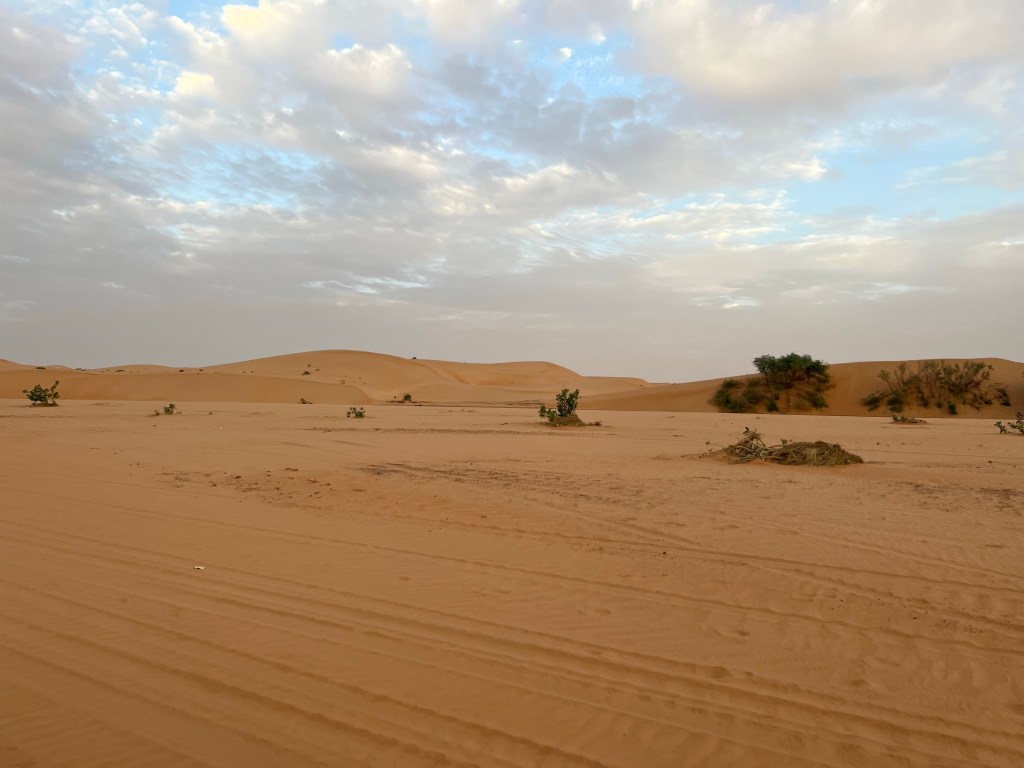
The Sahara, it seemed a distant place when we set off from home. Now we had pretty much crossed it. The last month we have crossed it’s rugged mountains, felt the coolness of the oasis, appreciated the ever changing beauty of the harsh scenery, had endless days of empty windy sand and learned about the diverse peoples that make this inhospitable place their home. The ethnicity of the people has been shaped by travel, pilgrimage and trans Saharan trade routes that have crossed this forbidding place since the beginning of time.
Whilst in Mauritania, the middle of the desert it only seemed appropriate to visit the iconic historic town of Chinguetti. Up there with Timbuktu, an important centre for learning, and a crossroads for pilgrimages to Mecca and trans Saharan trade routes.

Chinguetti, some 800 km north east of Nouakchott, we decided to leave our bike behind and go by car. Travelling at high speed in a gleaming white Toyota Hilux we swerved round the pot holes and sand drifts and in a day crossed the sandy desert arriving at an oasis called Tergit where we camped the night. Tergit was a climb into jagged mountains so similar to the Atlas and interestingly the people were Berber.
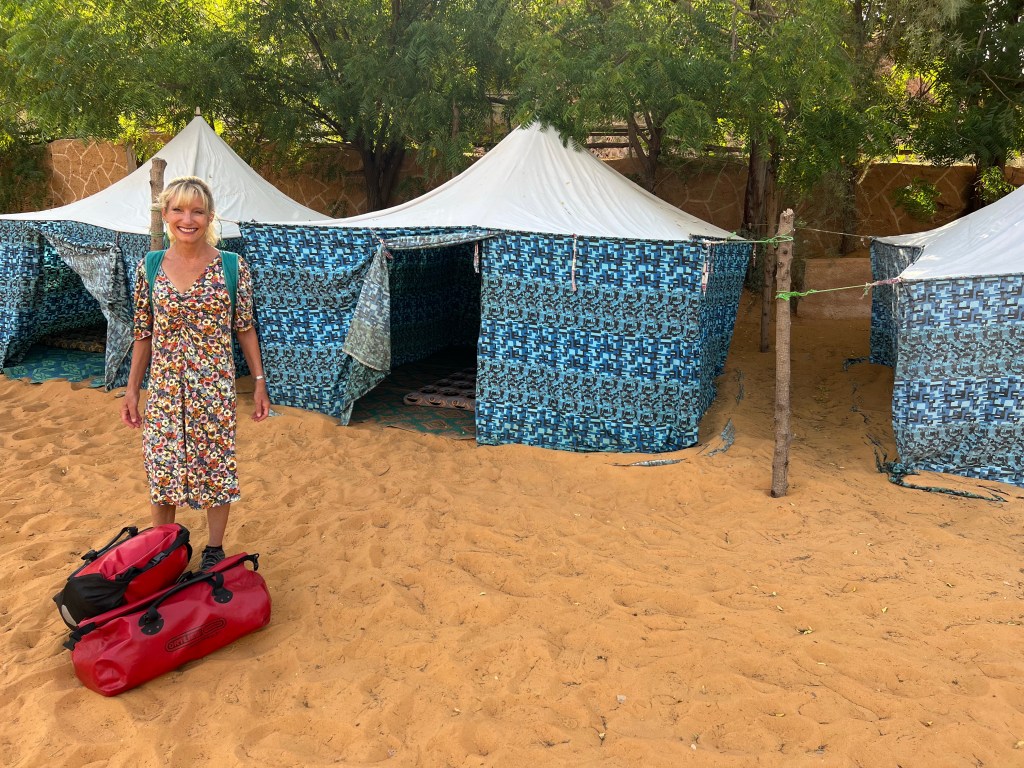
The small camp set amidst palm trees, mountains towering to the skyline, and water running through ponds set in the small palmerie, was frequented by a few other Europeans. It’s always intriguing when you meet people in these far flung places. A really interesting bunch; a mixture of expats working in Mauritania and tourists, a geologist with is wife and very young child, a teacher at the international school, a French guy who had been working with migrants in Mauritania, a German tourist who was walking and travelling the mountains of Adrar, he also told us of his trips canoeing the artic circle in Canada and exploits in Iraq and Afghanistan as a tourist, and a German social worker on a two week holiday to Mauritania.

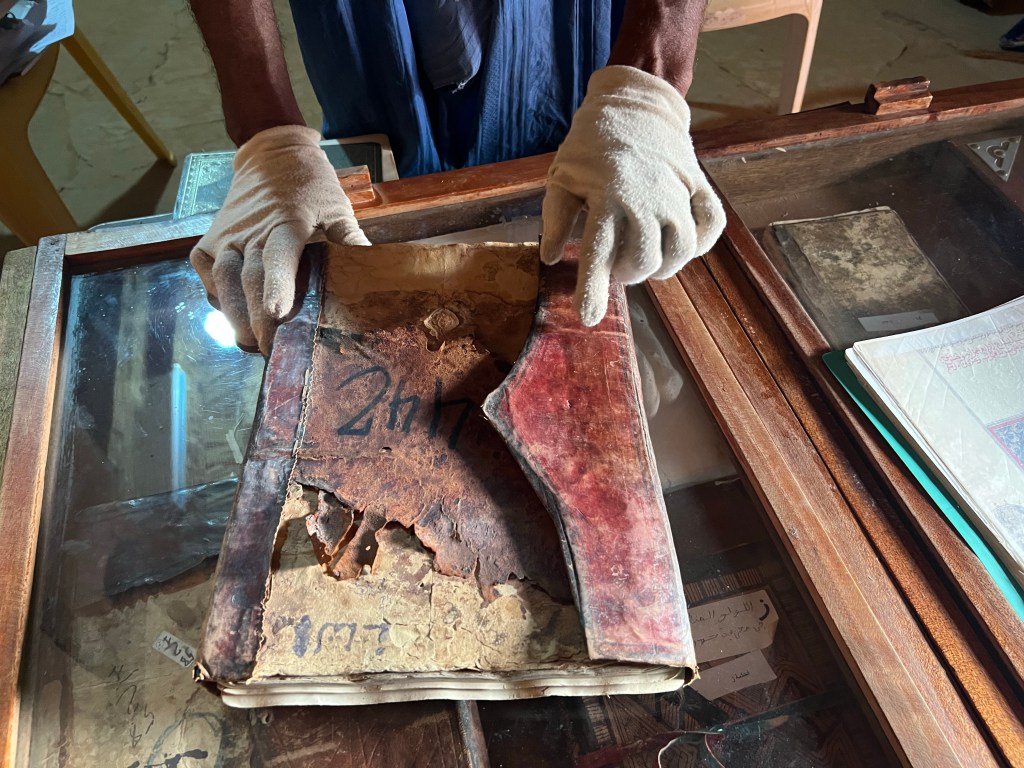
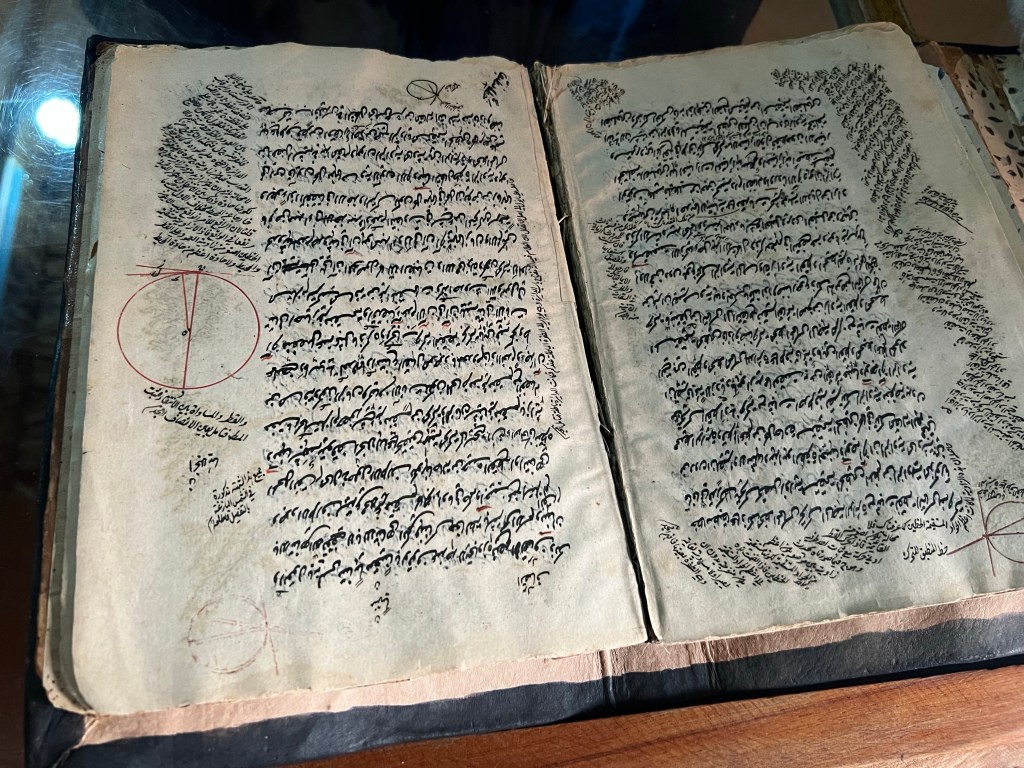
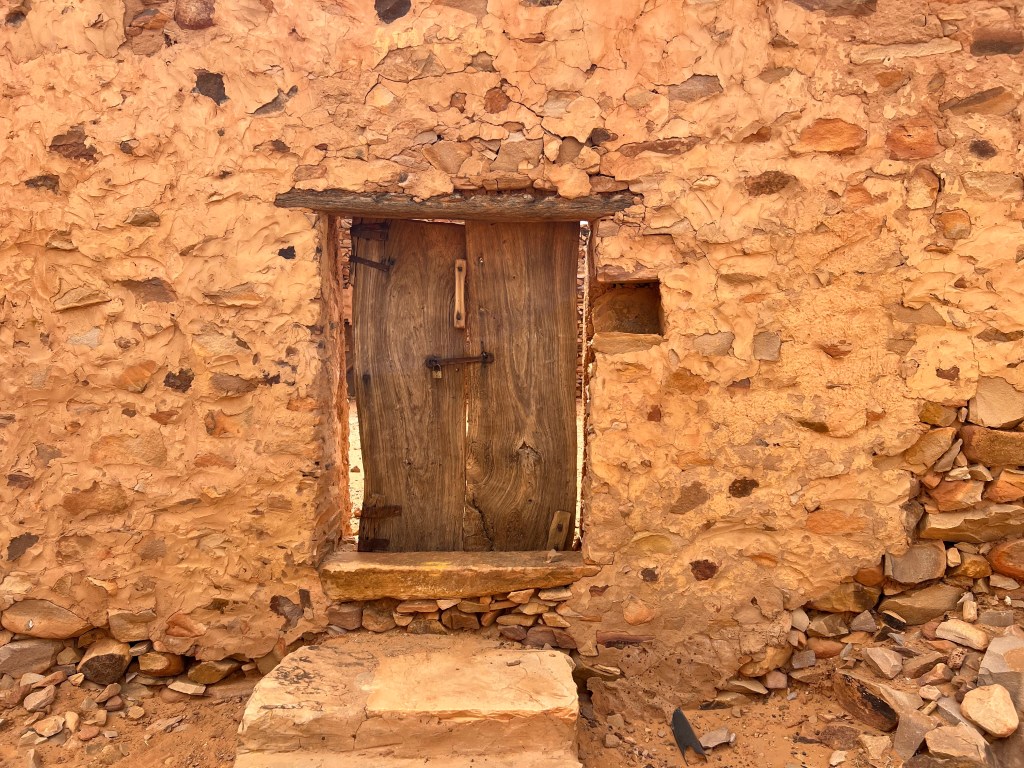
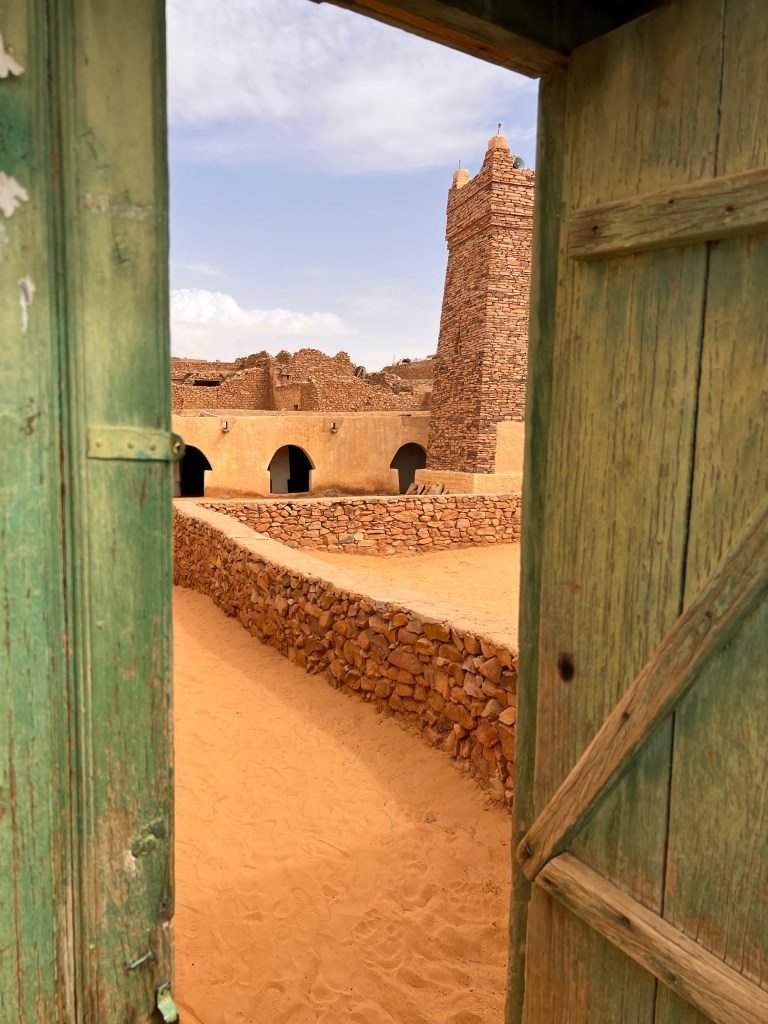
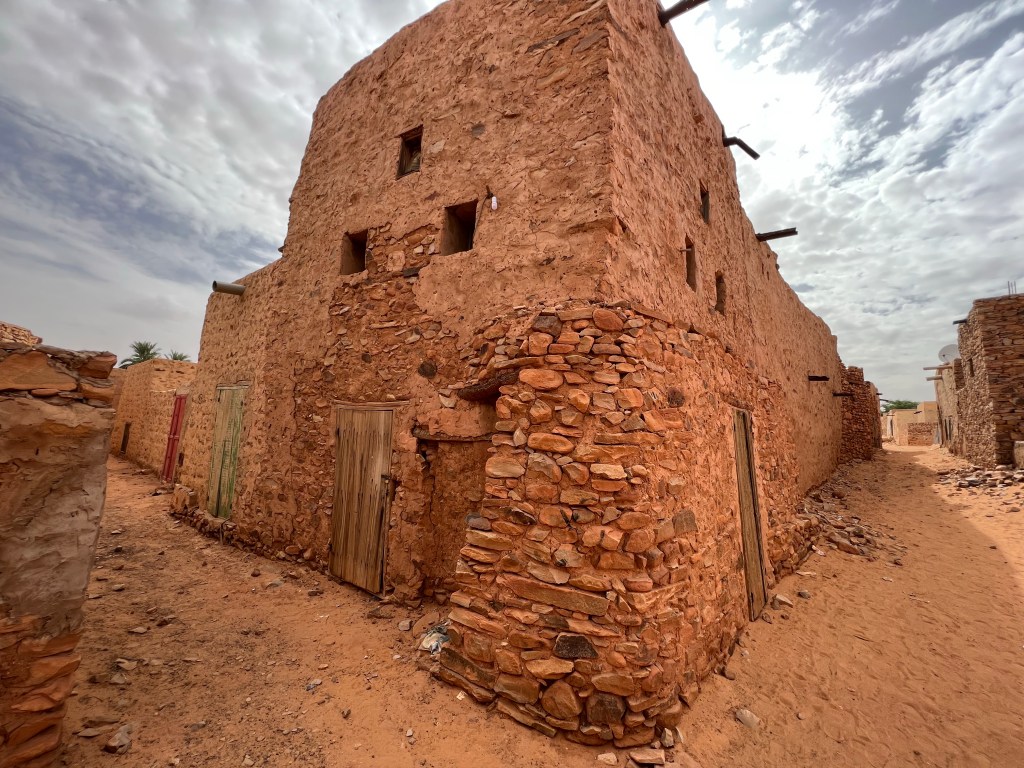
Chinguetti is right out in the desert backed by huge dunes on a bend in the wadi. A fascinating place although sadly is being retaken by the desert and very dilapidated. We spent time wandering the sand filled alleyways trying to imagine life here when the buildings stood proud and the place was buzzing with folk from all sides of the desert. It was a cross roads for pilgrims going to Mecca, which took 6 months one way by camel, and the trans Saharan caravan trade route. Pilgrims, merchants and travellers would stop and study Theology, law, astronomy and Islam. The libraries were education places and owned by families. The collections of books are handed down through families. The librarian, a statuesque guy in his blue Mauritanian robes explains to us how his family has had the library of several thousand manuscripts for 6 generations. He shows us books on theology and astronomy dating from 13 century. The collection can only be owned by men, so if there are only daughters then it goes to the daughter’s husband and the original family loose the library. Visiting the library and standing on the dunes overlooking the dust filled decaying place with its central old mosque still standing proud we could feel the sense of splendour and importance the places must of had despite being set in such a bleak, harsh landscape.

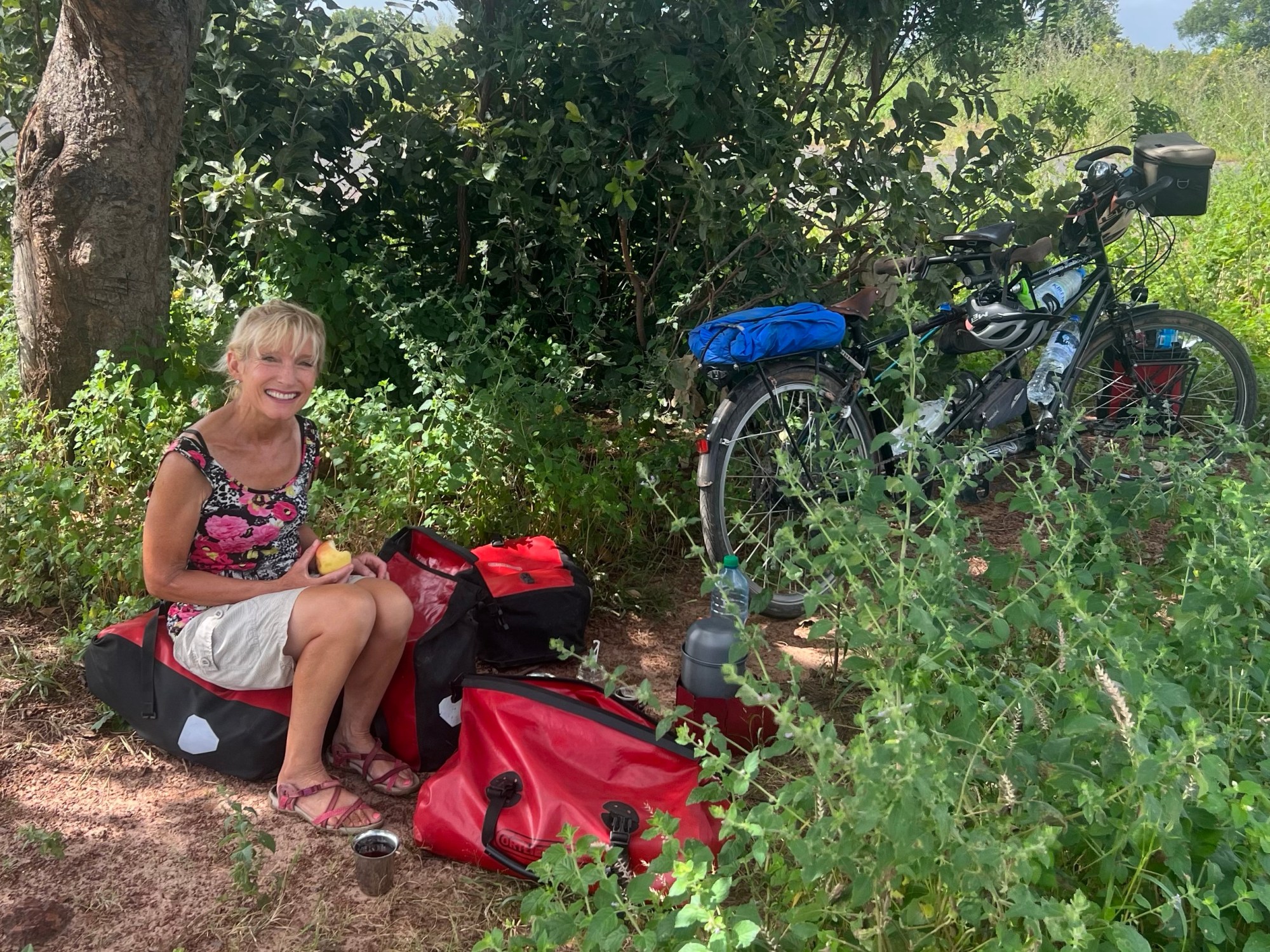
We return to our bike in Nouakchott and it feels wonderful to be back in control of our travels again. The bike is freedom and everything is easy. A quick trip round a town for provisions or just take in the markets and atmosphere is a simple outing. We always struggle a bit with conventual transport and not having the complete freedom to start and stop when you like.
After breakfast at Jeloua, the guest house haven in Nouakchott run by the lovely Olivia, we set off towards Senegal. The chaotic city was well underway with leaving later than we would normally. But it was still not too hot and we love the interactions you get in an urban area. It looks daunting, unruly, and shambolic, but actually you soon realise there is care and consideration. People give you space as you maybe struggling to weave your way round pot holes. Smiling faces abound, beaten up old cars full of people wanting to chat as we manoeuvre round the obstacles. Lots of encouragement, “bon route, bon voyage, bon courage”. It’s pretty much all men even in the capital city but there is a real sense of calm and friendliness. The driving is not aggressive and on the open road trucks generally slow up and give us plenty of room, like they did through Morocco and we were later to find this in Senegal with the trucks from Mali. Maybe it’s the desert people that are more relaxed. As a Malian said, “we don’t have money but we do have time”. Mauritania certainly fitted this mould too. There was a relaxed connection with the place and the two people we stayed with in Nouakchott must have felt this too. Olivia and Sebastian had both driven here from France on their way to Senegal some 20 years ago, stopped in Mauritania, loved it and never moved on. They run auberges in Nouakchott. Even at Chinguetti a French lady is running an auberge with all that personal love like fine coffee served in rustic clay cups and a slice of tart au pomme to go alongside.
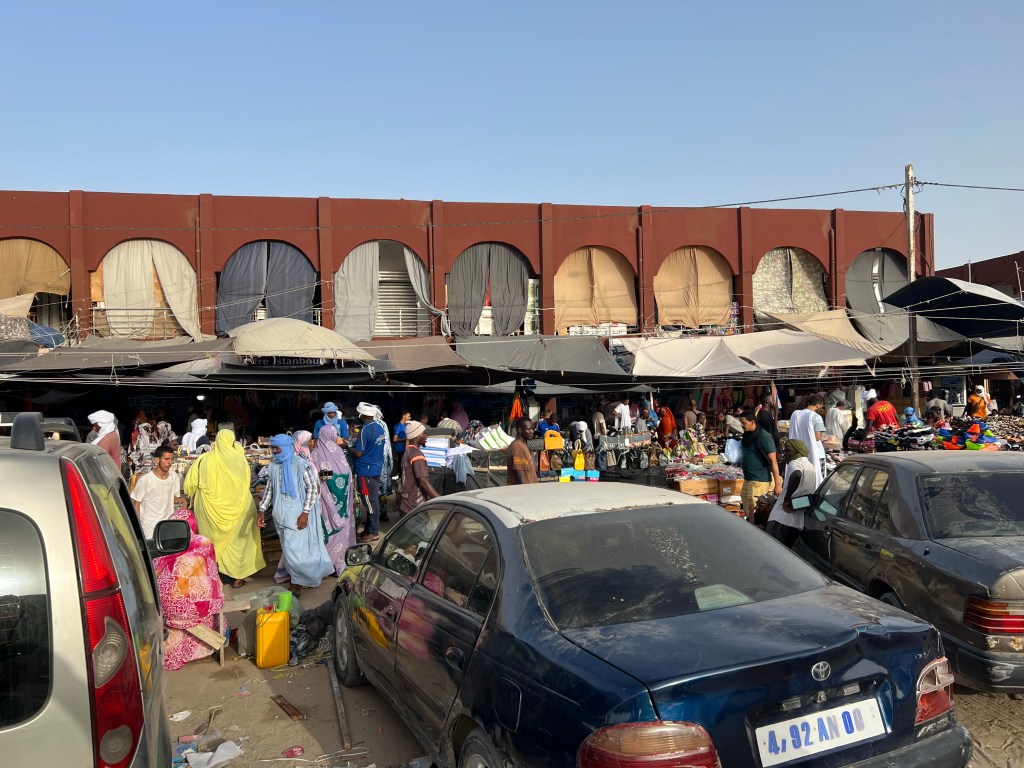
Eventually the sprawl of lovable confusion, the markets, the tents shading fabric workers, the shacks that form simple dwellings and the engaging beaming faces radiating from overloaded, ramshackle of cars and vans, slips behind us and the empty desert returns once more.

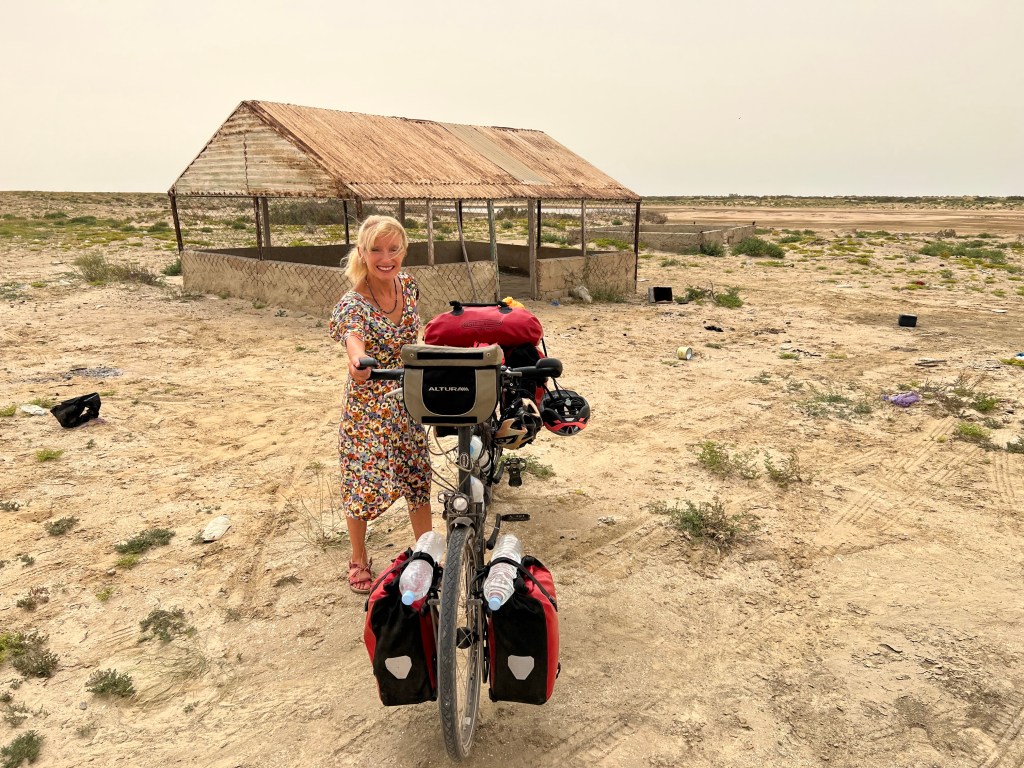
The rains have been the best for ten years so the desert is now quite green, occasionally still slipping into barren dunes but more and more there are trees and grass. Cows are becoming much more common and it’s not long before we see our last camels. Interestingly these last camels, some in big herds were for milk unlike further north where they were exclusively for meat. They aren’t for transport anymore, that must be long gone, but the herders generally still live in tents and move the camels across the country finding grazing and eventually to the camel markets.


The three hundred and fifty kilometres to Senegal is a real transition from the desert to rich savanna, made more luxuriant by the mighty Senegal river that marks the border. It becomes humid and feels so much hotter, we are dripping with sweat. The vegetation thickens, there are more trees and there is water. The air is filled with birdsong, so much more life.
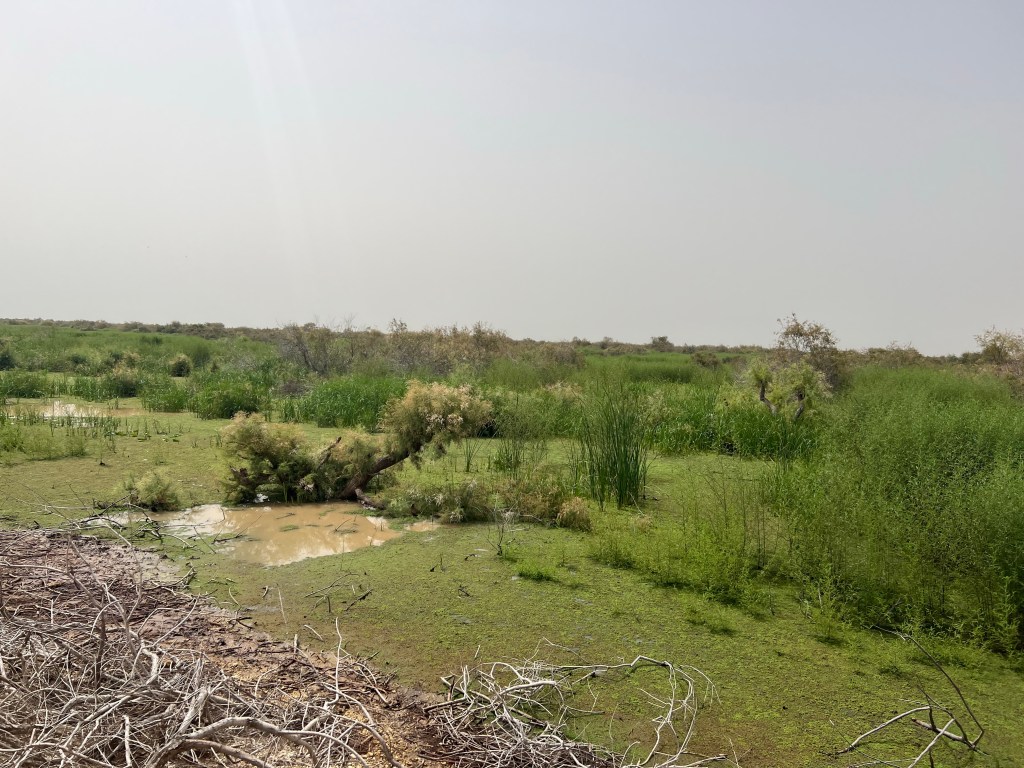
The country has a different feel. The villages are all inhabited, children, girls too are going to school.
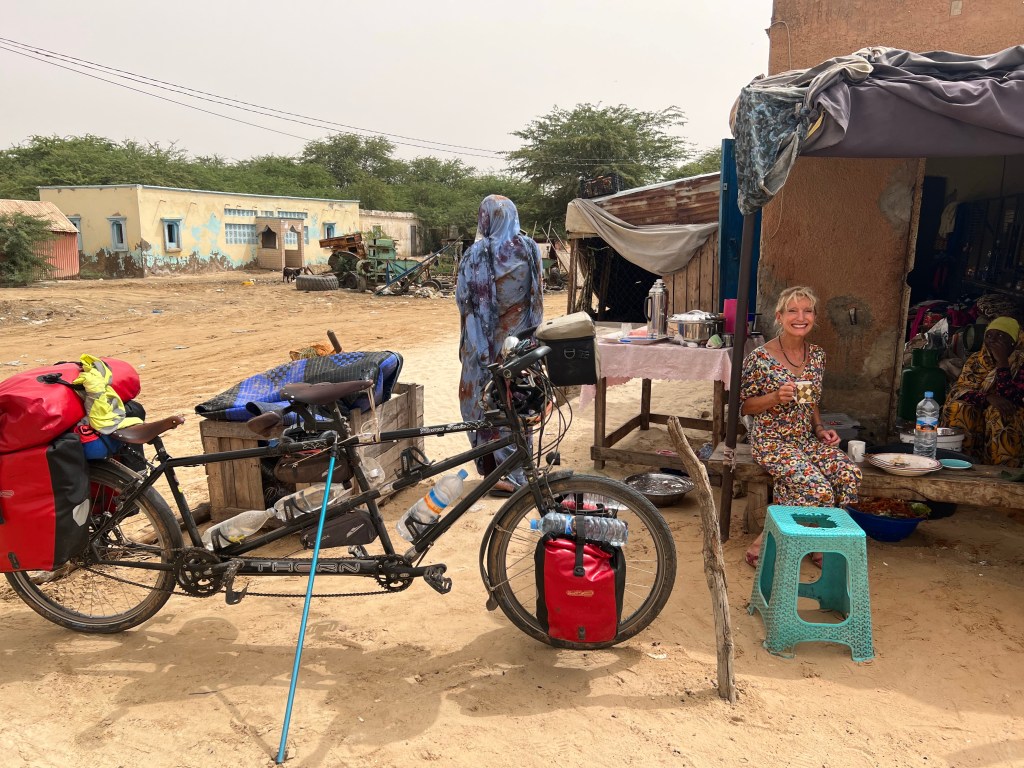
As we close in on the Senegal river we take the muddy bumpy road that follows the river to the dam at Diama where we can cross into Senegal. We stop at an omelette stall run by ladies. We feel like we are in Senegal already. Only men run eating places in Mauritania and Morocco. Men are chatting in what you would call banter with the ladies, such a refreshing difference that we haven’t seen since crossing the Mediterranean. You don’t even see boys and girls walking together, let alone playing. And say in a capital city where you might see a woman driving, it will only be with other women or children in the car. It’s such an instilled separation and in Morocco is surprising with schooling being very popular and appears pretty good quality with mixed schools, but the boys and girls stay apart.
The muddy track extending some fifty kilometres is hard going but exciting. Water surrounds us. Rice fields and mangroves adorn the place. Birds of all sizes and bright colours wade the wetlands, swoop around us and roost in the trees. Their song is piercing with shrieks that fill the hot humid air. Warthogs with babies haphazardly scurry across the track diving into the dense labyrinth of mangroves. The occasional not too big crocodiles slip from the muddy banks into the water.

Eventually we reach the dam along a small track that leads to the immigration post. The occupants are all sleeping and there is some relaxed disorder as they get themselves together and the various rooms containing that all important official stamp are opened up and we can be processed and sent on our way over the dam to Senegal.
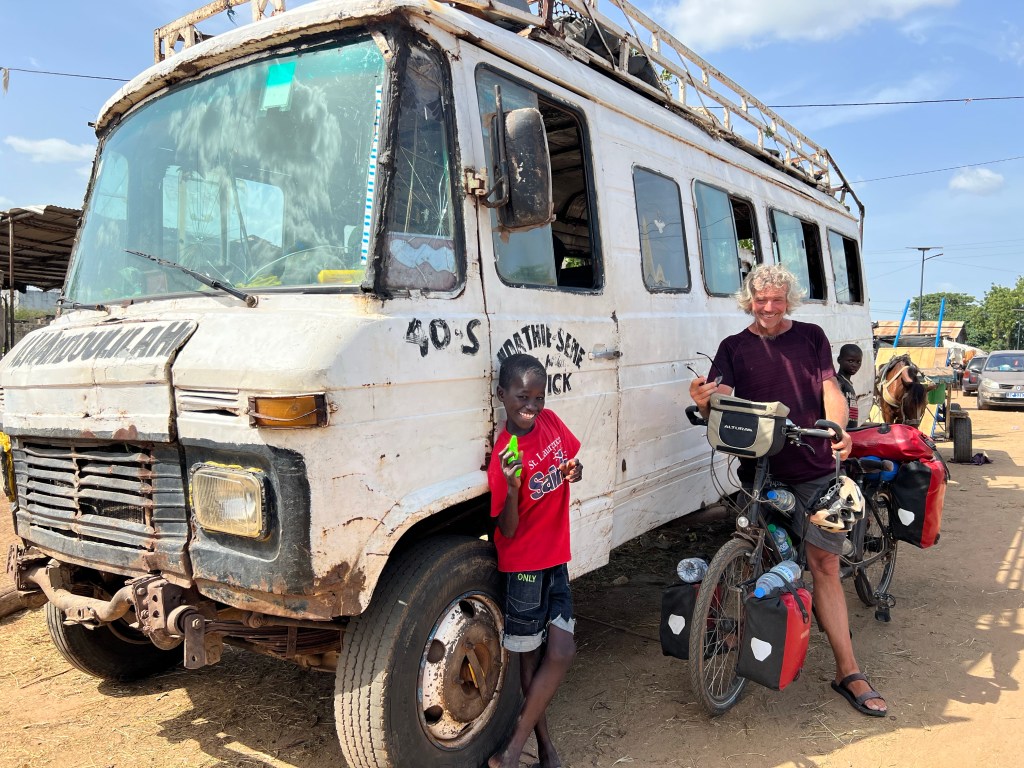
The transition to Senegal had already happened as we neared the river in Mauritania so there wasn’t much change like you normally get when crossing a border. As we got closer to the old colonial city of Saint Louis we pass a thriving university, young people in skinny jeans walking about glued to their smart phones, head phones in, like any other youth of the world, so different from the scene further north. It was much noisier too, the peace of Mauritania had gone, confident people shouted out to friends, music played from sound systems, gone were the majestic robes of Mauritania worn by the men, and now it was football shirts and jeans.
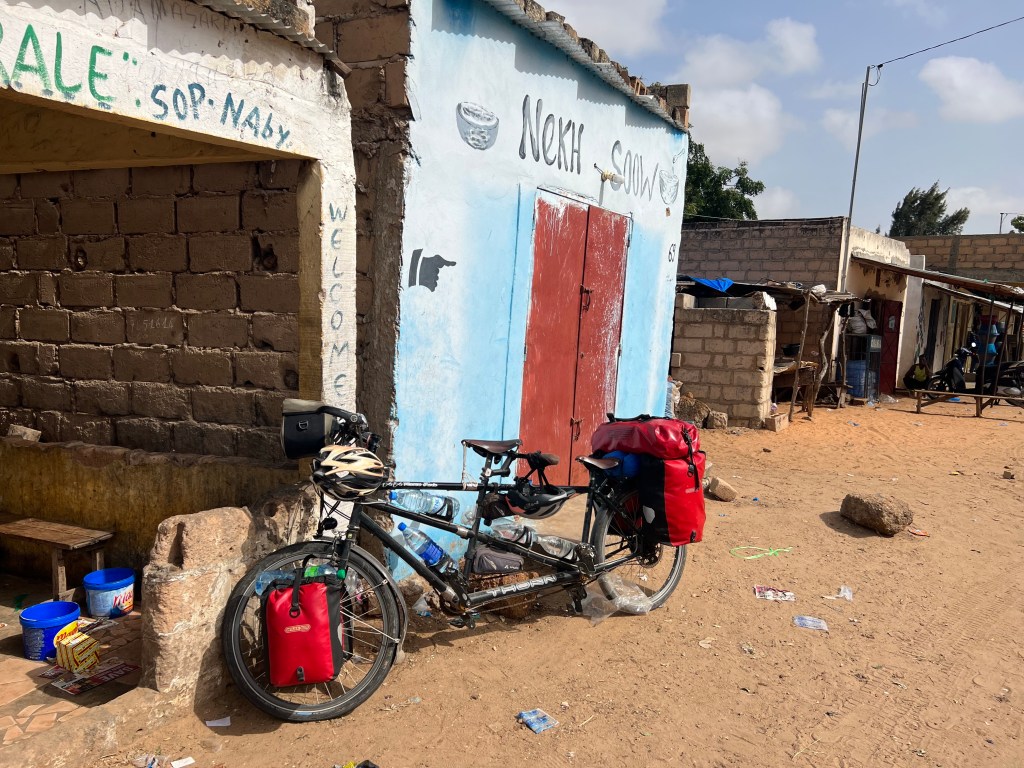
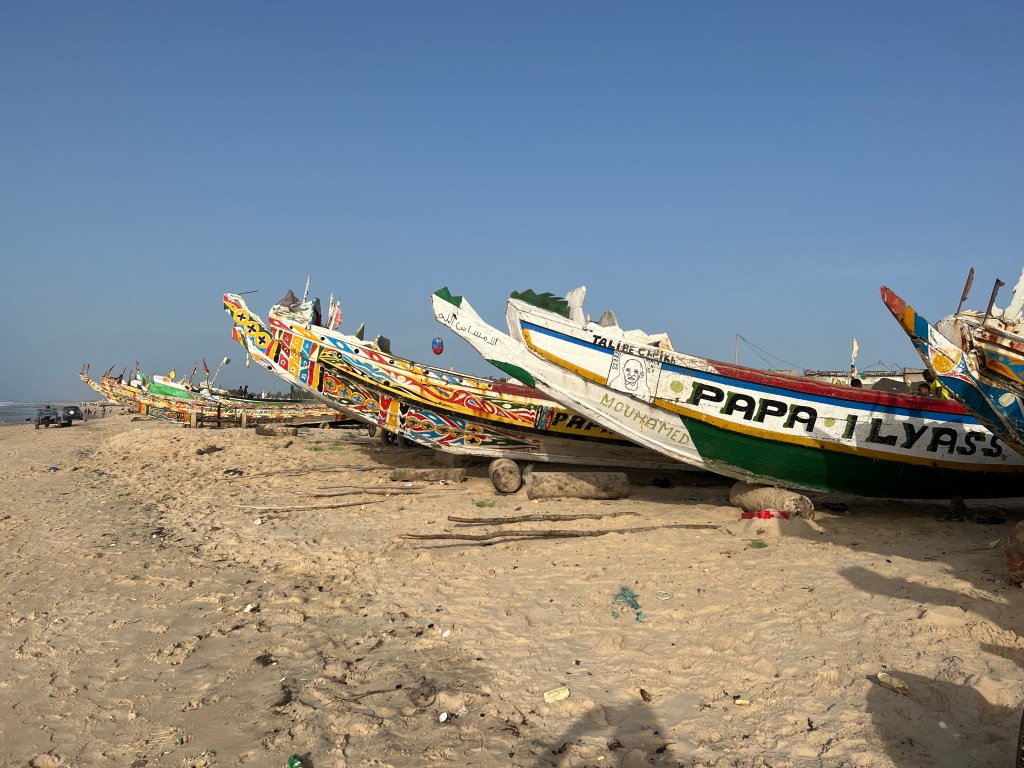
Football is such a West African passion and it really does signify our arrival in West Africa. It’s played everywhere, as the day cools down, games start up on any scrap of land. There are pitches on the outside of villages in the countryside, the beach is used as the tide drops and there is a gap between the pulled up colourful fishing boats and the crashing waves, bits of unused rubbish strewn urban land and even the road make a place for the game. That evening subdued delicate light casting a warm yellow tincture contrasts to the high energy and enthusiasm of the game that brings so many out as the day becomes dusk and twilight. Even in Morocco near Zagora where you see more West African looking people, that must have had ancestors that settled there as a result of the Trans Saharan trade routes, football was being played. On our journey across the Sahara the football left us, to return a little in Nouakchott, but really again in full force when we arrived in Senegal. The football goes with the African people, like cricket for the Indian sub continent.

Saint Louis, set on an island and laid out streets that were lined with old French buildings with balconies, gave it a former grandeur feel, but like so many places in Africa the glory days have gone and the place has a decaying ambience.
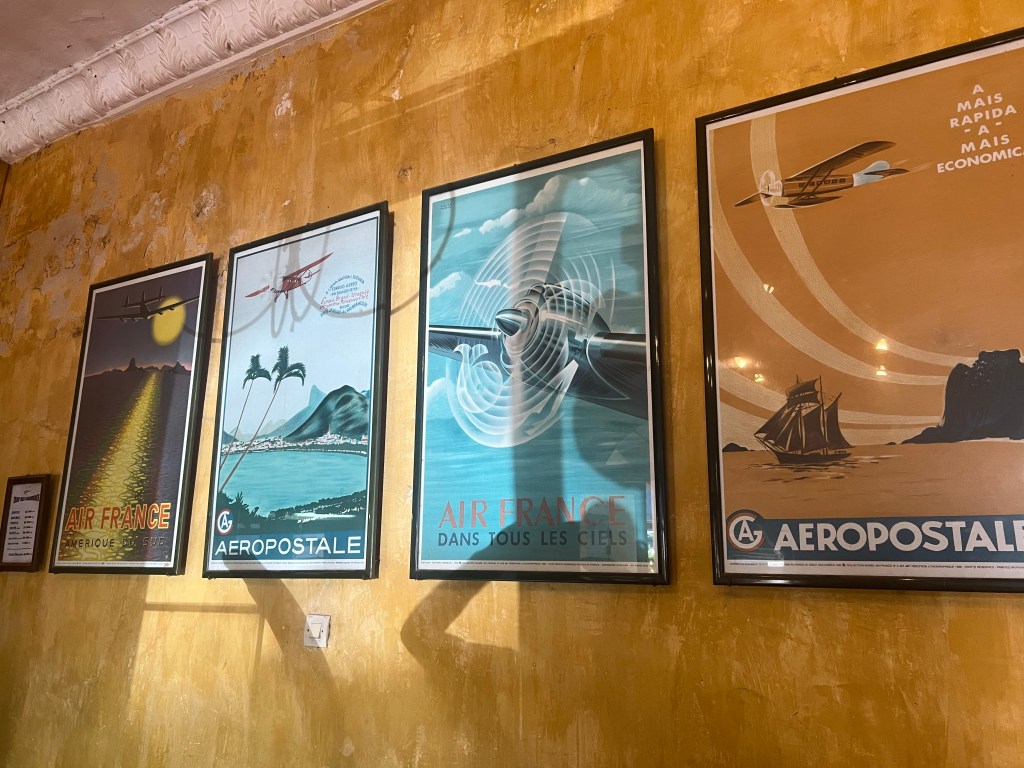
We stayed at the wonderful Hotel de Poste, a superb tribute to the Aeropostale service back in colonial times. The gallant pilots stayed at the hotel back then and the place is full of pictures, memorabilia and articles that paid homage to these heroes achievements.
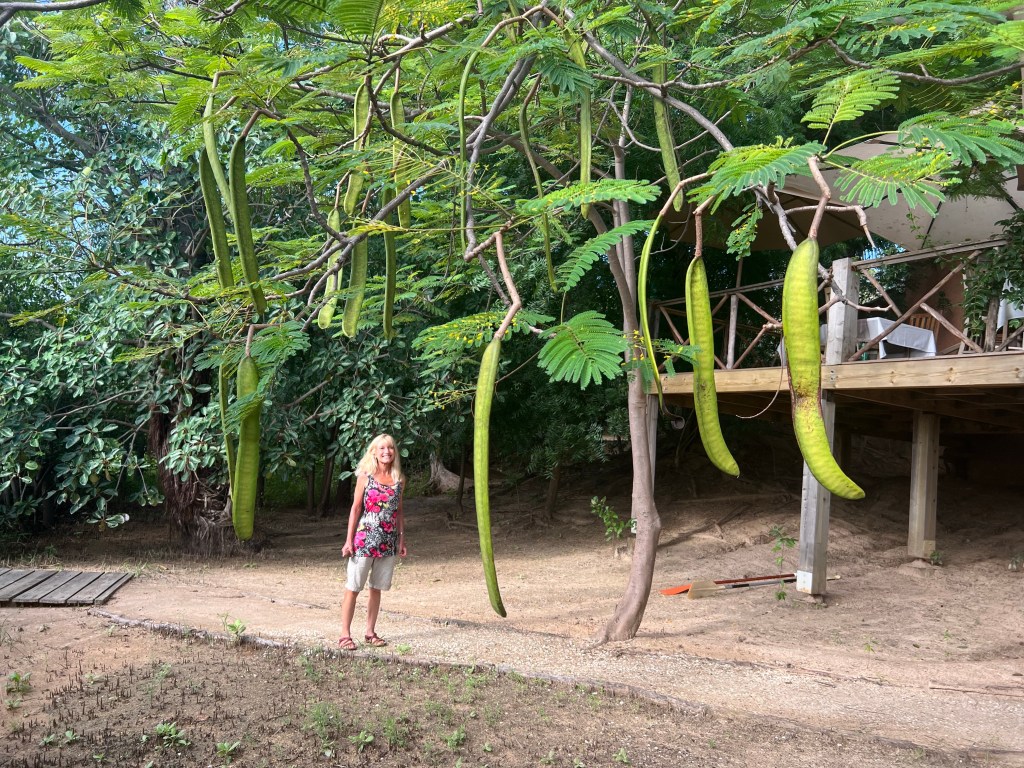
We pushed on through Senegal, following the coast at first and then cross country towards the Sine Saloum mangrove delta. We marvelled at the lushness of the vegetation and trees. Weaver birds, butterflies, dragon flies, and all kinds of vivid, dazzling, colourful birds filled the hot humid air and became much more abundant. Huge seeds and pods hung from the big handsome trees, and we appreciated the shade we could now find for lunch stops.



The coast brought us to the familiar elegantly painted fishing fleets like we had seen on the beach in Nouakchott. Such a common sight along the coast of West Africa, and we always love watching the thriving communities dependent on this way of life.


Crossing the Sine Saloum delta was our next task. The roads led through incredibly luxuriant prolific flora teeming with life and an abundance of water everywhere. We found ourselves at the end of the road and the creeks and waterways cutting their way through the mangroves lay ahead. A surprisingly short amount of negotiation sorted out a boat to take us through the labyrinth of channels amidst the dark green mangroves that have their web of roots clinging to the muddy banks and islands.

We are used to loading the tandem onto such craft and this one was a better than some of the craft we have used for such crossings. We had now been passed on a few times which is so often the case as we are ‘sold’ down the line to eventually ending up with the guy and his lad who will actually take us. The first negotiator takes half the money and the other half goes to the boatman when we get there four hours later. There is always a level of not understanding quite what’s going on, but we feel confident and are very familiar with this kind of set up. There is trust and it all works out fine.
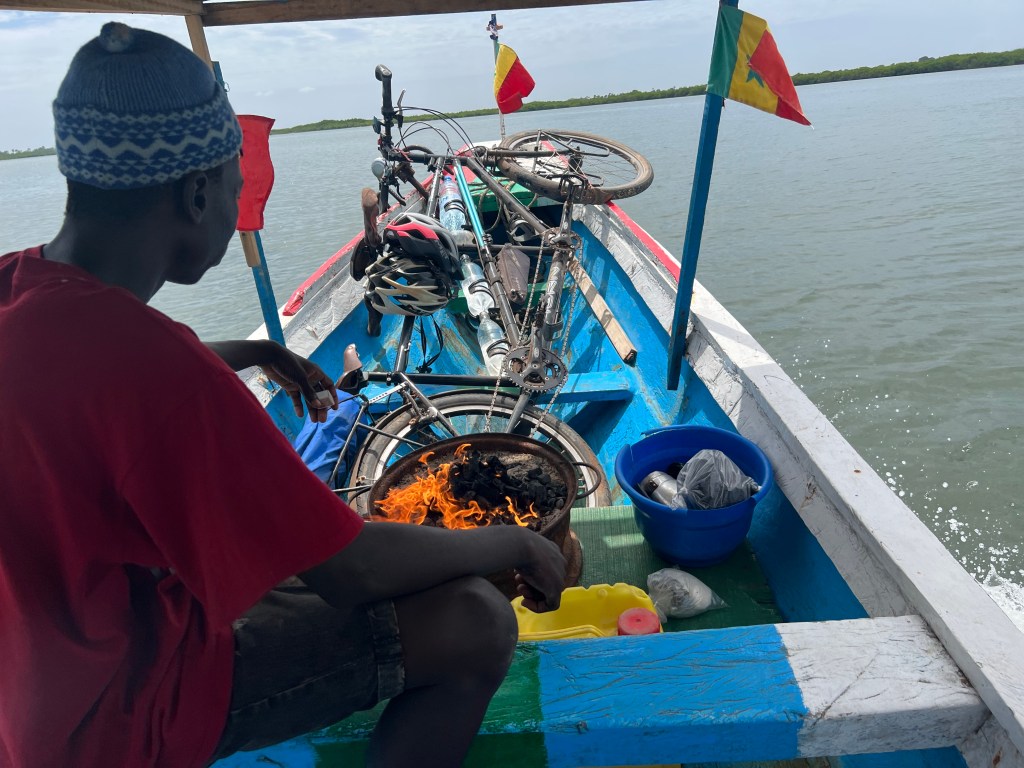
The young lad loads on an old car wheel used as a make shift charcoal cooker. Once out on the water ways he gets a small cup of petrol from the outboard tank and chucks it over the charcoal before lighting it with his cigarette lighter. A slightly concerning fire roars away in the old wheel which is disconcertingly close to our bike and we are in a small flimsy wooden boat which could be a worry, but the lad doesn’t look concerned and is soon heating water for tea.
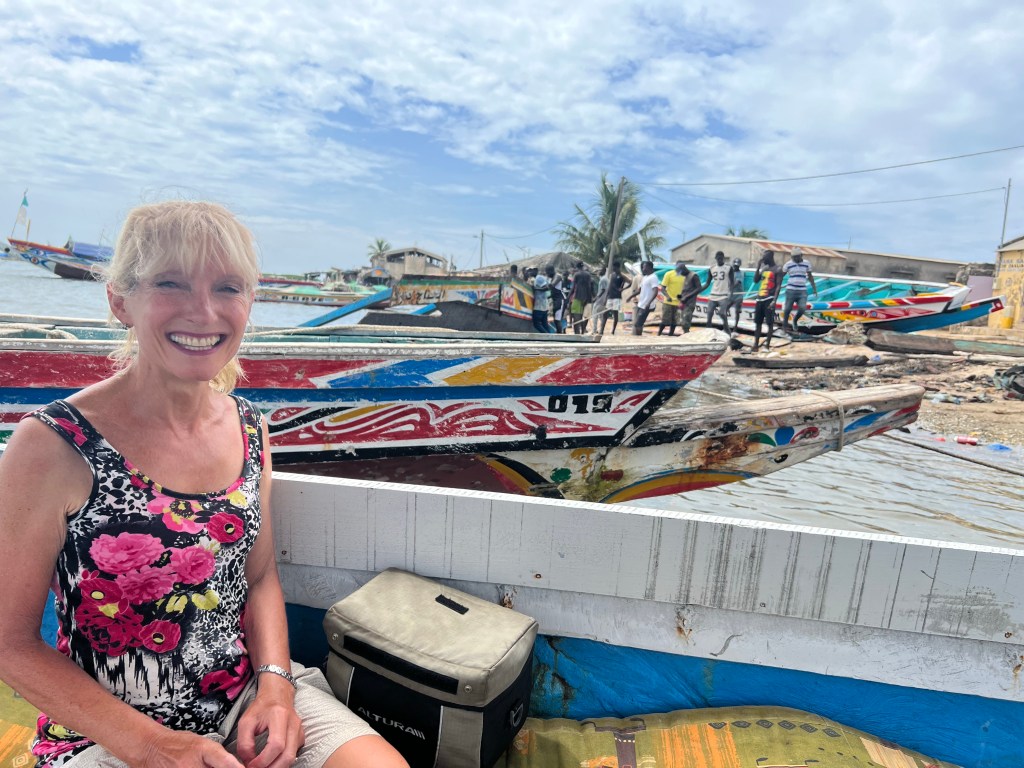
We wind our way through the maize of channels admiring the absolute beauty of the place. Other boats pass by full of people and sacks of goods going to villages on the islands. The women are brightly dressed with dazzling printed cloth, their radiant elegant posture displayed as they carry large loads and bundles on their heads.
We cross into Gambia and head to our next big river. The smiles seem to get even bigger and English spoken everywhere is striking. It’s not far and across The Gambia River we arrive at the point where we started our 2019 West Africa Bike Ride, 3800 miles from home, we have now joined the lines on our map making a complete journey all the way to the Nigerian border with Benin.

On the last trip we didn’t really see Gambia so this time we thought we should head up country for a few days to see what the place has to offer. Like so many we know about this country as a winter sun holiday destination, but even right on the coast it is a lot more African than you would expect and going inland it was surprising how untouched the place is by tourism, definitely real West Africa.
We cycled a couple of days up country which got us to just before George Town at a place called Kuntaur perched on the banks of the river it was an idyllic place to stop for a few days and explore the surroundings.


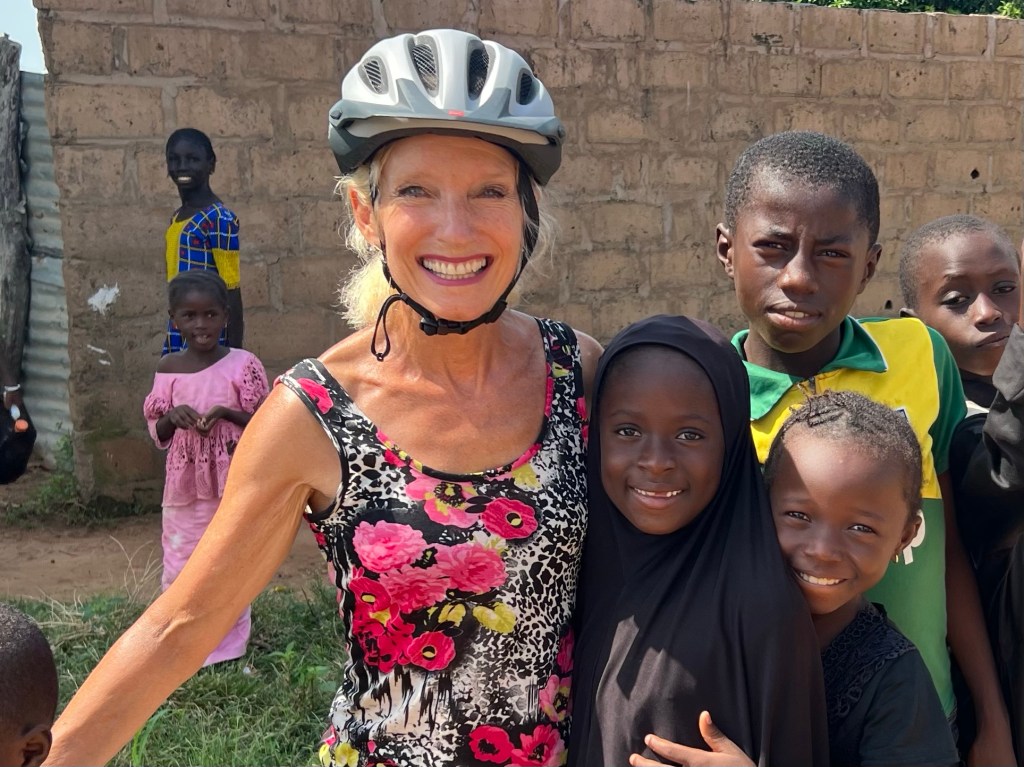

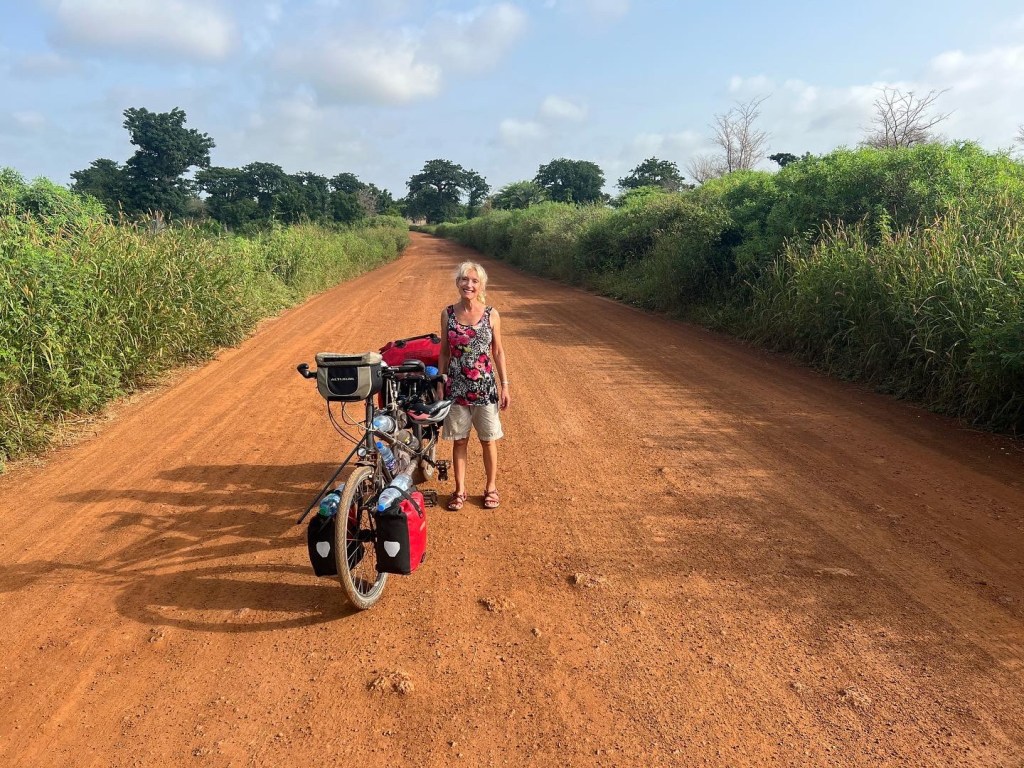
We had alot of fun cycling out along rusty orange coloured dusty tracks as they cut their way through lush green tall grass dotted with large hulks of trees, leading to functional little villages set in the vivid green landscape. It’s always fascinating seeing the agriculture that’s going on, having time to stop and charms with farmers and labourers. Ground nuts mainly and some melons were being harvested. Horse and donkey carts are used a lot for transporting produce as well as for ploughing along with the ox. This is not so common in west Africa like it is in India and Asia. Certainly as we proceeded through West Africa in 2019 the agriculture really did slip away, returning a bit more in Togo and Benin, but still not up to this level with the use of animals as well. However still like throughout the region the shops and markets have sacks of imported rice, potatoes and onions, plus all the other imported tinned items like sardines and vegetables, and of course the huge tubs of mayonnaise that West Africans absolutely love. It’s such a strange thing to dominate the local cuisine, if you can call it that! They add it to everything including coffee sometimes.
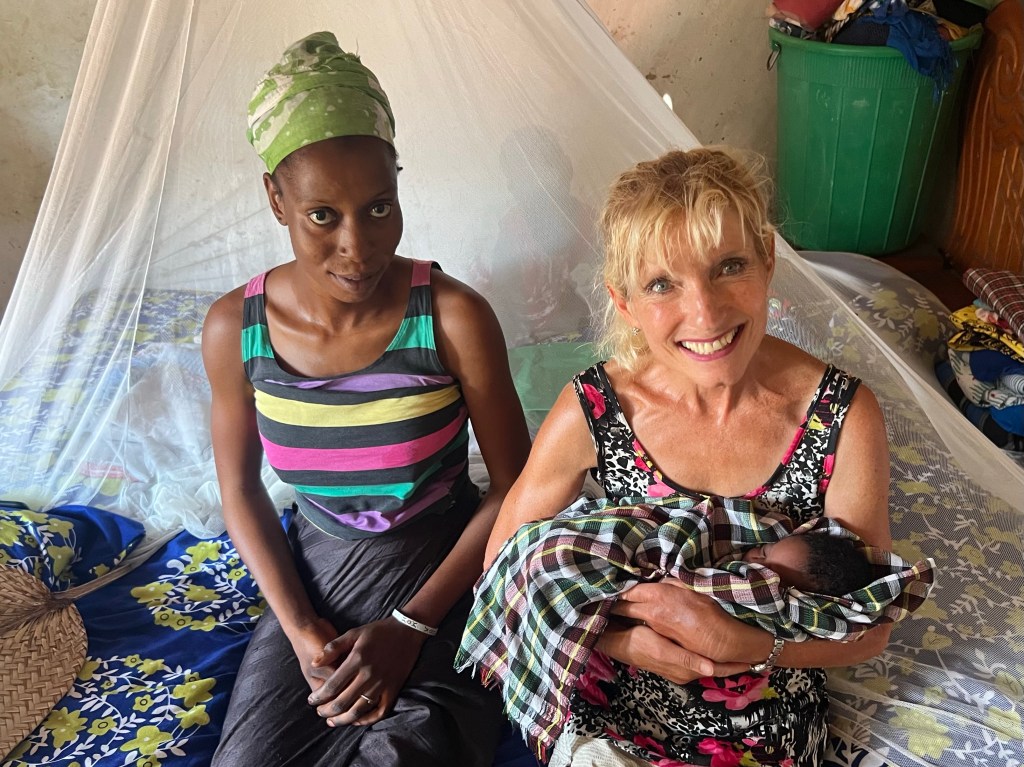
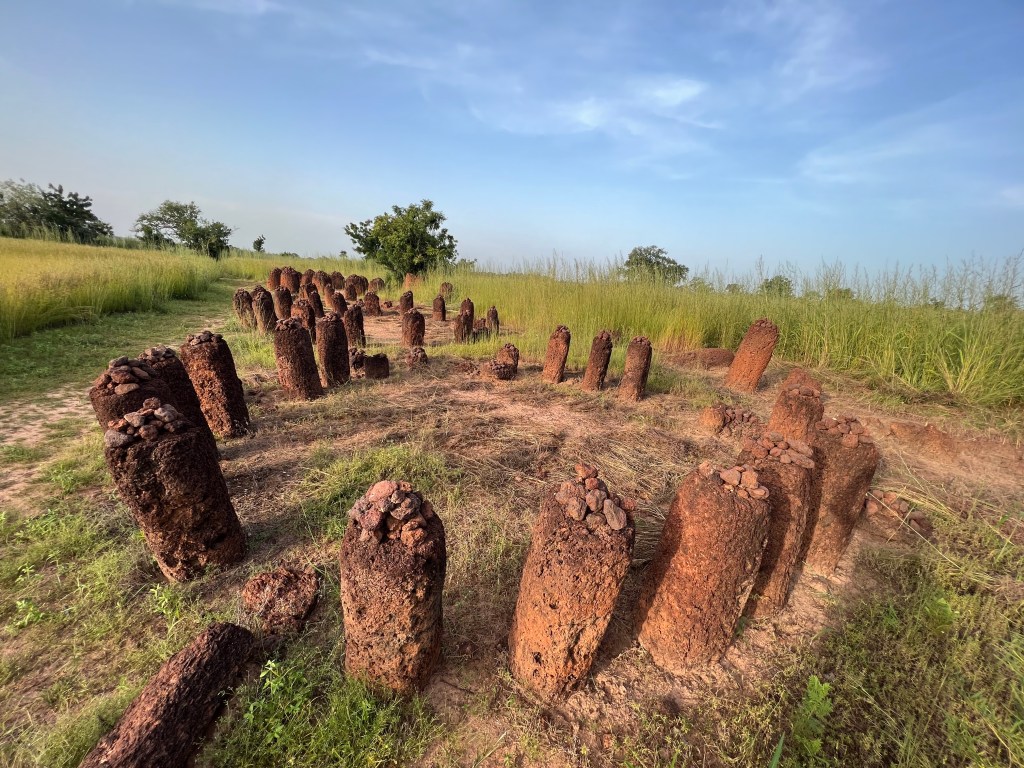
The villages were super and it was lovely having time to have a laugh with the hordes of children, and nice chats with the adults, and the honour of being invited into someone’s house to see a newborn baby. Another fascinating local visit was to some stone circles at Wassu. No one really knows why they are there and there are numerous sites like this between The Gambia River and the Sine Saloum. There is real mystery surrounding the stones that look so beautiful set against the green elephant grass in the evening sun.
Upriver in The Gambia really marked the extent of this bike trip, now 4000 miles cycled from home and it seemed really fitting to visit the Chimpanzee Rehabilitation Project run by the iconic Janis Carter. We aren’t normally drawn to the wild life places on our trips. They are ok, but that’s about it, so often a bit sad and not very well done and rather run down, but this one looked like something truly special, made so by the unique hands on character of Janis.

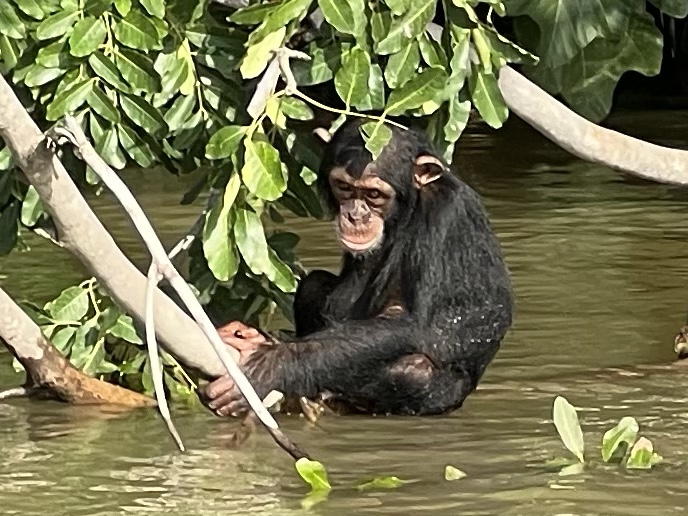

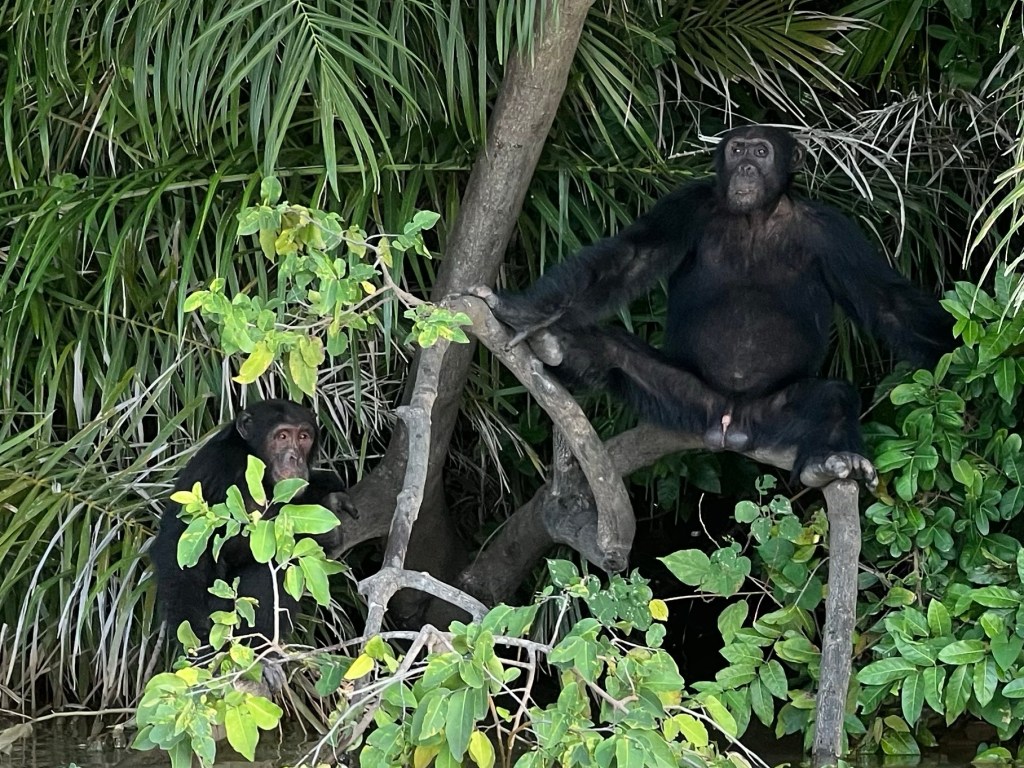
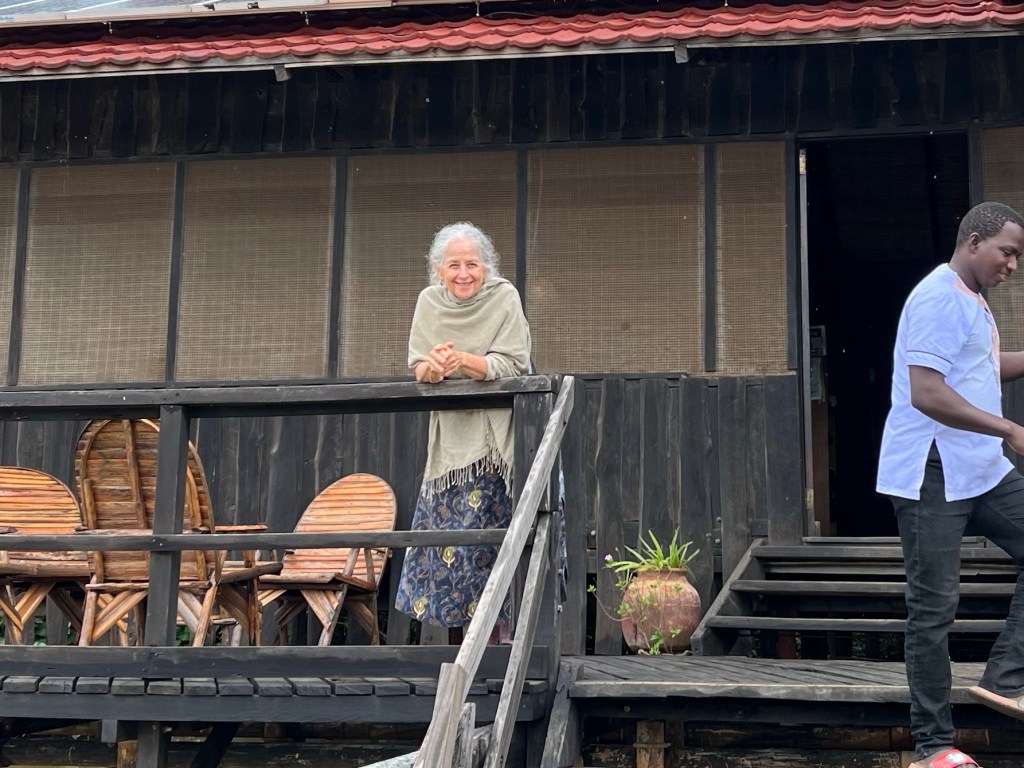
Gosh what an experience staying at the Chimpanzee Rehabilitation Project and meeting Janis Carter. A truly special encounter and what a character Janis is. So nice chatting with her and her enthusiasm and unpretentious knowledge is so refreshing. Set on a beautiful bend of The Gambia River some 300 km from the coast and on several river islands Janis and Stella set the project up in the 1970s. The protected forest and islands hang with dense luxuriant foliage looking more like the jungles of the Congo. Janis was telling us how for the first eight years she lived with the chimps on one of the islands raising them like her own children, carrying the babies in a sling. They eventually had to leave the island and run the project from the river bank as the chimps became more wild and territorial. The original chimps were rescued from various places in the world but now there are 140 and nearly all are island born. Just Two remain from the original 20. Janis now 72 years old continues to run the place with the passion she must of had from the beginning. She knows every chimp by name and now is just struggling to see them clearly, but is going for cataract treatment soon. Only eight guests can stay at a time for just a few days a week and just in the winter. Staying in safari style tents perched on the cliff side you get lovely views of the river and islands. A lovely low key project that Janis has passionately protected for all these years. She doesn’t have a website, publicity, or signs up, to keep it the way it has always been.
The local people that are all from nearby villages that also work on the project are equally passionate and knowledgeable, some have been there for over twenty years, and it was so wonderful that they were able to teach us about the plants and trees used for medicine, all the different exotic birds, and of course about the chimps. They had been trained so well and to have such a loyal team is credit to Janis and so important for the project to run to her vision.
As we took the launch back to Kuntaur passing by the palm dripping luxuriant river bank with the brightly coloured birds darting about, creepers and broad leafed wild unruly plants hung from the higher trees making a mat of vibrant jungle green, we felt humbled by our memorable experience at this wonderful place. This was the end of our journey, we had crossed Europe, the Sahara desert and into West Africa to reach this magical place.

 tandemtravelcouk
Again a marvellous, interesting and wonderful narrative of your adventurous tarvels You are truly amazing people
LikeLike
What a lovely place to end your journey. I know it well. Though the chimpanzee sanctuary was strictly closed to protect the chimps from covid, I had tea with the caretaker.
We wild camped in the forest nearby, by pure chance. Out on the river searching for hippos with Lamin the fisherman we could hear the chimpanzees, but never caught sight of one.
Described in my story
https://unlikelystories.home.blog/portfolio/forest/
LikeLike
That is a lovely fishing story
LikeLike
What a trip, fantastic armchair reading! To have done all that in 70 days is truly remarkable, and all from riding out of your front gate, amazing! It has to be up there with your best and also endurance no doubt, on that Sahara stretch especially. Will look forward to seeing where your next trip takes you, on down the west side of Africa perhaps?!
LikeLike