

The scruffy empty ferry brought us from Europe to Africa, a five hour crossing from Almeria to Nador. We had left lively bars and restaurants of the port town and crossed into a different continent. We cycled out through Nador marvelling at the differences. The aromatic smells of spice in large jute sacks, stacks of melons piled high at street corner stalls, men drinking mint tea watching the world go by, marinated grilled meat on charcoal stoves sending appetising pungent smells into the air, and an occasional mule with traditional carpet lined panniers trot by.
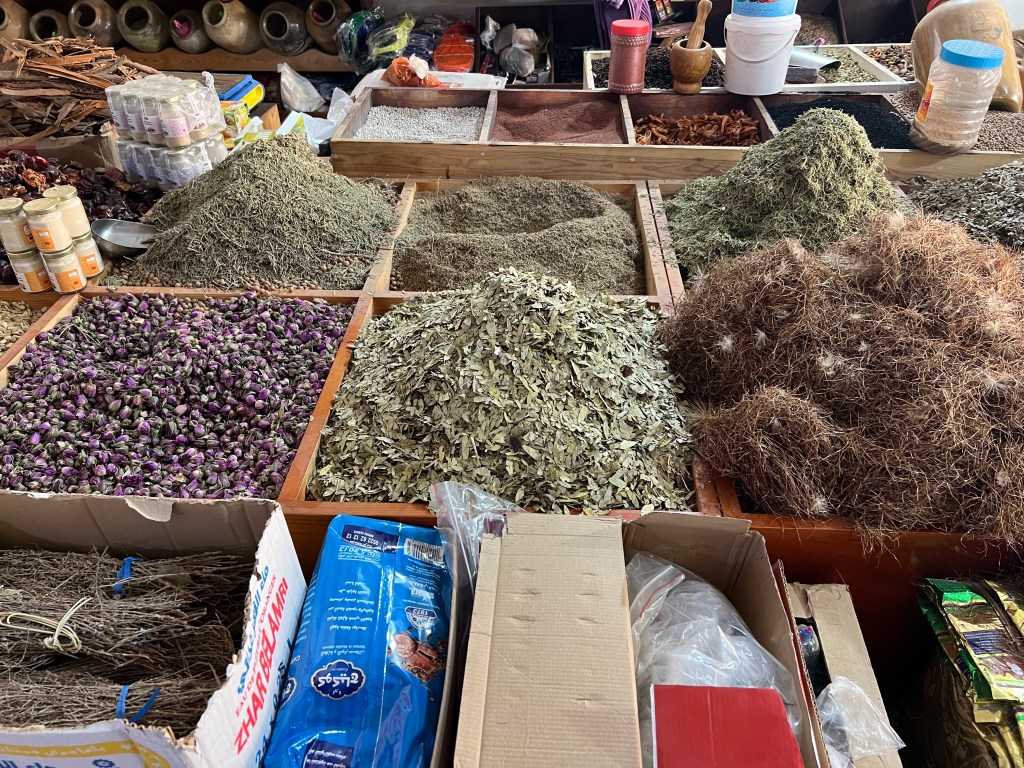
On a practical front when in a new country we have to get our eye in on where to buy supplies, where to get a coffee or tea, which places do food. It always takes a day or two before you recognise the right places and learn what’s on offer.
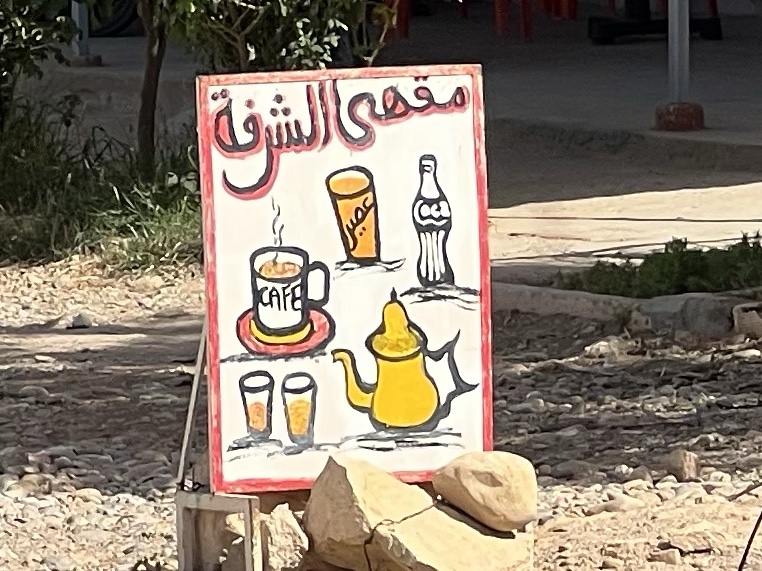
Our first proper day on the road in Morocco we soon left the built up area and were out in beautiful countryside. It was a refreshing surprise to so quickly be in the kind of countryside we associated with Morocco.

The sun was rising illuminating the ochre tinged arid scenery. Darker mountains rose abruptly in the distance contrasting to the red stoney land. Clumps of prickly pear cacti were by the roadside. Nomadic herdsmen mind their sheep and goats on scrappy parched pastures. Incredibly bird song fills the air in this harsh place.


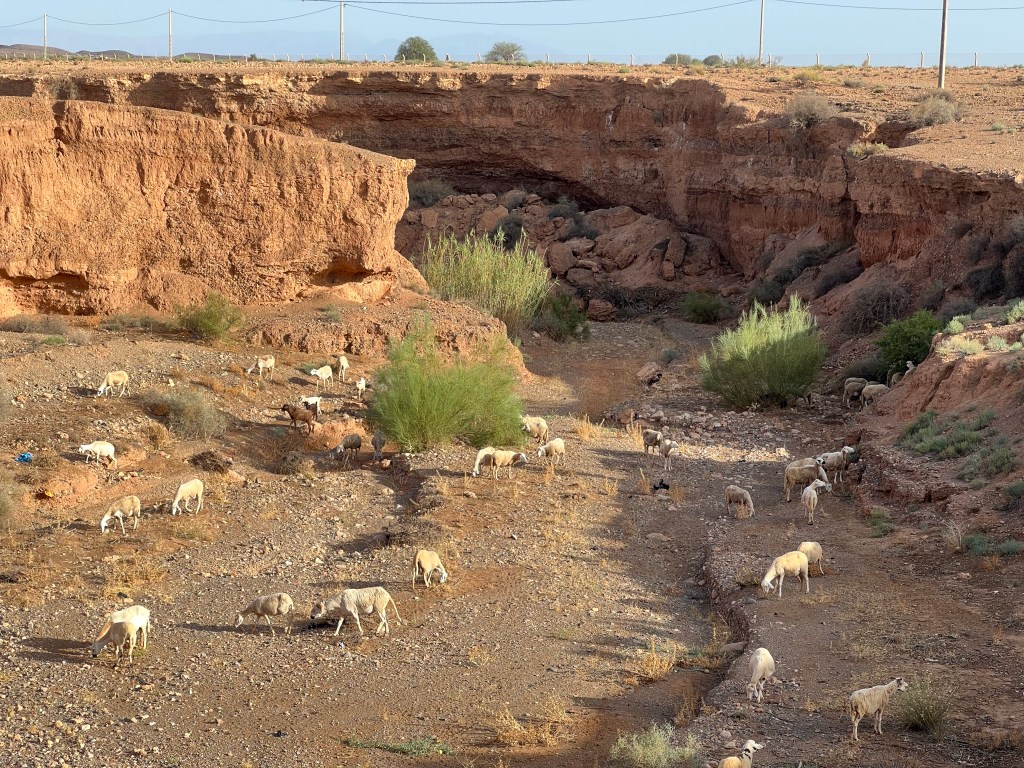


A few days on good roads gradually climbing takes us to Midelt, the beginning of the High Alas.


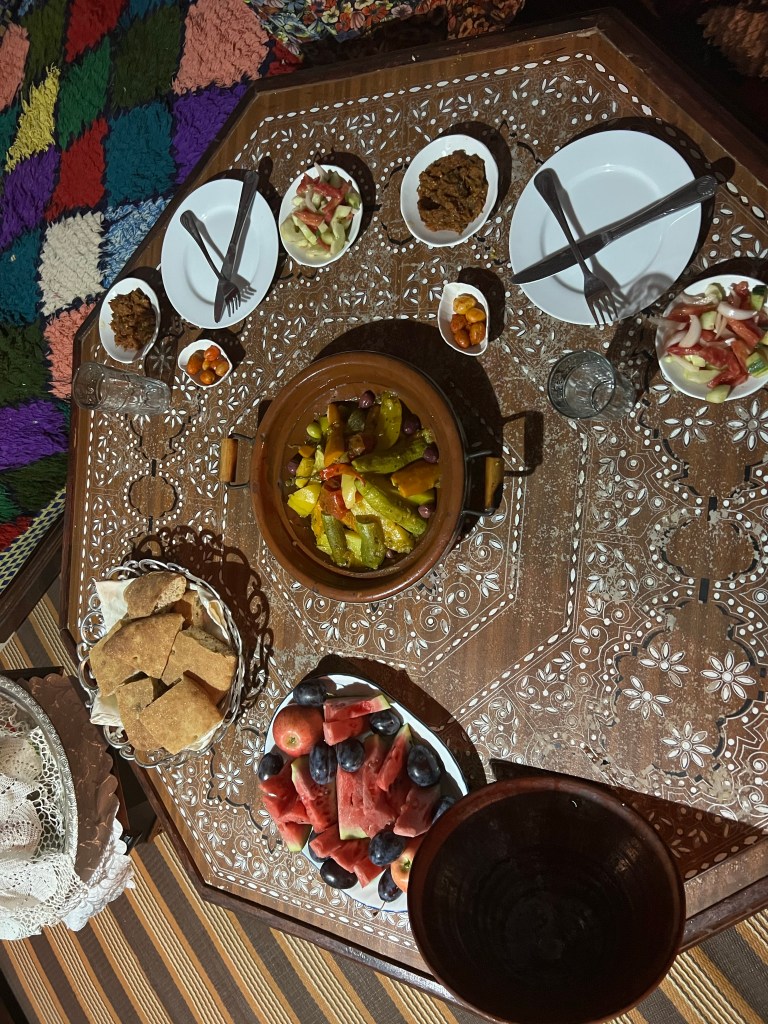

Stopping a night at Nadine’s house was a lovely insight into Moroccan hospitality. Welcomed with mint tea served from a shiny elegant silver tea pot placed on a brass tray with several glasses. The room was decorated with ornate colourful wall hangings and woven mats to the floor and seats.The fabrics displayed the intricate repeating geometric patterns and tapestry so associated with this part of North Africa. We sat on the carpet covered bench and sipped our sweet mint tea that revitalised us after the day on the road.
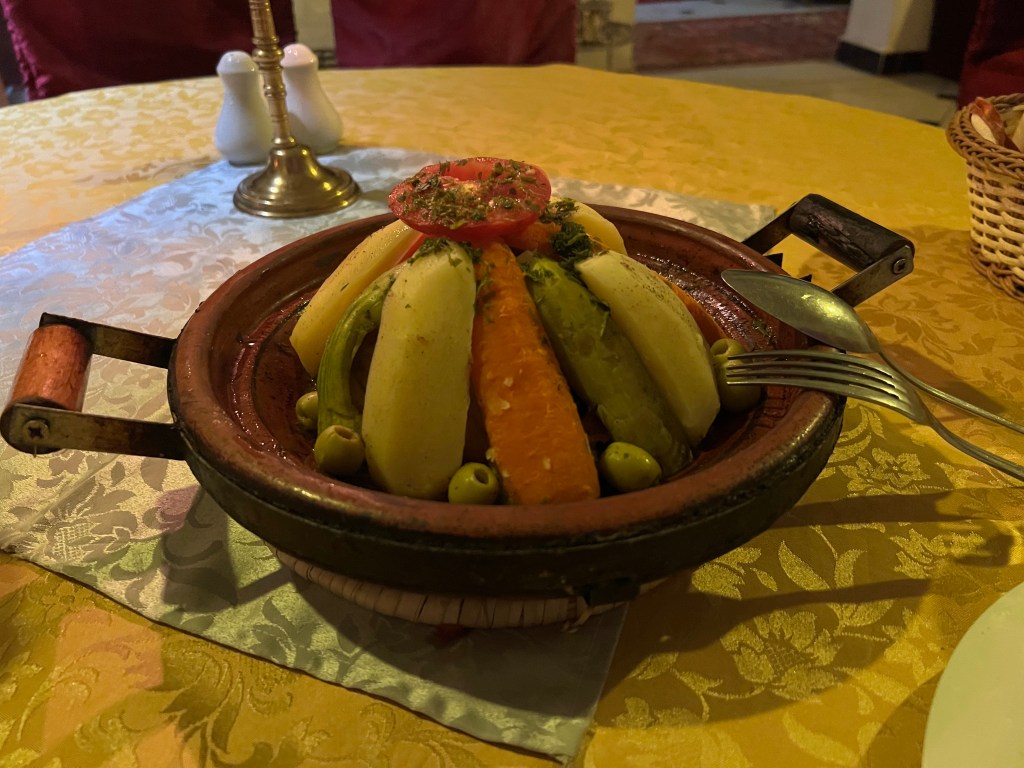
It felt a long way from Europe as we were presented with our first authentic tagine, the sizzling characteristic conical clay pot, sent the aroma of cooked spice into the air, was placed on the octagonal patterned table. Accompanied with warm round flat bread we tucked into the stack of vegetables that were caressing the slow cooked tender meat in the middle.
Nadine was such a sweet lady and insisted on getting up early to make us breakfast at 5.30am. We felt well looked after and this was something that we became used to when staying in peoples house. The places were run like B&Bs and always included supper. Often they would also send us on our way with some treats for lunch too.

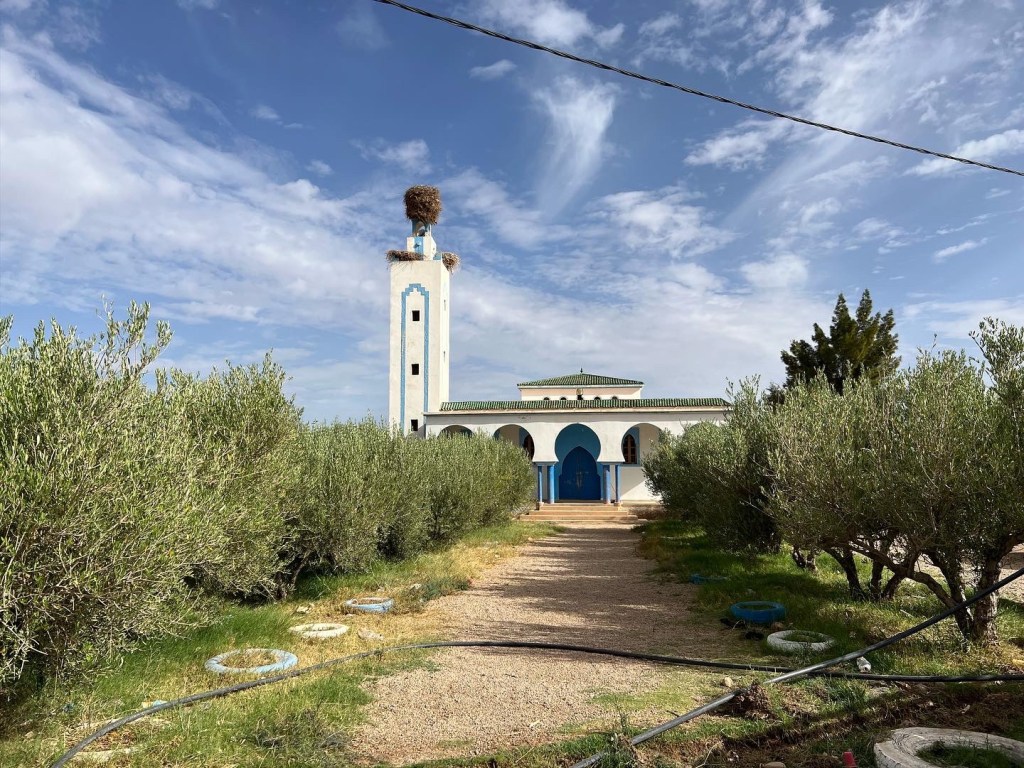
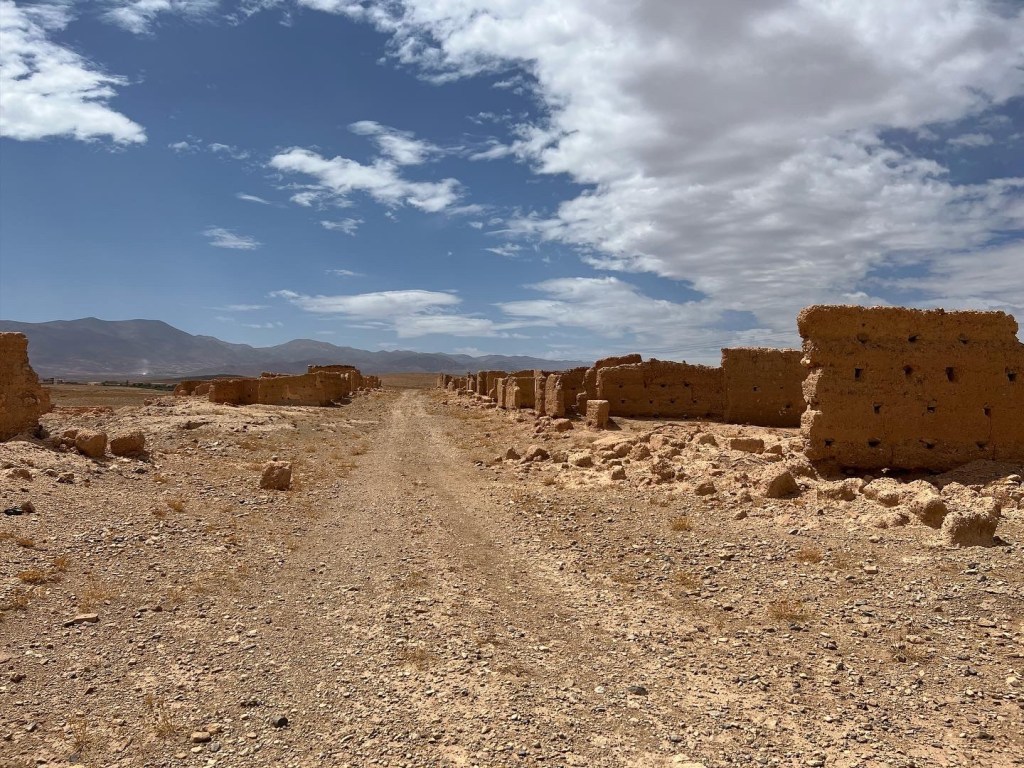
As we slipped out of Midelt in the dark leaving the low oblong sandy coloured buildings behind, we wound our way over a couple of small rivers and were on a stone track heading towards towering craggy mountains, their shapes in silhouette in the low pre dawn light.
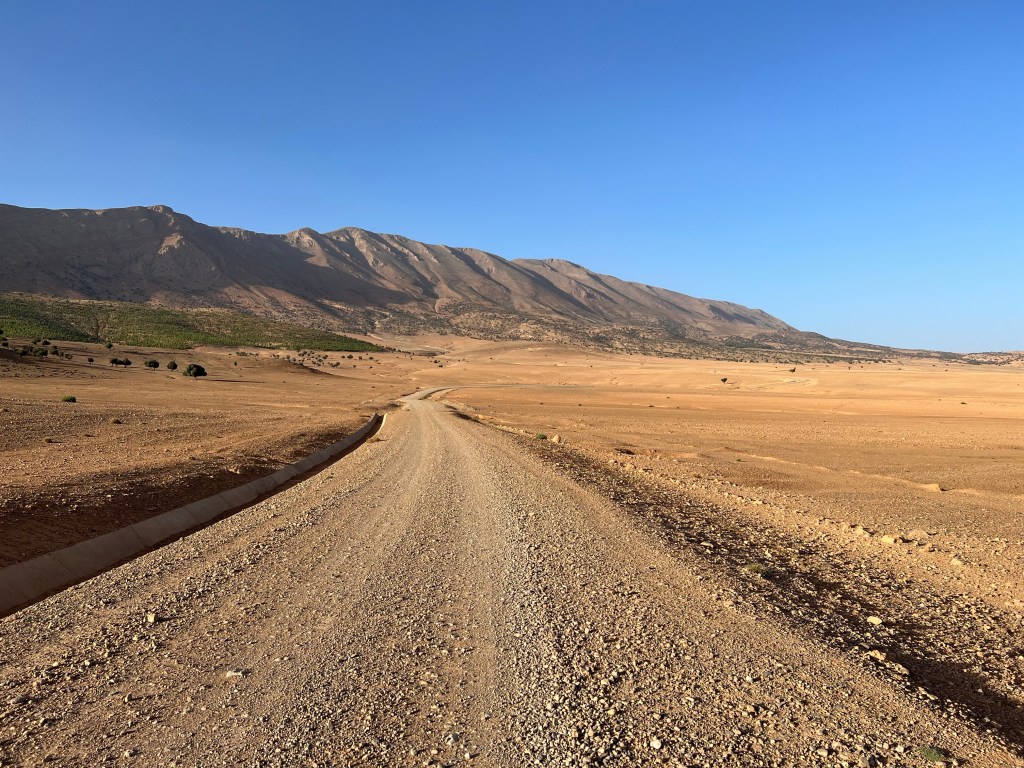
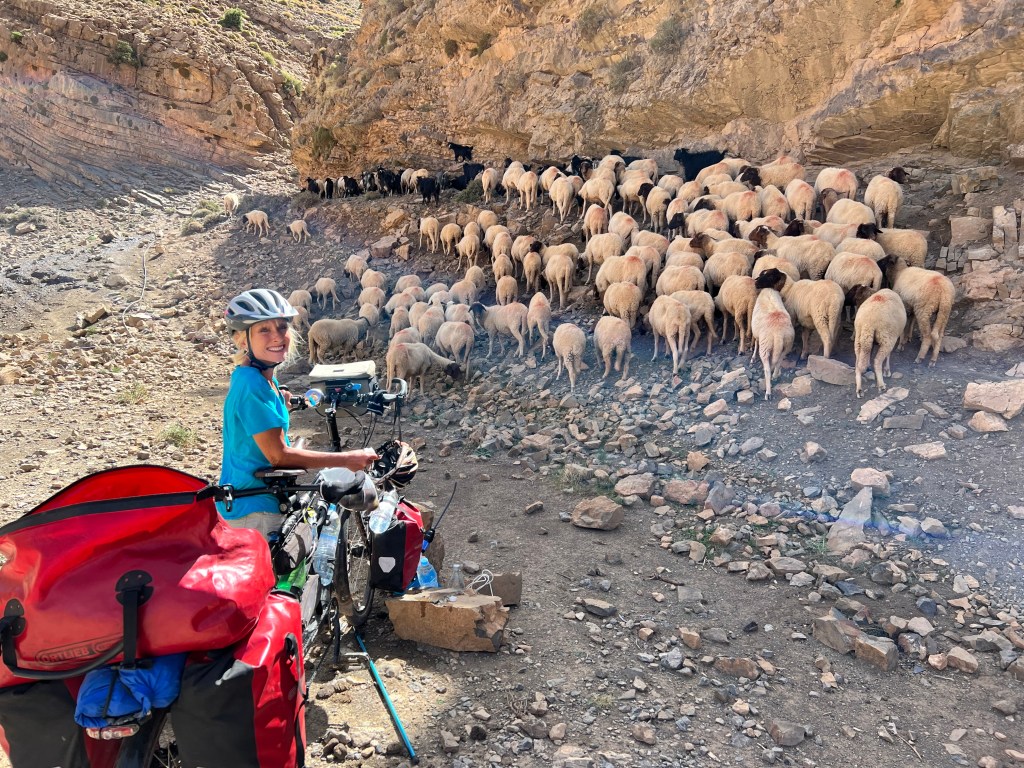

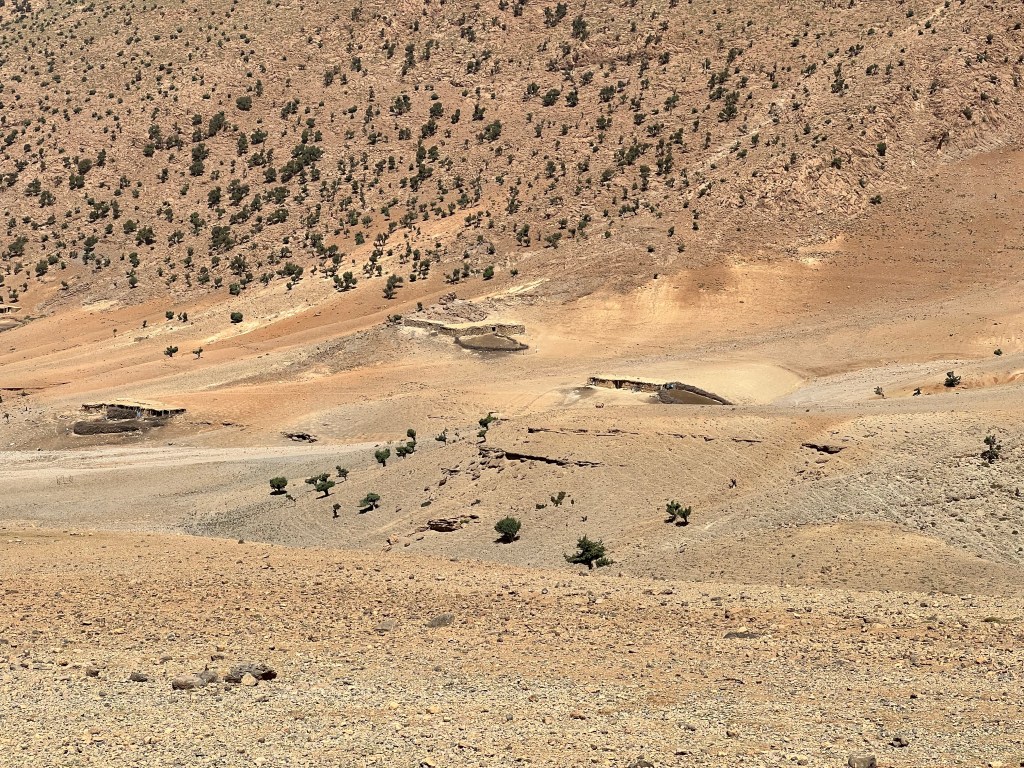

The track narrowed and became rougher as we climbed and climbed to the pass, struggling with loose rock that caused problems with traction, meaning we had to walk and push the bike at times. We were now within the mountains. The towering scale of the rock was all around us. Every hue and tint from orange to rusty red, to shades of mauve and grey were displayed all around us. Such beauty in different shades of rock and gravel warmly illuminated in the early morning light. There was emptiness and silence is this vast beautiful landscape. Occasional thickets of vegetation dotted some of the crimsom hills.
We picked our way along narrow tracks, meeting the odd shepherd with his flock at a rare stream with water in it. The route occasionally passed through some hardy wooded areas where the track became less rocky and was compacted sand that was easier going.

We continued on through the Atlas heading towards the head of the Dades valley on small roads with broken tarmac, sometimes rough track but also at times a surprise of a newly constructed road. It became more populated as the small valley bottoms could be irrigated. Women carried large bundles of grass and plants for animal feed. Men trotted along on loaded mules. Villages dotted the valleys now and the mud and stone houses blended into the background of the mountains. As we climbed out of one valley heading to the next the mountains become more arid once more, we were back in the rocky and gravel panorama of all hues of rock making stunning scenery.


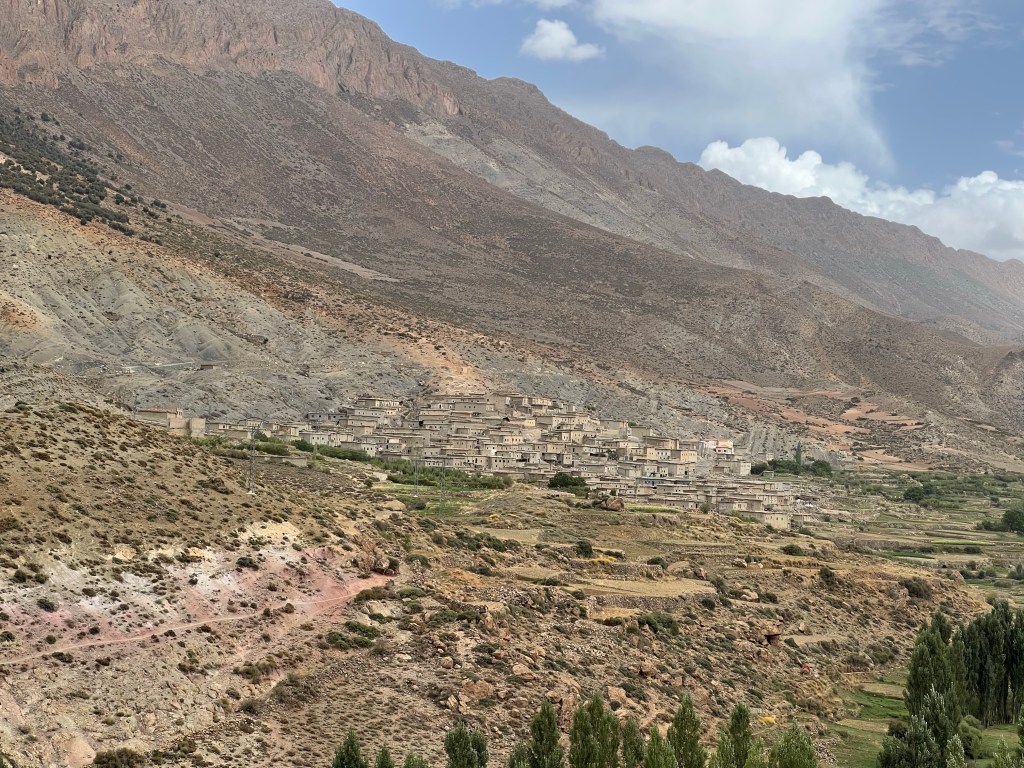
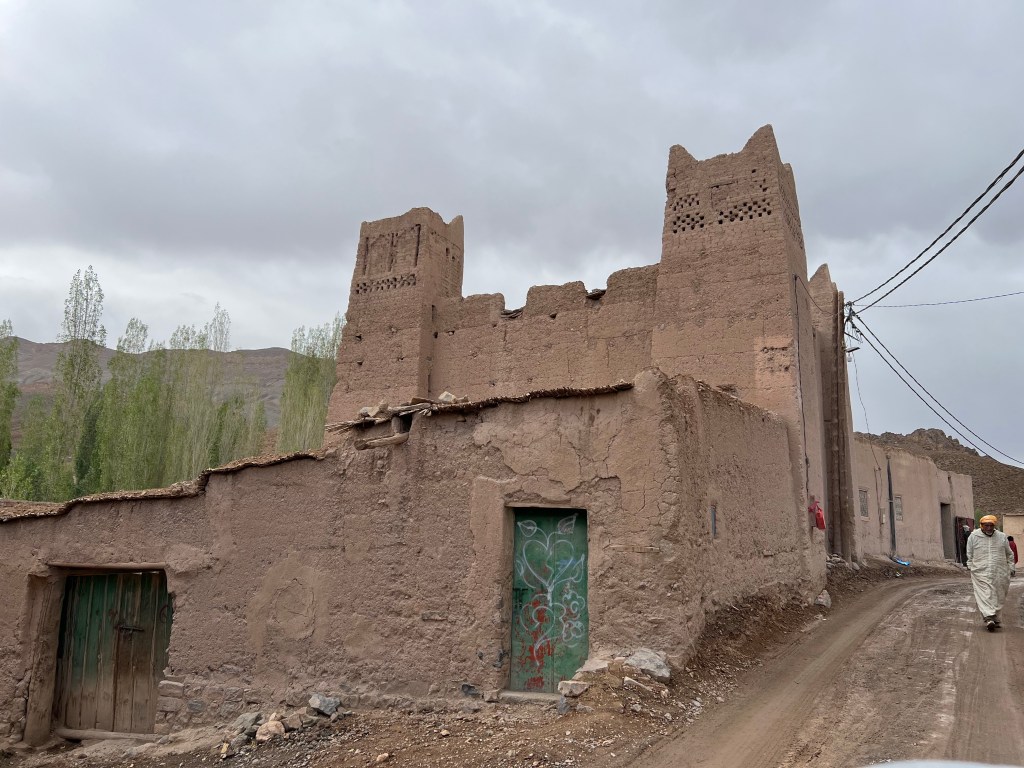
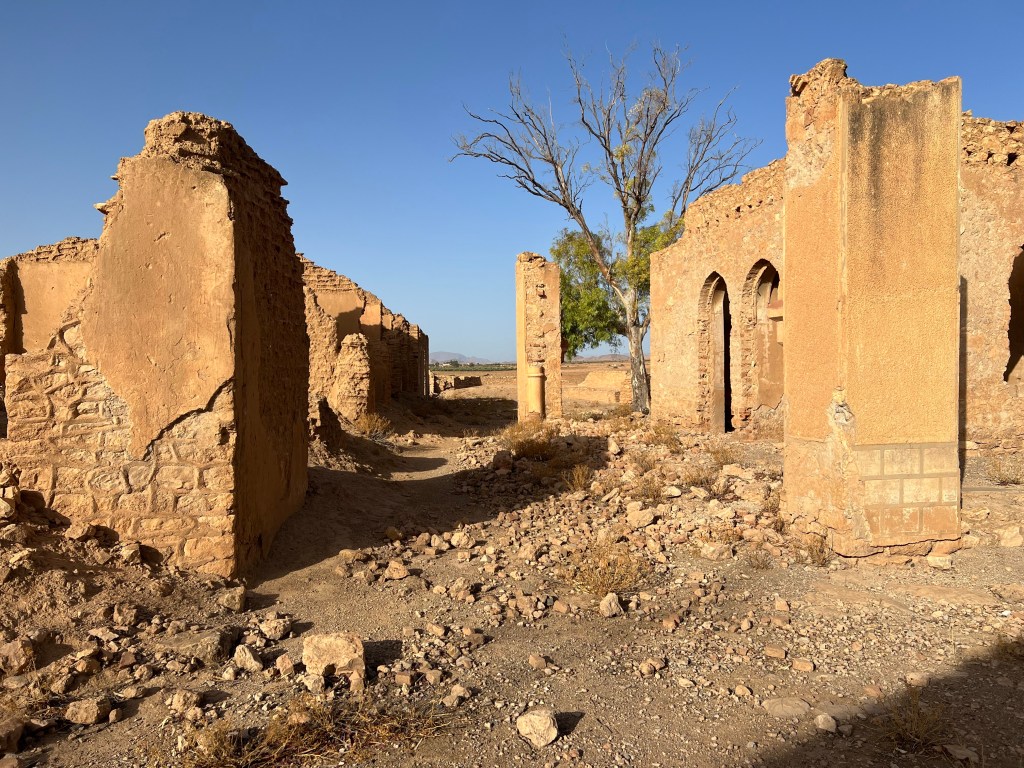
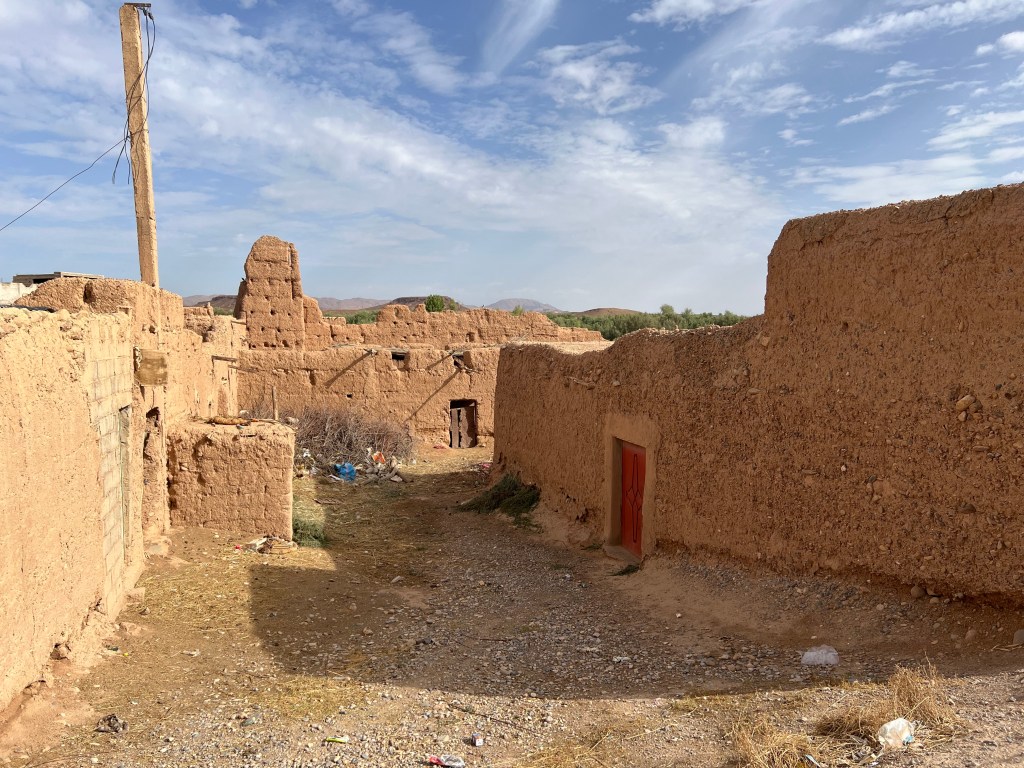
Crumbling Kasbahs and old fortified towns known as ksours started to litter the landscape. Immense complexes made from mud stone and straw, largely deserted, roofs missing and the walls eaten away by the elements forming remnants of past glory. Old decorated arches stand lonely amidst crumbling mud and rock debris. We imagined the life that was lived in these places. The coolness of their construction and the vernacular appearance that blended with the surrounding geology. Now they were like skeletons of of their former importance.

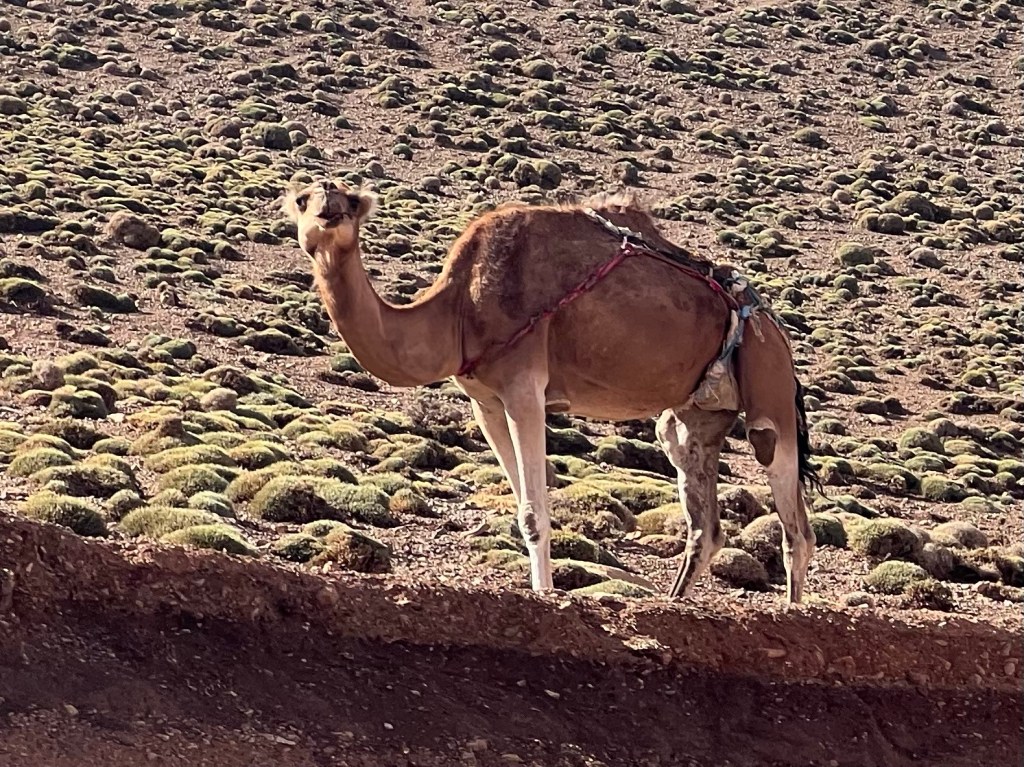
The mountains were a hard environment to cycle, but just so rewarding with breathtaking scenery around each corner. As we climbed to another pass we would settle down to a low gear and start our plod that often went on for four hours or more. You notice the small things changing and were rewarded by the views becoming more and more impressive as you climbed. The gain in elevation boosted your moral to keep going. A few camels pass and a lonely nomad on horseback in the far distance, a sign we will soon be entering the valleys that lead to the Sahara.


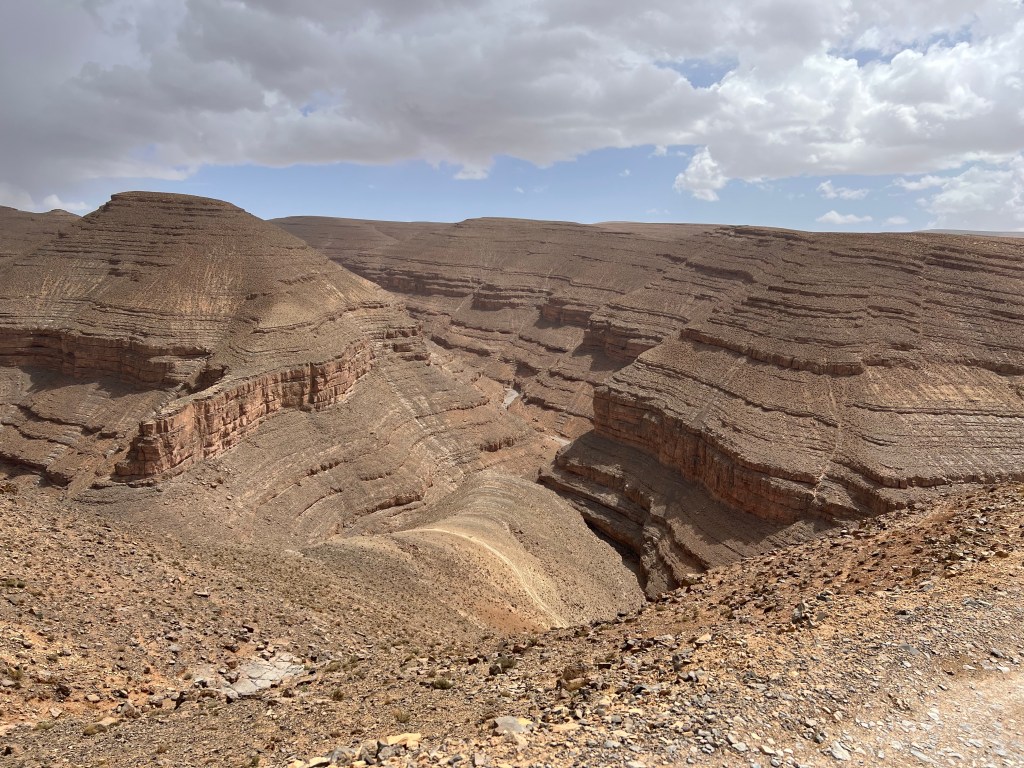
After several days we reach our final pass at 2900 metres and descend abruptly into the Dades gorge. The panorama that opened out was spectacular. Huge flat topped arid mountains where the rivers had cut a network of deep canyons exposing the layers of rock producing jagged cliffs and steep slopes of loose debris, something reminiscent of the Grand Canyon. The track wound it’s way precariously on switchbacks down and down, the scenery towered over us and it became warmer.
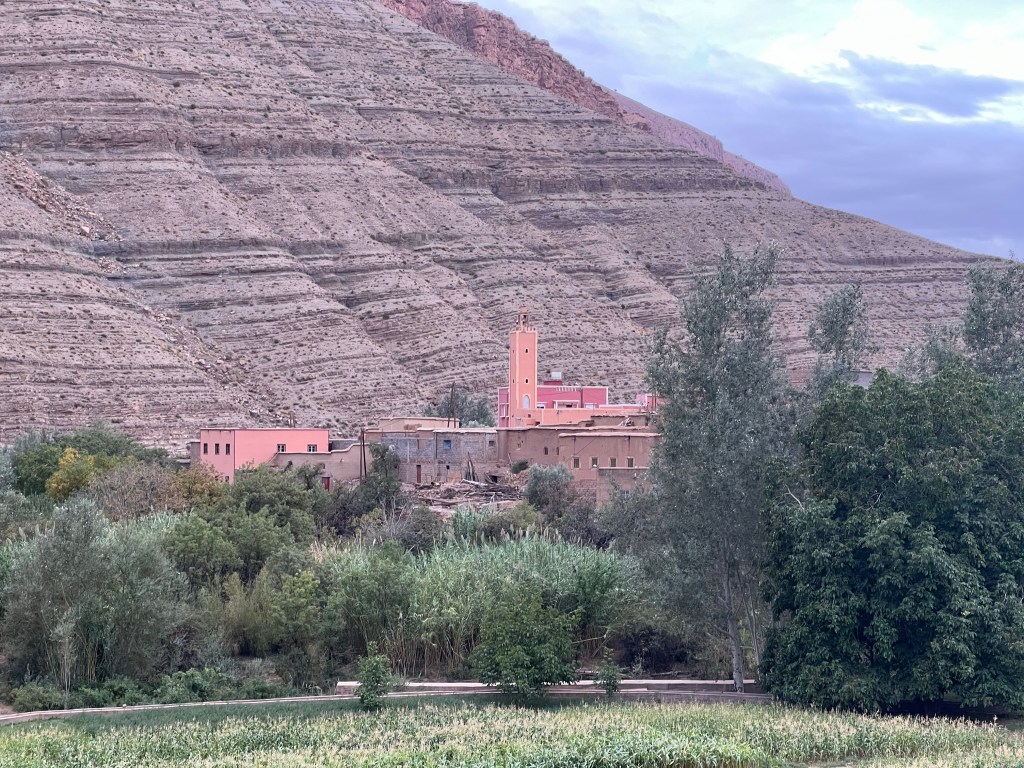
We descended all that climbing we had done over the previous days. The gorge narrowed so there was only just room for the road undercutting the cliffs and the river alongside. Kasbahs and ksours stood boldly at strategic positions in the gorge. Staggering scenery rose abruptly from the narrow cultivated valley floor.

Eventually the terrain around us diminished in grandeur and we were on a narrow plain between the High Atlas and the Jebel Saghro, our final barrier to cross before the Sahara.

The Jebel Saghro had a different character, more arid and minimal cultivation. Just a small amount of plants growing near villages and very close to where the river would have flowed when water is about. The mountains were dry and craggy but not as sheer as the Dades Gorge. Again the palette of colours of rock gave the mountains such beauty as they spread out into the distance. We were lucky with some cloud cover as we climbed the eight hundred metres or so to the pass, Tizzi n Tazazert, where we were greeted by a lovely guy who had a little Gite and he made us the most wonderful omelettes and coffee. The view was incredible. Now it was down hill to the desert.

The valleys took on a different character now. Date palms planted in Palmeries ran along the water course and expanded at the settlements. Other vegetables grew between the palms in places. Still there were crumbling Kasbahs and Ksours, their colour changing a little with change in the surrounding geology.
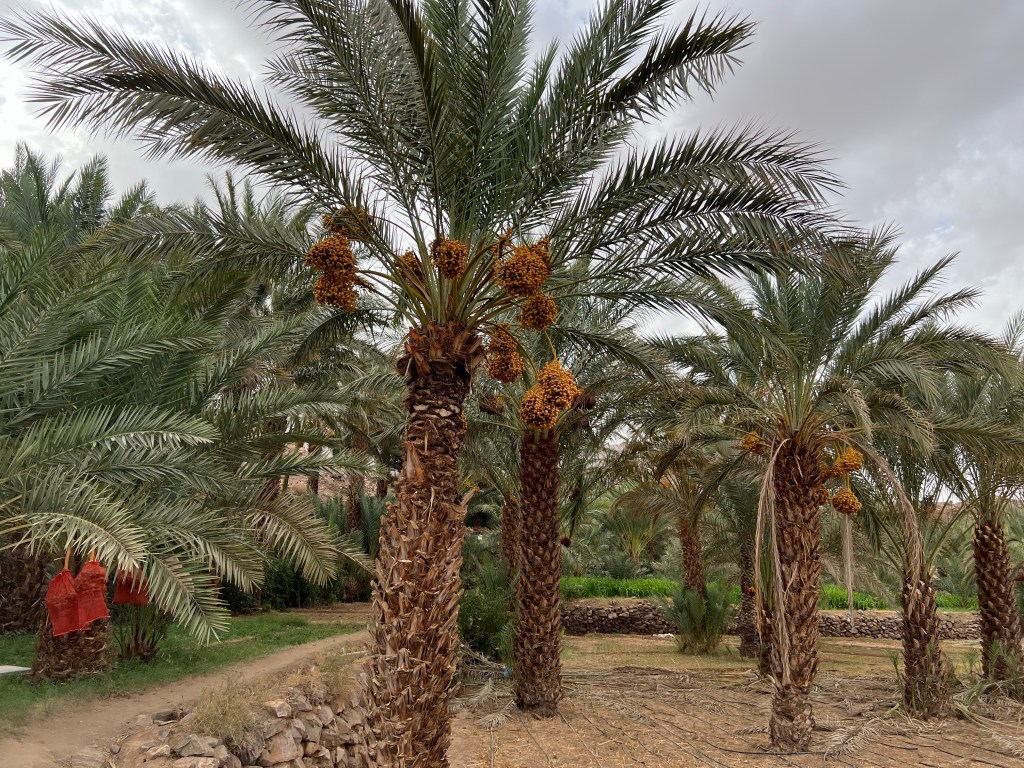
We arrived at Zagora the gateway to the Sahara and once an important staging point for the camel trains crossing the desert to Timbuktu which could be done in 52 days. A large twice weekly market brought people from all around together. Peoples faces again have changed a little, more African looking people about as the Berber have mixed with the Saharan people.
We continued on in the baking heating stopping in at a fascinating village with semi submerged Kasbahs and Ksours. A complete cool subterranean complex which was still lived in and had been an important seat of learning, holding huge numbers of historic and religious manuscripts.
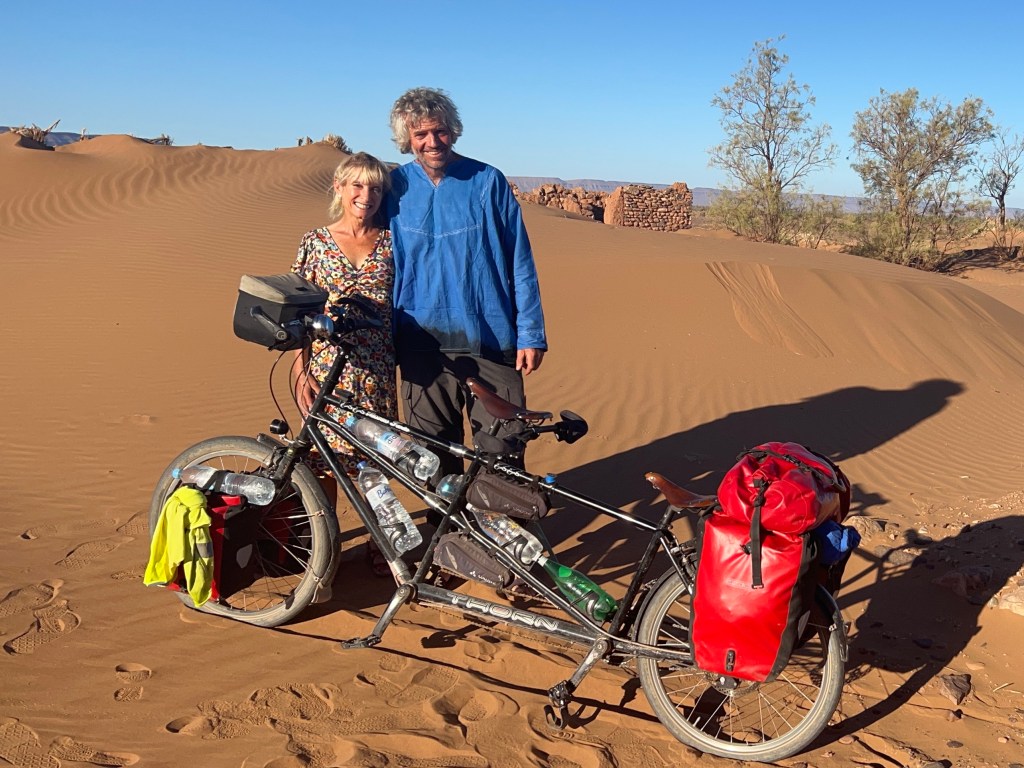
We had reached the Sahara, 28 days from home, 1845 miles and no punctures.
 tandemtravelcouk
Davy, this was such a wonderful description and I am absolutely fascinated.
LikeLiked by 1 person
Excellent pictures and commentary,I expect you enjoyed your birthday Dave in some perverse way, 78 miles against a strong head wind
All the best Joe and Alison
LikeLiked by 1 person
I love the photos, they speak a thousand words. Your “trip” makes the Sahara seem much closer to the UK, just a “bike ride” away or the world a smaller place depending on how one looks at it.
LikeLiked by 1 person
Thanks Steve
LikeLike